Showing posts with label Fossil Fuels. Show all posts

Saturday, March 30, 2019

President Trump Tries To Open Up Arctic For Oil Drilling, Judge Says No


Breaking news -- not really.  Read all about it...President Trump tries to open up the Arctic Ocean for oil drilling and is met in court with a response of 'No':


 In a major legal blow to President Trump’s push to expand offshore oil and gas development, a federal judge ruled that an executive order by Mr. Trump that lifted an Obama-era ban on oil and gas drilling in the Arctic Ocean was unlawful.
The decision, by Judge Sharon L. Gleason of the United States District Court for the District of Alaska, concluded late Friday that President Barack Obama’s 2015 and 2016 withdrawal of about 1120 million acres of Arctic Ocean from drilling “will remain in full force and effect unless and until revoked by Congress.” She wrote that an April 2017 executive order by Mr. Trump revoking the drilling ban “is unlawful, as it exceeded the president’s authority.”
The decision, which is expected to be appealed in the Ninth Circuit Court of Appeals, immediately reinstates the drilling ban on most of the Arctic Ocean off the coast of Alaska, a pristine region home to endangered species including polar bears and bowhead whales where oil companies have long sought to drill. It also has broader implications for Mr. Trump’s effort to push drilling across the American coastline and on public lands.
Specifically, the Arctic Ocean drilling case could give legal ammunition to opponents of Mr. Trump’s efforts to roll back protections for two million acres of national monuments created by Mr. Obama and President Bill Clinton.


With each passing day, the news is filled with updates on the success of the transition toward a renewable energy future.  Some may detail certain obstacles while others break the news regarding either a private entity or government moving (or making a commitment) toward achieving a non-zero percentage of their energy economy on clean (renewable) energy.  This reality is not new.


Neither is President Trump's inability to realize that 'rolling back' environmental laws put in place by the Obama Administration takes skill (and reason/logic) to reverse.  Congress will have to act at the very least.  Within that act will have to be a good reason to repeal the law put into place.  I have previously stated on this blog site the fact that if a rule is to be changed, the replacement has to be better than the previous law.


Which is to say that the law needs to be even more environmentally friendly than the previous proposal to be passed.  Otherwise, the existing law stays in place and is continuously challenged in courts -- as has been the case for the Trump Administration over the last two years.   I try hard to explain that rule to everyone with whom I meet and discuss the 'rollbacks' that supposedly have been accomplished by the Trump Administration.


The reality is stated in the article above that the Trump Administration has failed miserably on at least 40 accounts to persuade courts to reverse or 'rollback' a given environmental rule put in place by the Trump Administration.  These decisions have been in line with the current standards set in place by Congress.  Which should surprise no one including the President of the United States.  We will next have to see what Congress says about the issue at hand.


So far Congress has been willing to hold bipartisan hearings this year on the critical issue of climate change.  Furthermore, Congress recently wrote a letter to the Director of the Department of the Interior, asking him to not drill for oil off the coast of Florida.  That should be a significant indicator to President Trump that his attempts to 'rollback' any Obama Administration's environmental regulations (at least the majority of them) is not an accessible route to go down.


Of course, we are dealing with a non-traditional President of the United States currently.  The newspapers should keep up the great work at reporting on such failures.  Otherwise, a person might be led to think that a 'rollback' is possible without Congress.  The reality is that even Congress is batting for a renewable energy future.  Although the timeline might be debatable.  Nonetheless, a clean, renewable energy future is coming.  Stay tuned.


Related Blog Posts:


Congress Intervenes And Asks For No More Oil Drilling Off Of Florida


President Trump Is Out Of Touch With The Transition Toward Renewable Energy


EPA Director Finally Realizes Reality Of Trying To Roll-Back Obama Era Clean Air Act Regulation


Environmental Groups Question Environmental Protection Agency (EPA) Cuts


President Trump's Immigration Rhetoric Damages International Science Student Enrollment


What Promises Did President Trump Make Science Research During His Campaign?


Can The President Prevent The Public From Learning About Scientific Research???


President Trump's Understanding of the Paris Agreement


World Goes Left, While Trump Leads Right - On Climate - Why?


Is This Behavior Presidential - President Trump?


Paris Climate Agreement Is A Start Toward The Renewable Energy Future


READ THIS BEFORE VOTING -- Presidential Science (WORLD) Issues!


Brings Jobs Back By Promoting Renewable Energy!

Wednesday, February 6, 2019

Parameters: Germany Plans To Cut Coal Dependence By 2038


Whenever the transition toward renewable energy is brought up in discussions, people typically tighten up showing a large amount of uncertainty about the topic.  Regardless of their knowledge of the process or the timeline, one certainty exists in today's world:  A large number of countries, local governments, states along with industries are starting to make the transition toward a renewable energy-based system in the future.  Each might possess an individual pace.  But ultimately, each are headed in the correct direction: away from a fossil fuel dependent economy (and world).


Renewable Energy Not Fossil Fuels


The transition toward renewable energy has been under fire to different degrees in different nations.  In the European countries, renewable energy is becoming more favorable with the political will emerging.  Just recently, an article in 'The Ecologist' stated that Lithuania received the European Commission's support to transition toward renewable energy:


International renewable energy industry experts predict that within the next two decades, traditional energy sources such as gas, coal, and oil due will be replaced 100 percent by renewables as a result of their current slow-to-non existent growth rates.
In light of these findings, Lithuanian energy experts believe that by continually meeting EU energy directives, incentivising electricity production, and pursuing corporate responsibility targets where companies aim to be powered 100 percent by renewables, then Lithuania can set an example to policy makers and solar energy suppliers in neighbouring Latvia and Estonia on how to reduce the entire Baltic region’s need for Russian energy and pursue its own energy autonomy.


European investors have been increasingly committing more over time as banks are reassured by technologists and policy makers along with industry analysts that the transition is not only going to happen -- but that the transition will have ample funding with more on the way.  Not to mention that political will is increasing slowly but surely.


Now, Germany recently announced a major change (Big News!!!) to take place by 2038.  The organization 'Climate Action' presented the news as follows:


The Federal Government in Germany has announced plans to phase out coal by 2038.
The Commission on Growth, Employment and Structural Change released a 20-year report which has agreed to cancel out coal by 2038.
With only one vote against, the commission agreed on a total of 40 billion euros in aid for the states affected by the coalition exit. The federal Government will now turn the commission report into a reliable energy concept.
Olaf ScholzIf, Federal Finance Minister, said: “If we do not lose sight of the common goal, we can develop Germany into an exemplary state of energy policy."
In the years 2023, 2026 and 2029, the Commission will undertake a review by an independent panel of experts.
In response to this review, the power plant capacity will be reduced to 17 gigawatts of brown coal and hard coal in 2030, more than halving it. Depending on the report, the withdrawal of coal could take place, according to the recommendation of the commission, by 2035.
Greenpeace have called for this target to be brought forward to 2030 to ensure that carbon emissions are reduced sooner.
It was reported that, in 2018, the production of coal accounted for 38 per cent of Germany’s energy generation. This move away from fossil fuel generation will put Germany back on track to meet the targets set at the Paris Agreement.
This news follows a report that found that the immediate phase-out of fossil fuels is crucial to meet important climate targets.
The report found that if carbon intensive technologies were replaced by carbon-free alternatives, carbon emissions would steadily decline, dropping to near zero in 40 years. This would result in a 64 per cent chance of limiting global warming to 1.5 degrees Celsius.


Great.  Everything stated above is encouraging.  Germany is taking the lead in changing the entire system of nations.  The rest of Europe are on board too as reported in the article before the above statement.  The European Commission must continue to offer assurance (i.e. support).  From the news reports over the last couple of years, the support not only seems to be building, but nations are actually taking action in the European Union.


Although, the size of Germany has always been brought up in discussions here in the United States.  The argument is that a smaller nation is able to make sweeping changes more easily than larger ones can.  Alright.  I can see that.  But that is no excuse for not making changes here -- especially on a state by state basis -- which is comparable to the size of Germany.


Size -- California vs. Germany??


Right after the article above was published (and I read the article), I was talking with my colleague who holds German citizenship.  She was born in Germany.  In a prior discussion about Germany moving toward the use of natural gas, she warned that the move could be potentially dangerous considering the main source of gas presently -- Gazprom -- from Russia.  This would put Germany at the hands of Russian gas giants (effectively Russia) for a stable and steady gas supply.


Although, since that discussion, the natural gas industry has started to boom (in the sense of shipping).  Technology has improved the ability to ship liquified natural gas all around the world.  Now, back to the discussion at hand.  This massive shift in dependence on fossil fuels in a reasonable amount of time makes other countries uneasy.  Some here in the United States view this transition as 'short sighted' since the infrastructure and change is occuring on such a short time scale.


But is the timescale that short?  What kind of transition plan is reasonable? How long should the U.S. or Germany rely on coal/fossil fuels?


The change that Germany is embarking on reminds me of the recent (as in the past few months) commitment to renewable energy made by then Governor Jerry Brown regarding the state of California.  Governor Brown signed into law last year the commitment to have California on a carbon neutral (net zero) program for energy by 2045.  This was ambitious to say the least.


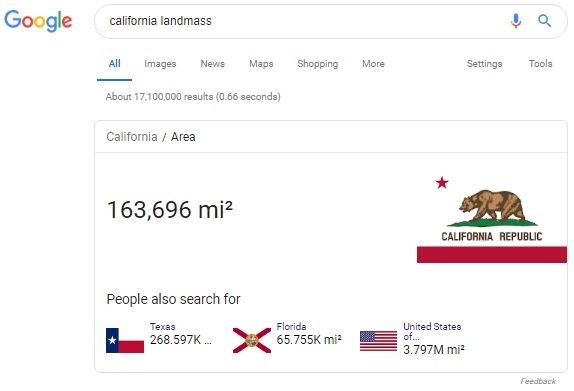
Remember that California's economy is the fifth largest in the world.  Which may cause someone to immediately draw parallels between Germany's transition and California's transition.  Let's look at the size (landmass) difference between the two for a closer comparison.  First, Germany's landmass is shown below:


Next, California's landmass is shown below:


As you can see, California has a larger landmass than Germany.  With Governor Jerry Brown signing into law the transition to a carbon neutral economy by 2045, the current announcement above for Germany by 2038 is not too far fetched.  Especially given the size of the two landmasses.  Additionally, Germany is probably better suited to the transition toward renewable energy -- which is why the date is set for a complete transition earlier.


Regardless, the news above is exciting to those who are big fans for the transition toward a greater dependence on renewable energy.  As this post is published (Wednesday morning), a subcommittee is gathering in the U.S. Congress --House Committee on Energy & Commerce -- is meeting to discuss action for the United States of America.  I will write a follow up post on the hearing in the near future.  We should watch and note these commitments of transitioning toward renewable energy.  Further, these commitments should serve as a motivation to build momentum toward change.  The future of transitioning toward renewable energy is turning into a reality and is really exciting.


Related Blog Posts:


Governor Jerry Brown Leads The U.S. With Ambitious Calls For 100% Renewable By 2045 -- Wow!!!


Parameters: GM Lays Off Thousands Of Workers -- Why? People Are Not Buying Cars?


EPA Estimates Of Methane - GHG - are off by 60%


135 Climate Scientists Urge Prime Minister Theresa May to Challenge President Trump on his Climate Stance during visit to the UK


Parameters: Oil vs. Corn based Ethanol - A Tug-Of-War between Trump Administration and Congressional Leaders


French President Macron Calls On U.S. Congress To Save The Planet


Parameters: Shells Oil Corporation Invests In Renewable Energy Infrastructure


Parameters: South Korea Uses Renewable Energy For Olympic Games


French President Macron Organizes Climate Conference With Pledges Of Trillions Of Dollars For Climate Risk Management From World Organizations


Do You Need Clean Air To Breathe? An Introduction To Environmental Justice


Environmental Entrepreneurs Weigh In On Repealing The Clean Power Plan


EPA Blatantly Suppresses Scientific Results Regarding Climate Change?


EPA Director Finally Realizes Reality Of Trying To Roll-Back Obama Era Clean Air Act Regulation


Monday, January 14, 2019

Over 600 Environmental Groups write letter to Congress to phase out fossil fuels


Last November, voters came to the polls in America and voted to change the House of Representatives from a republican majority to a democratic majority.  Over the last two years, the erosion of the federal agencies oversight to enforce regulations to protect Americans from harm by corporate entities has ensued without major obstacles.  Which is problematic for important issues such as climate change -- which spans over decades not just one election cycle.  Although, action needs to be continuously optimized by encouraging our elected leaders in Congress to have our best interest in mind and keep steering toward sustainable goals which have a positive effect on our planet looking into the future.


One such plan that has emerged with the change of the majority on Capitol Hill is the Green New Deal.  Over 600 environmental groups have written to express support for the Green New Deal and work toward finding solutions in general by forming committees along with passing legislation.  Negotiations are starting to happen which is encouraging to say the least.  Whenever I read about a large number of organizations sending letter to elected officials, I am alway curious about the content of such letters.  What do elected officials receive in letters in the form of information/persuasion toward their argument?  That is what this short blog post is about - persuasive content.


With that being said, the letter is shown below without the signatures:


January 10, 2019
Re: Legislation to Address the Urgent Threat of Climate Change
Dear Representative:
On behalf of our millions of members and supporters, we are writing today to urge you to consider the following principles as the 116th Congress debates climate change legislation and momentum around the country builds for a Green New Deal. As the Intergovernmental Panel on Climate Change recently warned, if we are to keep global warming below 1.5°C, we must act aggressively and quickly. At a minimum, reaching that target requires visionary and affirmative legislative action in the following areas:
Halt all fossil fuel leasing, phase out all fossil fuel extraction, and end fossil fuel and other dirty energy subsidies.
The science is clear that fossil fuels must be kept in the ground. Pursuing new fossil fuel projects at this moment in history is folly. Most immediately, the federal government must stop selling off or leasing publicly owned lands, water, and mineral rights for development to fossil fuel producers. The government must also stop approving fossil fuel power plants and infrastructure projects. We must reverse recent legislation that ended the 40-year ban on the export of crude oil, end the export of all other fossil fuels, and overhaul relevant statutes that govern fossil fuel extraction in order to pursue a managed decline of fossil fuel production. Further, the federal government must immediately end the massive, irrational subsidies and other financial support that fossil fuel, and other dirty energy companies (such as nuclear, waste incineration and biomass energy) continue to receive both domestically and overseas.
Transition power generation to 100% renewable energy.
As the United States shifts away from fossil fuels, we must simultaneously ramp up energy efficiency and transition to clean, renewable energy to power the nation’s economy where, in addition to excluding fossil fuels, any definition of renewable energy must also exclude all combustion-based power generation, nuclear, biomass energy, large scale hydro and waste-to-energy technologies. To achieve this, the United States must shift to 100 percent renewable power generation by 2035 or earlier. This shift will necessitate upgrading our electricity grid to be smart, efficient, and decentralized, with the ability to incorporate battery storage and distributed energy systems that are democratically governed. In addition, Congress must bring the outdated regulation of electricity into the twenty-first century, encouraging public and community ownership over power infrastructure and electricity choice, as well as permitting distributed energy sources, including rooftop and community solar programs to supply the grid.
Expand public transportation and phase out fossil fuel vehicles.
As the transition away from fossil fuels occurs, our transportation system must also undergo 100 percent decarbonization. To accomplish a fossil-fuel-free reality, Congress must require and fund greater investment in renewable-energy-powered public transportation that serves the people who need it most. The United States must also phase out the sale of automobiles and trucks with internal fossil fuel combustion engines as quickly as possible and phase out all existing fossil fuel mobile sources by 2040 or earlier. Federal credits for electric vehicles must be expanded.
Harness the full power of the Clean Air Act.
The Clean Air Act provides powerful tools that have proven successful in protecting the air we breathe and reducing greenhouse pollution. It can also serve as an important backstop to ensure climate targets are met. Congress should harness the full power of the statute by setting strict deadlines and providing adequate funding for EPA to carry out all its duties under all applicable sections of the Act, including implementing greenhouse pollution reduction requirements for cars, trucks, aircraft, ships, smokestacks and other sources, as well as a science-based national pollution cap. The Act has successfully reduced many air pollutants and can do the same for greenhouse pollution.
Ensure a Just Transition led by impacted communities and workers.
In effectuating this energy transformation, it is critical to prioritize support for communities who have historically been harmed first and most by the dirty energy economy and workers in the energy sector and related industries. We support a comprehensive economic plan to drive job growth and invest in a new green economy that is designed, built and governed by communities and workers. Building new energy, waste, transportation and housing infrastructure, designed to serve climate resilience and human needs; retrofitting millions of buildings to conserve energy and other resources; and, actively restoring natural ecosystems to protect communities from climate change, are but a few ways to build a sustainable, low carbon economy where no one is left behind during this change.
Uphold Indigenous Rights
The United Nations Declaration on the Rights of Indigenous Peoples (UNDRIP) must be upheld and implemented, along with treaties, instruments and decisions of international law that recognize that Indigenous Peoples have the right to give or withhold “free, prior and informed consent” to legislation and development of their lands, territories and/or natural resources, cultural properties and heritage, and other interests, and to receive remedies of losses and damages of property taken without consent. 
Further, we will vigorously oppose any legislation that: (1) rolls back existing environmental, health, and other protections, (2) protects fossil fuel and other dirty energy polluters from liability, or (3) promotes corporate schemes that place profits over community burdens and benefits, including market-based mechanisms and technology options such as carbon and emissions trading and offsets, carbon capture and storage, nuclear power, waste-to-energy and biomass energy. Fossil fuel companies should pay their fair share for damages caused by climate change, rather than shifting those costs to taxpayers.
We look forward to working with you to address the gravest environmental crisis humanity has ever faced, to protect all present and future generations around the world, while centering the rights of those communities and workers most impacted.
Sincerely,


The above letter was signed by over 600 environmental groups.  The names of which can be found at the end of the letter hyperlinked -- here.   There is no question that if various elected officials on both sides consider climate change to be a threat to our national security (to our planet on a much larger scale), then negotiation needs to start happening soon if change is going to follow in the future.


There are people who do not think that climate change is real or a major threat.  As a scientist, I can just defer to a non-scientist's reasoning.  Recently, I was listening to a podcast titled "Mike Drop" which was an interview between two former Navy Seals about all aspects of life.  Mike Ritland interviews Andy Stumpf about all aspects of life spanning from gun control to climate change.  When the topic of climate change came up, here is what was agreed upon (at 3:02:16 into podcast):


". . . I'm trying to close the loop on that yeah ... I mean I would say I'm probably similarly ignorant to it other than the fact that to me common sense would tell you you know basically what you said but then also just ... just take automobiles as an example is that you know if you can shut your garage door, turn your car on and be dead in a matter of minutes like chances are with (Andy Stumpf breaks in with "you know I think you need a hose for that too") ... but you know ... ya I got your fucking hose ... yeah you know chances are that having ... you know hundreds of millions of vehicles billions you know driving ... or if you know is probably not that great for us you know and that's one example"


That was a great example offered up from interviewer Mike Ritland.  Common sense would tell you that if you can close the door of your garage with the car still running, eventually, the fumes will kill you.  Therefore, having billions of tons of CO, CO2 spewing into your environment are probably not that good.


With that being said, the new change to the House of Representatives seems to be on the right track with the emerging Green New Deal in discussion.  A discussion is where change starts to happen.  And as has been highlighted in the last couple of years, changes are greatly needed in the direction toward sustainable energy while steering us clear of our dependence on fossil fuels.  Keep asking your elected officials to consider clean energy along with the environment when a vote is under consideration on capitol hill.


Related Blog Posts:


Senator Carper Blasts Environmental Protection Agency For Considering Relaxing 'Mercury and Air Toxics Standard'?


What does a Government Shutdown look like?


What is the difference between General Anxiety Disorder and Trump Anxiety Disorder?


Congress Gets Involved In Beef Recall


How Effective Are Poultry Corporations At Reducing Salmonella In Their Products?


NIDA Director Nora Volkow: How Health Communicators and Journalists Can Help Replace Stigma with Science


Governor Jerry Brown Leads The U.S. With Ambitious Calls For 100% Renewable By 2045 -- Wow!!!


Thoughts: An example letter of opposition to repealing the 2015 Clean Waters Rule


EPA Estimates Of Methane - GHG - are off by 60%


Chemical Safety Board's Future Uncertain as Hurricane Season Approaches


Update: Congress asks Federal Agencies about Dangerous Chemicals -- PFOA and PFOS


Congress Asks Defense Department and Environmental Protection Agency about Dangerous Chemicals


President Trump Just Allowed Greater Environmental Risk To Children's Health


Thoughts: Senator Bernie Sanders Asks Public To Get Involved In The Public Process At Any Level


Do You Need Clean Air To Breathe? An Introduction To Environmental Justice


French President Macron Organizes Climate Conference With Pledges Of Trillions Of Dollars For Climate Risk Management From World Organizations


Coal Magnate Murray Shames Fossil Fuel Industry For Being "Forward Thinkers" For Energy


Democrats Question EPA Adminstrator Scott Pruitt On Historical Job Cuts At EPA


There Is No Climate Debate -- Scientific Facts Have Settled The Issue?


Tuesday, February 14, 2017

Should Pollution Concern Us?

The title is simple right?


Easy question, should the amount of pollution over major cities concern the citizens of this planet?


Depending on who you ask, the answer might differ.  Why does this have to be the case?


Recently, I found a great short video by California's previous Governor Arnold Schwarzenegger on the adverse effects of pollution.  I thought that I would bring the contents of the video to your attention just in case you were too busy to take out a minute and a half to watch the video below:


If you did not watch the video, here are the highlights of the important video:


1) 7 million people die world-wide because of pollution related illnesses


2) That is more than the following combined: suicides, traffic fatalities, and war casualties!


3) Politicians take the stand that the problem is "too costly to fix" -- imagine that politicians love to spend money to get results which promote votes from their constituents.


4) Politicians are trying to shut down the EPA's ability to regulate carbon.


5)  Arnold's Solution: strap their mouths (politicians) to the tailpipe of a truck exhaust pipe and then turn on the engine and see how long it takes for them to "tap out".


6) In California, politicians have shown that the possibility exists to protect the environment and the economy at the same time.


7) After California passed strict climate change laws, the economy grew by 12.4%


8) If the biggest economy in the country can thrive under the strictest environmental laws, that means the same is possible all over the country as a whole.


9) California has outpaced Texas in GDP growth since 2011.


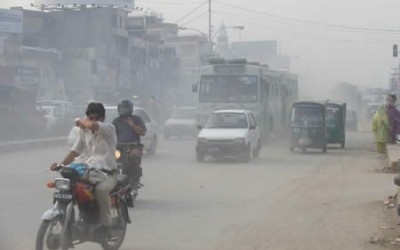
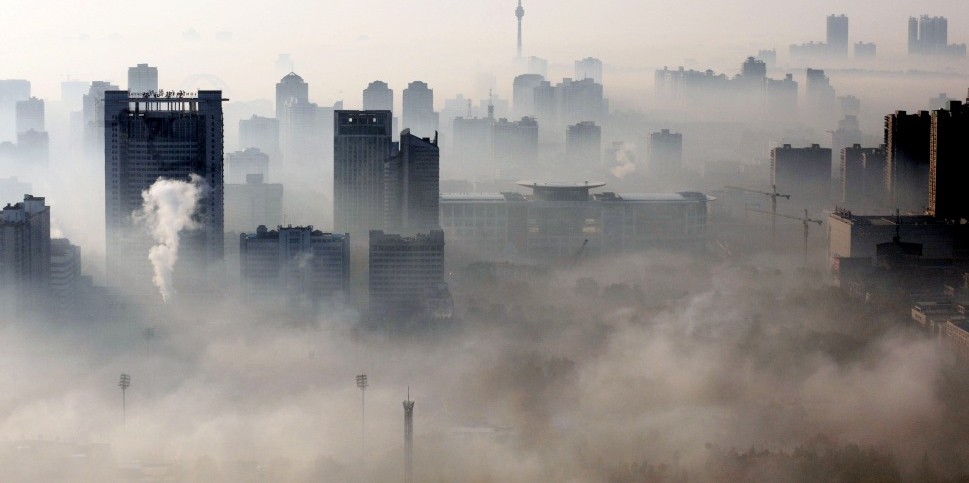
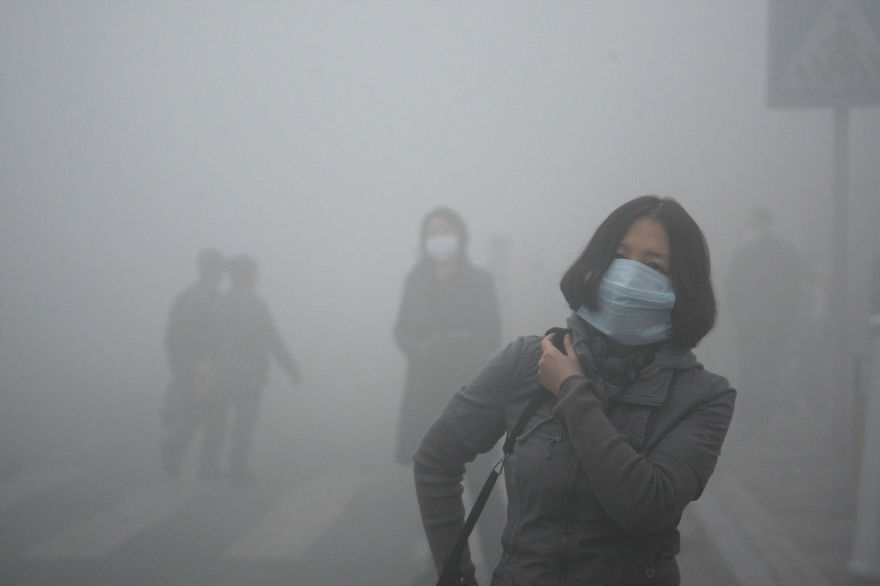
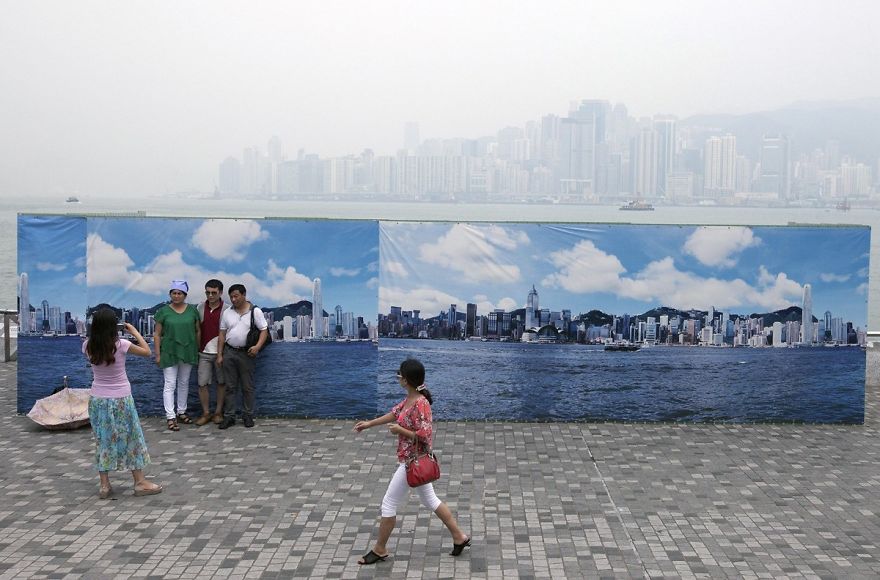
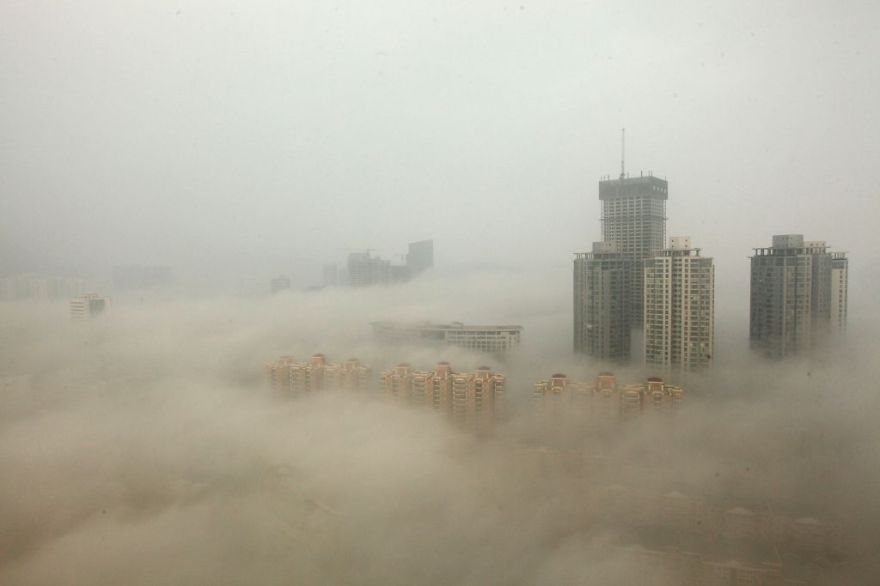
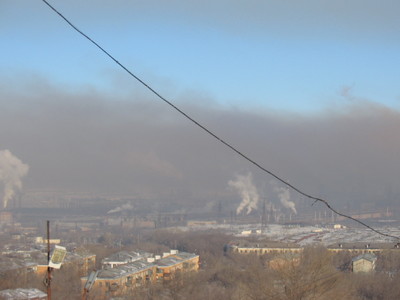
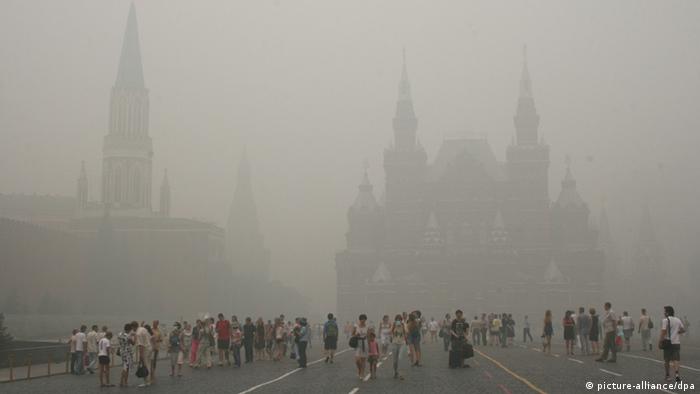
Pictures of Air Pollution Around The World:


1) United States of America (USA):


Source: RT.com


Source: Wikipedia


Source: USAtoday.com


2) India:


Source: Map of India


3) China


Source: SoftPedia


Source: Bored Panda


Source: Bored Panda


Source: Bored Panda


5) Russia:


Source: TESteach


Source: DW.com


There are many more pictures available for your viewing online with a search of the topic: "air pollution in .... images" where "..." stands for the country of interest (Russia, USA, China, India, etc.).


Below is a satellite image of the particulate matter (of size 2.5 micrometer) distribution across of the globe.  USA is quite blue -- meaning relatively lower levels compared to other parts of the world.


 Source: NASA


As the pictures still portray above of air pollution around the world, there is still work to be done.  The overarching take home message to all residents of the world should be the following:


Each of us breathe the same air in the world.  Working together, the world would be a healthier place to live.  As it stands now, we are on a deadly trajectory for the future.


Action is needed!


Until next time, Have a great day!


Saturday, November 5, 2016

Does Oil Demand Restrict The Amount Of Safety Regulation On Big Oil Companies?

If the last few decades are used as a litmus test, the following questions can be raised regarding large oil operations inside the United States:


Does our demand out strip our ability to provide safe oil/gas to various parts of the U.S.?


Have regulators lost control of the ability to regulate large oil companies?


How many more oil/gas spills must occur before meaningful change can occur?


The above questions are real and meaningful to each of us.  Below is evidence that these statements might be true or stand to be questioned.


Man-Made Disasters


There is no question that the world demand for oil is out of control.  By out of control, I mean that our dependence on oil is so large that the flow of oil around the world is imperative and not an option.  With the rise of research and development into renewable fuels/energy, the options could change depending on the magnitude of the output of such emerging technologies.


How big is our dependence on oil?


What is the daily dependence of oil on the world scale?


How about a developed nation like the U.S.?


I wrote a blog about the magnitude of the world daily usage of oil a few months ago.  The estimated number of barrels required to fuel the world is around 94 million barrels of oil per day.  In the blog post, I point out by using dimensional analysis that 94 million barrels of oil is equivalent to 4.23 billion gallons of oil per day.  A metric that is commonly used on this blog site is the Mercedez Benz Super Dome shown below:


Source: Nwill21


Which has interior space of 125,000,000 cubic feet of interior space which looks like the picture below taken from 'Wikipedia':


Source: David Reber


Just imagine, nearly 5 Super Domes (4.6) could be filled with the daily Global demand of oil.  WOW.  That puts the global daily demand of oil into perspective.  If you are interested in viewing the calculations, click here to access the post.


What about the U.S.?


The daily oil demand for the US is estimated to be around 19.4 million barrels per day.  With a conversion factor of 42 gallons of oil per barrel, the calculation of the conversion is possible as shown below:


The daily U.S. demand of oil is 814 million gallons a day. Wow.  Further, the oil demand is dispersed throughout the entire U.S. for consumption.  This begs the question:


How does the oil get distributed throughout the U.S. to meet the daily demand?


The three major avenues of distribution are shown below:


Truck:


Rail Car:


And finally, the most popular form of transport is the 'pipeline' shown below:


Source: Greenbiz


There is no doubt that each form of transportation involves an inherent risk associated.  Over the last couple of years, the oil pipelines have become a hot topic of dispute.  Just recently, a protest has been brewing in North Dakota over the proposed pipeline.  The energy company 'Energy Transfer' wants to run a pipeline through North Dakota underneath a water supply for the Standing Rock Sioux Tribe.


In a blog I wrote last week, I discussed the battle that has erupted over the pipeline.  An article I quoted from 'The New York Times' cited the two following statements regarding pipelines and the safety surrounding them:


Amount of pipeline in the U.S.:


The United States has a web of 2.5 million miles of pipelines that carry products like oil and natural gas, pumping them to processing and treatment plants, power plants, homes and businesses. Most of the lines are buried, but some run above ground.


Safety of pipelines:
Energy companies and their federal overseer, the Pipeline and Hazardous Materials Safety Administration, promote the safety record of pipelines. Pipeline companies say it is far safer to move oil and natural gas in an underground pipe than in rail cars or trucks, which can crash and create huge fires.

But pipeline spills and ruptures occur regularly. Sometimes the leaks are small, and sometimes they are catastrophic gushers. In 2013, a Tesoro Logistics pipeline in North Dakota broke open and spilled 865,000 gallons of oil onto a farm. In 2010, an Enbridge Energy pipeline dumped more than 843,000 gallons of oil into the Kalamazoo River in Michigan, resulting in a cleanup that lasted years and cost more than a billion dollars, according to Inside Climate News.

In a 2012 examination of pipeline safety, ProPublica reported that more than half of the country’s pipelines were at least 50 years old. Critics cited aging pipelines and scant federal oversight as factors that put public health and the environment at risk.


In the same post, I pointed out that the amount of oil is far less in a given accident by fuel truck compared to a break in the oil pipeline.  A typical fuel truck carries (less than 4,000 gallons) along with a rail car (train car capacity is around 33,000 gallons per car).  The article out of 'The Times' used in the post cited a daily volume of around 470,000 barrels would be moved throughout the pipeline.  That equals around 19.7 million gallons per day being pumped through the pipeline per day.  See post for calculations!


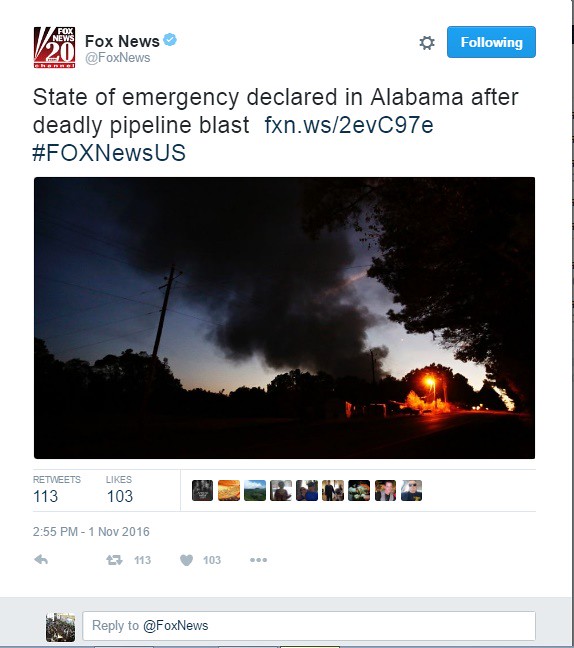
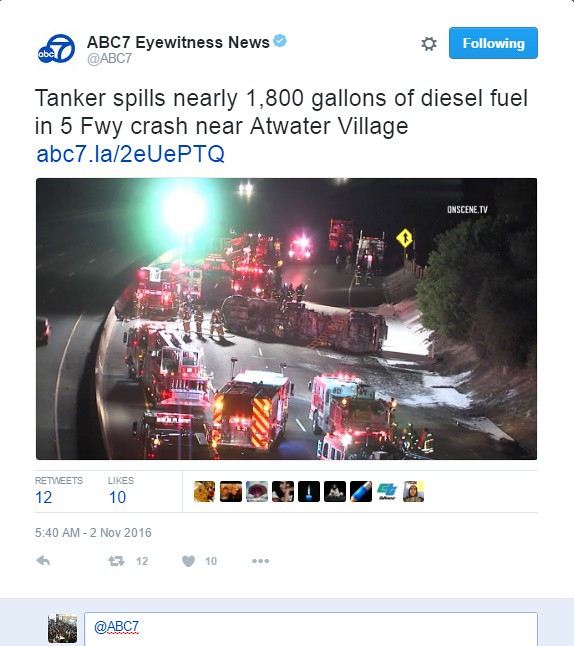
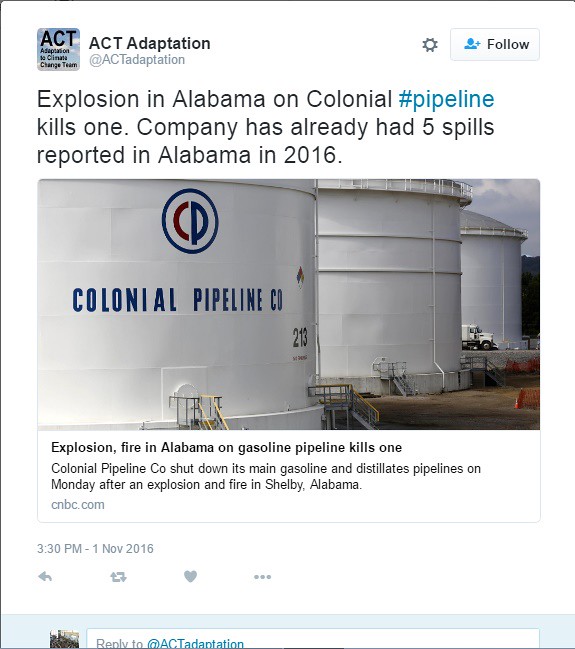
Now, compare the relative volumes being transported by each method.  Here are two images of 'Tweets' that appeared within 24 hours of me publishing the previous post shown below regarding disasters brought on by transporting oil/gas:


Tweet 1:


Tweet 2:


In the first tweet, a pipeline exploded and caused great damage to the surrounding area.  Whereas in the second tweet, a local fuel truck tanker overturned and caused a spill of 1,800 gallons.  Further, a couple of years ago, the company whose pipeline broke due to an explosion has had multiple (5 violations) so far in 2016 as shown by the tweet below:


The energy company 'Colonial' just had a pipeline burst a couple of months ago which spewed around 6,000 - 8,000 barrels of fuel spilled into the forest.  I wrote a blog post about the spill.  According to the company, the spill was small (supposedly) in comparison to others in recent history.  You don't say?


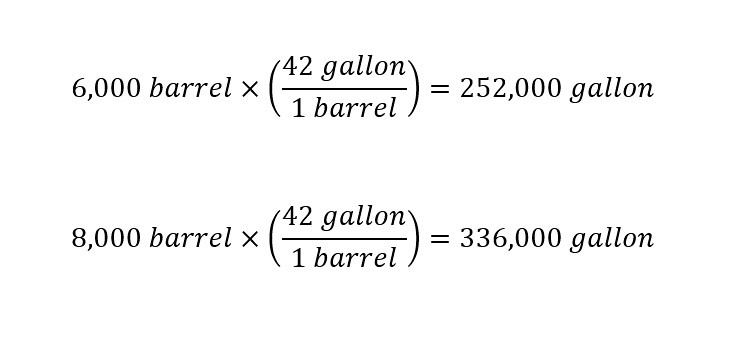
In comparison to the volumes listed in the excerpts above from 'The Times' article which I used in a previous post, Colonial would like you to think the spills are small.  As I calculated in the blog post, the range of 6,000 - 8,000 barrels corresponds to 250,000-330,000 gallons of fuel does not compare well (Really?) with the respective volumes 865,000 and 843,000 gallons of oil.


With all of the oil being dumped and not necessarily reported, one cannot help but wonder where are all of the regulators at?


Are they being paid off by the energy companies to remain silent of overlook disasters?


Have we as a nation reach a point with 2.4 million miles of oi pipelines throughout the U.S. at which regulation becomes impossible?


Do we have enough regulators to handle the job needed to maintain safe oil pipelines?


These questions remain unanswered.  In the United States this coming Tuesday, a national election is going to take place.  If the answer lies anywhere, the answer that involves change will be held with a future President of the United States.  In the next section, each candidates views on regulation, climate change, and business relations will be presented.


Regulation Is Needed!


As I just mentioned, a national election is going to take place this Tuesday.  If an answer to the above questions is possible, the next President should be able to shed light on the matter based on the platform on which they are running for office.  I wrote a blog a couple of days ago which just listed 20 questions that Presidential candidates should answer.  These questions are important in providing any guidance as to the next four years of funding and support for reform and regulation will look like.  See the previous post for all of the 20 questions - only those pertaining to the subject of the post will be displayed below.


The questions and answers below were directly taken (cut and pasted) from the nonprofit's "Science Debate" website under "20 Questions" for candidates about science issues.  Over 56 organizations signed on to make these questions which represent 12 million scientist around the country.


Without further ado, here are the questions and answers:


Climate Change:


Question 3:


The Earth’s climate is changing and political discussion has become divided over both the science and the best response. What are your views on climate change, and how would your administration act on those views?


Answers:


Hillary Clinton:


When it comes to climate change, the science is crystal clear. Climate change is an urgent threat and a defining challenge of our time and its impacts are already being felt at home and around the world. That’s why as President, I will work both domestically and internationally to ensure that we build on recent progress and continue to slash greenhouse gas pollution over the coming years as the science clearly tells us we must. 
I will set three goals that we will achieve within ten years of taking office and which will make America the clean energy superpower of the 21st century: 
1) Generate half of our electricity from clean sources, with half a billion solar panels installed by the end of my first term. 
2) Cut energy waste in American homes, schools, hospitals and offices by a third and make American manufacturing the cleanest and most efficient in the world. 
3) Reduce American oil consumption by a third through cleaner fuels and more efficient cars, boilers, ships, and trucks. 
To get there, my administration will implement and build on the range of pollution and efficiency standards and clean energy tax incentives that have made the United States a global leader in the battle against climate change. These standards are also essential for protecting the health of our children, saving American households and businesses billions of dollars in energy costs, and creating thousands of good paying jobs. 

These standards set the floor, not the ceiling. As President, I will launch a $60 billion Clean Energy Challenge to partner with those states, cities, and rural communities across the country that are ready to take the lead on clean energy and energy efficiency, giving them the flexibility, tools and resources they need to succeed. 


Donald Trump:


There is still much that needs to be investigated in the field of “climate change.”  Perhaps the best use of our limited financial resources should be in dealing with making sure that every person in the world has clean water.  Perhaps we should focus on eliminating lingering diseases around the world like malaria.  Perhaps we should focus on efforts to increase food production to keep pace with an ever-growing world population.  Perhaps we should be focused on developing energy sources and power production that alleviates the need for dependence on fossil fuels.  We must decide on how best to proceed so that we can make lives better, safer and more prosperous.


Energy:


Question 7:


Strategic management of the US energy portfolio can have powerful economic, environmental, and foreign policy impacts. How do you see the energy landscape evolving over the next 4 to 8 years, and, as President, what will your energy strategy be?


Answers:


Hillary Clinton:


The next decade is not only critical to meeting the climate challenge, but offers a tremendous opportunity to ensure America becomes a 21st century clean energy superpower. I reject the notion that we as a country are forced to choose between our economy, our environment, and our security. The truth is that with a smart energy policy we can advance all three simultaneously. I will set the following bold, national goals – and get to work on Day 1, implementing my plan to achieve them within ten years of taking office: 
1) Generate half of our electricity from clean sources, with half a billion solar panels installed by the end of my first term. 
2) Cut energy waste in American homes, schools, hospitals and offices by a third and make American manufacturing the cleanest and most efficient in the world. 
3) Reduce American oil consumption by a third through cleaner fuels and more efficient cars, boilers, ships, and trucks. 
My plan will deliver on the pledge President Obama made at the Paris climate conference—without relying on climate deniers in Congress to pass new legislation. This includes: 
1) Defending, implementing, and extending smart pollution and efficiency standards, including the Clean Power Plan and standards for cars, trucks, and appliances that are already helping clean our air, save families money, and fight climate change. 
2) Launching a $60 billion Clean Energy Challenge to partner with states, cities, and rural communities to cut carbon pollution and expand clean energy, including for low-income families.  
3) Investing in clean energy infrastructure, innovation, manufacturing and workforce development to make the U.S. economy more competitive and create good-paying jobs and careers. 
4) Ensuring the fossil fuel production taking place today is safe and responsible and that areas too sensitive for energy production are taken off the table. 
5) Reforming leasing and expand clean energy production on public lands and waters tenfold within a decade. 
6) Cutting the billions of wasteful tax subsidies oil and gas companies have enjoyed for too long and invest in clean energy. 
7) Cutting methane emissions across the economy and put in place strong standards for reducing leaks from both new and existing sources. 
8) Revitalizing coal communities by supporting locally driven priorities and make them an engine of U.S. economic growth in the 21st century, as they have been for generations. 


Donald Trump:


It should be the goal of the American people and their government to achieve energy independence as soon as possible.  Energy independence means exploring and developing every possible energy source including wind, solar, nuclear and bio-fuels.  A thriving market system will allow consumers to determine the best sources of energy for future consumption.  Further, with the United States, Canada and Mexico as the key energy producers in the world, we will live in a safer, more productive and more prosperous world.


Water:


Question 10:


The long-term security of fresh water supplies is threatened by a dizzying array of aging infrastructure, aquifer depletion, pollution, and climate variability. Some American communities have lost access to water, affecting their viability and destroying home values.  If you are elected, what steps will you take to ensure access to clean water for all Americans?


Answers:


Hillary Clinton:


Chronic underinvestment in our nation’s drinking and wastewater systems has sickened and endangered Americans from Flint, Michigan, to Ohio and West Virginia. Outdated and inadequate wastewater systems discharge more than 900 billion gallons of untreated sewage a year, posing health risks to humans and wildlife life, disrupting ecosystems, and disproportionately impacting communities of color. In addition, many struggling communities around the United States have limited or no access to clean, safe water.

We will invest in infrastructure and work with states, municipalities, and the private sector to bring our water systems into the 21st century and provide all Americans access to clean, safe drinking water.

Climate change is also triggering changes in weather patterns, including the increased prevalence of long, hard droughts that pose a dire risk to the health and prosperity of American communities, particularly in the West. The federal government must become a better partner in supporting state and locally-led efforts to improve water security. To that end, we will create a coordinated, multi-agency Western Water Partnership to help fund water efficiency, consideration, and infrastructure modernization projects across the region, including significant new investments in water reuse and reclamation. 

We will also work to bring cutting edge efficiency, treatment and reuse solutions to our nation’s water challenges by establishing a new Water Innovation Lab. The Lab will bring urban water managers, farmers and tribes together with engineers, entrepreneurs, conservationists and other stakeholders to develop practical and usable technologies and strategies that can be deployed by local water utilities, agricultural and industrial water users, and environmental restoration projects across the country.


Donald Trump:


This may be the most important issue we face as a nation for the next generation.  Therefore, we must make the investment in our fresh water infrastructure to ensure access to affordable fresh water solutions for everyone.  We must explore all options to include making desalinization more affordable and working to build the distribution infrastructure to bring this scarce resource to where it is needed for our citizens and those who produce the food of the world.  This must be a top priority for my administration.


Nuclear Power:


Question 11:


Nuclear power can meet electricity demand without producing greenhouse gases, but it raises national security and environmental concerns. What is your plan for the use, expansion, or phasing out of nuclear power, and what steps will you take to monitor, manage and secure nuclear materials over their life cycle?


Answers:


Hillary Clinton:


Meeting the climate challenge is too important to limit the tools available in this fight. Nuclear power – which accounts for more than 60 percent of our zero carbon power generation today – is one of those tools. I will work to ensure that the climate benefits of our existing nuclear power plants that are safe to operate are appropriately valued and increase investment in the research, development and deployment of advanced nuclear power. At the same time, we must continue to invest in the security of our nuclear materials at home, and improve coordination between federal, state, and local authorities. We must also seek to reduce the amount of nuclear material worldwide – working with other countries so minimize the use of weapons-grade material for civil nuclear programs.


Donald Trump:


Nuclear power is a valuable source of energy and should be part of an all-the-above program for providing power for America long into the future.  We can make nuclear power safer, and its outputs are extraordinary given the investment we should make.  Nuclear power must be an integral part of energy independence for America.


Global Challenges:


Question 13:


We now live in a global economy with a large and growing human population. These factors create economic, public health, and environmental challenges that do not respect national borders. How would your administration balance national interests with global cooperation when tackling threats made clear by science, such as pandemic diseases and climate change, that cross national borders?


Answers:


Hillary Clinton:


Many of the greatest - and hardest - challenges facing our country extend beyond our borders and can only be ultimately addressed through global solutions. Climate change is a case in point. And that is why as Secretary of State I elevated the role of climate policy in our diplomacy, appointing our country’s first Special Envoy for Climate Change, making climate policy a key part of our broader relationship with China and other key countries, and helping to create and launch the global Climate and Clean Air Coalition to reduce potent non-carbon climate pollution.

As the world’s biggest and most powerful economy—and as the second-biggest emitter of greenhouse gases and the biggest historical emitter—the United States has a responsibility to lead the global response to the climate challenge. By making strong progress to reduce greenhouse gas emissions at home, President Obama was able to persuade and pressure other major emitters, including China and India, to step up. This dual process, where domestic policy changes helped spur international action, led tot the historic 195-nation Paris climate agreement, the first in our history where every country agreed to be part of the solution to climate change. 

The Paris agreement is critical, but it is not sufficient on its own. To keep global warming below the two degrees Celsius threshold and avoid the worst consequences of climate change, we need to cut emissions by at least 80 percent below 2005 levels by mid-century. To get there, we will need to continually work to improve upon the goals set in Paris, both in the United States and around the world. That’s why we must work to support more clean energy investment in emerging economies, help developing nations build resilience to the climate impacts that can’t be avoided, and continue to drive clean energy innovation here at home. And we will continue to work on a bilateral and multilateral basis with our partners, with key countries like China, and with the UNFCCC to protect our nation, our planet, and our children’s future. 

When dealing with the outbreak of diseases, we must be sure to act with caution, and rely on science to inform our decisions around trade, travel, and treatment. We are privileged to live in a country that individuals around the world aspire to visit and even immigrate to. It is within our national interest to think beyond our borders, and through our leadership, do everything we can to foster peace, health, and security around the world. In the United States, we need to break the cycle in which our own public health system is beholden to emergency appropriations for specific epidemics. We can do this by creating a dedicated Rapid Response Fund to help shore up our defenses, accelerate development of vaccines and new treatments, and respond more effectively to crises. We will also create a comprehensive global health strategy that moves beyond the disease-by-disease emergency model and seeks to build a robust, resilient global health system capable of quickly responding to and ending pandemics. 


Donald Trump:


Our best input to helping with global issues is to make sure that the United States is on the proper trajectory economically.  For the past decade we have seen Gross Domestic Product growth that has not provided adequate resources to fix our infrastructure, recapitalize our military, invest in our education system or secure energy independence.   We cannot take our place as world leader if we are not healthy enough to take care of ourselves.  This means we must make sure that we achieve our goals in tax reform, trade reform, immigration reform and energy independence.  A prosperous America is a much better partner in tackling global problems that affect this nation achieving its national objectives. 


Regulation:


Question 14:


Science is essential to many of the laws and policies that keep Americans safe and secure. How would science inform your administration's decisions to add, modify, or remove federal regulations, and how would you encourage a thriving business sector while protecting Americans vulnerable to public health and environmental threats?


Answers:


Hillary Clinton:


It is essential that environmental, health, and energy regulations, among other areas, use the best available science to guide decision-making, and I am committed to making sure that continues. For instance, we will have science guide us as we make important investments around health care. We will continue to invest in research to further our understanding of disease, including ramping up our investment in Alzheimer’s and related dementias to $2 billion per year, continuing Vice President Biden’s Cancer Moonshot, and scaling up our broader investment in the National Institutes of Health’s budget to combat all of the diseases of our day. 

My opponent in this race has consistently discounted scientific findings, from his comments about vaccines to his claim that climate change is a hoax. These dangerous positions not only put Americans at risk, but can have long term impacts on our country’s growth and productivity. Science will ensure our country continues to progress, and will help our government use its resources to provide the best possible life for all Americans.  


Donald Trump:


This is about balance.  We must balance a thriving economy with conserving our resources and protecting our citizens from threats.  Science will inform our decisions on what regulations to keep, rescind or add. A vibrant, robust free market system will regulate the private sector.


The above responses give us a starting point on which to form our opinion when we head to the voting polls next Tuesday.  At this point, you might ask the following question:


Mike, there are more than two Presidential Candidates?


What about Gary Johnson or Dr. Jill Stein?


For brevity, I chose to only include the two major candidates responses.  In order to view the remaining two candidates answers to the above questions, please visit my previous blog post with the questions and answers.


Conclusion


Regardless of who wins next Tuesday at the national election for the next seat as President of the United States, the issues at hand will still remain the same.  Although, armed with the answers to the questions above along with the remaining questions, each of us can get a sense of where the support lies in protecting us and the environment.  Our transition toward renewable energy is not just a "must happen" but a "when will it happen" statement.  With a more educated voting population, the process can move forward more easily.  Each of us should consider the above questions and answers seriously and plan for the future.


Until next time, Have a wonderful day!


Monday, September 19, 2016

Why Is There Another Oil Spill?

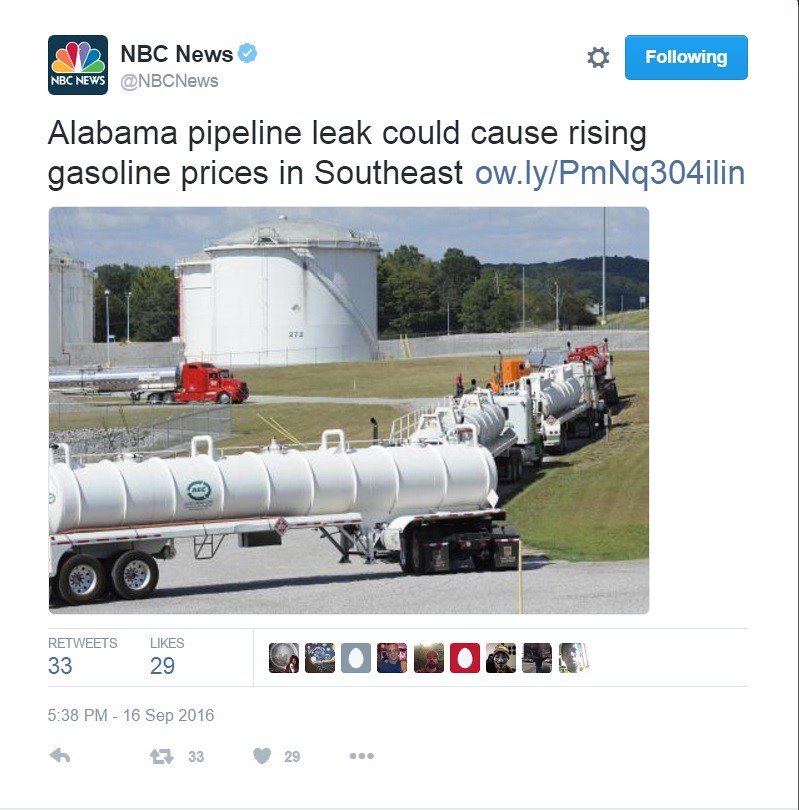
This is the question that I ask myself after viewing the following picture on twitter below:


Usually, the next question is the following:


How many gallons spilled this time?


Sounds like I am beating the same old drum.  I am.  A correction first in my initial question.  According to the news, gasoline spilled, not raw oil from the ground.  Other news sources quote oil.  Regardless, large volumes of any chemical that spills in any geographical area is not great for the environment.  Why? First, the following question:


Why can't these large oil companies get their act together and put infrastructure in place to stop such large volumes from polluting the environment?


In order to agree or disagree with me, we should explore the amount of oil that actually spilled in the cited case in Alabama.  First, I want to highlight that based on previous blog posts on my site under the theme "Large Volume Spill" -- the reported amount can be put immediately into perspective.  That is to say, if you have been reading the past blog posts, then upon reading the reported number of barrels of oil spilled, the volume should make sense.


To an extent, that realization is rather disappointing since that means this is not an isolated case.  Before we draw out more emotions, lets look at the numbers reported and subject the values to dimensional analysis.  Below is the result.  Enjoy!


How Many Gallons In A Barrel?


In order to understand the magnitude of the spill in Alabama, there are two values that need to be known.  First, the volume of oil that actually spilled -- usually reported in units of 'barrels'.  Next, the conversion factor from 'barrels' to 'gallons'.


According to the news site "NBC News," the amount of oil that was spilled was in the range of 6,000 to 8,000 barrels.  Here is an excerpt about the spill taken from the article:


It's unclear when the line started leaking, but Colonial said in a statement that the leak was detected on Sept. 9, and about 6,000 to 8,000 barrels of gasoline had been lost.

The company said there are no threats to public safety because the leak has been contained, but warned that parts of Georgia, Alabama, Tennessee, North Carolina and South Carolina gas markets would first be affected by the "disruption in supply."

Patrick DeHaan, a senior petroleum analyst with Gasbuddy.com, said prices at the pumps in those states could swell by 5 to 20 cents a gallon. "And it could be even worse," he said.


Where did the gasoline go?  According to the reports, the gasoline has 'pooled' into a 'retention pool' nearby preventing the gasoline from leaking into either the ground water or the nearby river.


Why is this so sketchy?


Why do we run a pipeline next to an important river?


Time and again, we see these designs in the interest of improving the bottom line of the petroleum companies on top of keeping Americans depend on cars.  Over the last two years, there have been enough examples of the failure of retention pools.  Think of the Gold King Mine waste spill in Colorado.  How about the Brazil mine wastewater spill?  And just a couple of days ago, there was a spill in Florida -- which I will write about in the next week or so.  In times such as these, one has to wonder why the companies want to risk damage to the environment too?


Lets put that discussion on pause for a minute in order to understand the magnitude of the spill here.


How many gallons does this volume equate to?


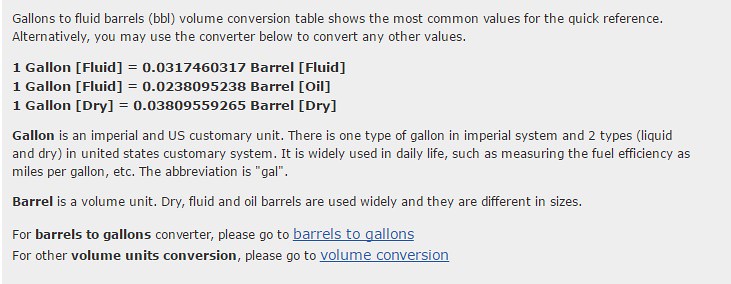
The conversion factor from a 'barrel' of oil to a 'gallon' of oil is the following provided by the website "asknumbers.com":


There are 42 gallons in one barrel.  If you perform the following calculation take 1 and divide the number (decimal number above) as follows: 1/ 0.0238 to get 42 gallons.  With these two values, the range can be calculated as shown below:


Wow!  Earlier, I suggested that based on the previous posts on this blog, the numbers should be easily put into perspective.


What did I mean by the statement?


How Does The Spill Compare To Refugio?


A couple of years ago, the California coast was once again rocked by an oil spill.  Again, in Santa Barbara.  The name of the spill was Refugio after the beach on which the oil washed up.  I wrote a blog post about the spill that has tainted the beaches below the northern beach.  We still see the effects to the environment -- which are not pretty and devastating.  Unfortunately, we accept them as part of our dependence on oil.


How does the current gasoline spill compare to the oil spill at Refugio Beach?


The Refugio oil spill was small (142,000 gallons) compared with the enormous 'Deepwater Horizon' Oil spill caused by the BP Oil drilling off shore (210,000,000 gallons).  Of course, the 'off shore' drilling was further out.  The spill near the beach in California was three orders of magnitude less than 'Deepwater Horizon'.  Still, a man-made disaster should not have happened in the first place.


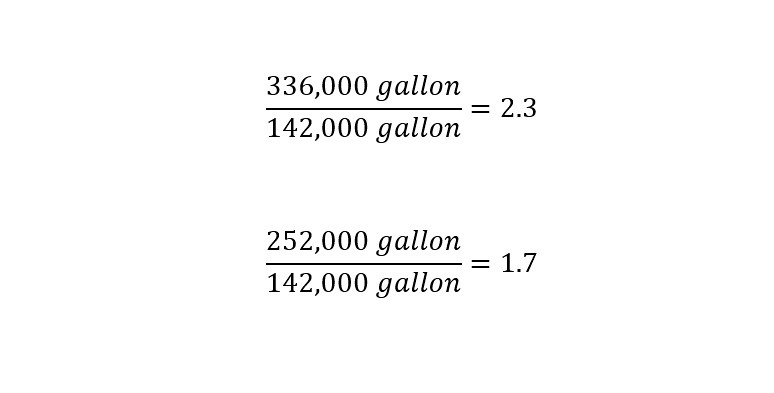
If the value of the current gas spill in Alabama is divided by the volume of the spill in Refugio Beach, the answer is the proportion of one spill to the other as shown below:


Which is to say, the results above based on the ranges calculated for the gasoline spill in Alabama suggest that the spill was 1.7-2.3 times the oil spill in Refugio Beach.  The spill overall was small compared to the previous spill entertained on this blog site.  Although, any damage to the marine environment or the public drinking water system is too much damage.


What else can be said about the volume of gasoline spilled in Alabama?


Again, if you are a consistent reader of the site, then you can look at the volume and say the following:


The amount that was spilled was relatively small in comparison to recent large volume disasters.  If we take an Olympic Swimming pool to use as a metric, not even half of the pool would be filled.  Really?  Yes, the volume of an Olympic Swimming pool is around 660,000 gallons.


You might be wondering where I got the idea to include the Olympic Size swimming pool.  In the "introductory post" for this site, I include an Olympic Size swimming pool as a metric in a dimensional analysis calculation.


Should we be worried about the spill?


Conclusion ...


Based on the last few statements, one might not be concerned about the spill due to the 'relatively small volume' of the spill.  Then I would ask the following:


If that volume were small, then why is the price of gas starting to rise as a result?


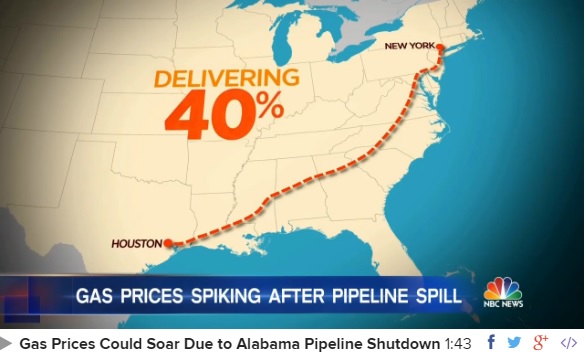
The answer is due to two culprits.  First, the amount that spilled is contained and not a huge amount -- therefore, we have lost some gas.  The second culprit is the significant parameter in the loss of gasoline.  The infrastructure is a large part of the supply chain and will need to be repaired.  Here is a diagram of the pipeline that busted and leaked gasoline taken from the video in the article mentioned above:


According to the map above, the pipeline delivers 40% of the gas to the region.  


Why do companies build pipelines like this?  


In the event of a break or leak, the entire system is shut down.  I have yet to understand the reasoning behind such construction.  


Maybe a reader can provide us with some information?  


Anyone out there work for a petroleum company want to educate the audience?


Regardless, in the Midwest, there is a current dispute with a native nation about the pipeline crossing property.  Additionally, the proposed pipeline will cross right on top of an aquifer in Nebraska.  Is this a good idea based on the current events unfolding in the nation -- with regard to large volume chemical spills?  Why don't politicians connect the dots between the two disasters?  I hate to speculate, therefore, I will end the post here.


After reading the above post, the spill should be easier to understand.  Furthermore, in the future, a spill will be easier to cast into perspective given the methodology explained in the brief post with the dimensional analysis.  Until next time, have a great day!