Over the last few years, Department of Energy Secretary Rick Perry has been on an educational journey into the variety of ways which the United States will meet the energy demands of the future. At the start of his tenure as Secretary of Energy, the major opinion of his knowledge was less than stellar -- especially on the contribution which renewable/clean energy will play on the world table in the future. With that being said, Secretary Rick Perry has since started to shy away from our dependence on coal (fossil fuel) based dependence and shifted toward Liquified Natural Gas (LNG). I must commend him on changing his view over time through educating himself.
In 1983, Cambridge Energy Research Associates (CERA) was founded in Cambridge, Massachusetts by Daniel Yergin and James Rosenfield. The energy research and consulting firm quickly became known for its critical knowledge and independent analysis on energy markets, geopolitics, industry trends, technology and strategy. Each year, CERA clients gathered for a few days in Houston, Texas to attend the executive conference where they gained insight into the energy future while connecting with their peers. Over time, the program was expanded to five days of informative sessions and networking opportunities—and named CERAWeek. More than three decades later, CERAWeek by IHS Markit has become the world’s premier energy event. The conference is distinctive in the extraordinary depth and breadth of its content and the quality of the dialogue among participants.
The top minds of energy development along with the customers to the policy makers gather to discuss the future of energy. A wide range of topics are covered including some which might at first sight seem unrelated to the global discussion of energy. Some of these will be discussed in the video below and are worth considering as part of the larger picture of energy demand as the United States along with other nations move into the future of energy. Let's listen to what Secretary Perry has in mind for the future in a brief interview below.
The video below is taken from the conference series CERA which is an interview between Carlos and DOE Secretary Rick Perry (which is 10 minutes in length):
Note: Click lower right hand side of the video screen to 'fullscreen' the video.
The future is exciting to say the least. Energy transition encompasses more than meets the eye when the average American considers the wide range of technologies which energy support (namely nearly all). Without energy, the world does not operate. We do not operate on a daily basis. How energy transition takes into account the changing global conditions such as climate change are the present topics to discuss and incorporate solutions into tomorrow's policy making decisions. Secretary Perry shows the growth needed as a high ranking government official to entertain the parameters needed to make the energy transition a reality. We should commend him on his growth through education.
Do you know how much energy is lost through the average building? What do I mean by lost energy through a building? Think about the home improvement shows which have grown in popularity in recent years. One major restriction on these types of shows which is commonly unknown -- there is a limit on how many windows which can be installed in a house renovation project. The reason is due to the amount of energy which can be lost through the window during the cold season. Not to mention the ability to 'cool' the house during the summer season -- depending on the geographical region.
A tremendous amount of energy is lost through the windows, walls, and attics -- along with every other crease, crack, joint inside buildings. A building is quite 'porous' - meaning the energy is easily - very easily lost through the structure. Which results in an increased energy consumption. Therefore, in any transition toward clean (sustainable) energy, a major part must be concerned with the improvement of building materials and construction to reduce energy usage/consumption.
In addition to the lost energy through poor energy construction, there are other factors which are impacted by the construction of a building. Ambiance is typically noted as a dominant factors such as ventilation, lighting, air flow, along with overall feeling inside the room/building. Recently, Canada came up with benchmarks for K-12 schools to aim for to reduce energy consumption. Here is the announcement shown below:
Energy benchmarking for K-12 schools
Improve learning outcomes with energy benchmarking
Studies have shown that physical environment contributes to learning and productivity. Schools that are well lit, well ventilated, and in good repair create a healthy, comfortable learning and teaching environment, which leads to better performance and achievement.
In 2005, the U.S. Environmental Protection Agency found that a typical school district spends more on energy than on any other expense except salaries. Energy costs are higher than the total for computers and texbooks combined. Furthermore, one third of the energy is often wasted due to poorly functioning equipment, poor insulation and outdated technology. Energy benchmarking can help shrink the waste and reduce the costs, especially if students are actively engaged in monitoring and finding ways to reduce energy use. Benefits that can arise from regular energy benchmarking include the following:
-- Schools can use savings from improved energy performance to help pay for building improvements and other upgrades that enhance the learning environment.
-- Energy improvements can help free up resources so they can be redirected towards educational materials.
-- A more energy efficient structure will simultaneously help pay for those investments through cost savings over time.
-- Improving the energy efficiency of the school can serve as a key learning tool for students in terms of science, math, the environment, and social and fiscal responsibility.
-- By being more energy efficient, schools across Canada can help reduce greenhouse gas emissions.
Collect the data you need to benchmark your school
The ENERGY STAR® Score for K-12 Schools in Canada applies to a building or campus of buildings used as a school for Kindergarten through Grade 12. It does not apply to CEGEP, college or university classroom facilities and laboratories, or vocational, technical, trade schools or daycare facilities. These schools will still benefit from energy benchmarking and can obtain an energy use intensity (EUI) value to identify energy-saving priorities.
To obtain a 1-100 ENERGY STAR score, in addition to your school’s basic tombstone information, you need the following building data:
-- Gross floor area for each building
-- Gross floor area of gymnasium
-- Student seating capacity
-- Number of employees
-- Percent of each building that is cooled
-- Percent of each building that is heated
-- High school (yes/no)
-- Energy Use
Specific energy billing information for each building for all purchased energy. You will need to begin with at least 12 consecutive months for each energy source and update regularly with monthly usage data.
Note that the above information is not required to start benchmarking. You can start using the tool to track your energy performance no matter how much data you have. However, in order to obtain the 1-100 score or an energy use intensity value, you need the details above.
Apply for certification
If your school earns a score of 75 or higher and meets certain other criteria, it could be eligible for ENERGY STAR certification. Learn more about certification and how you can apply.
The plan outlined above might be brief but is a great starting point. As countries around the world move toward renewable/clean energy, all factors should be considered to improve the overall transition. Thinking deeply about each energy contribution (and loss) will only result in a greater outcomes (in terms of energy efficiency). Opponents may argue that more or less needs to be done. Regardless, a conversation needs to be started on the transition toward a better more efficient building construction.
Getting toward a cleaner energy economy will take both time and energy. Although, if the conversation does not start now on various paths toward achieving greater energy efficiency, no progress will be made in years to come. The European Union has been at the forefront of financing (giving confidence) to various countries who start to make the transition. Here in the United States, the conversation has begun. That is good progress given the size and scope of the transition for our nation.
Last October, Governor Jerry Brown signed into law the realization that by 2045 California will be a net zero (carbon neutral) economy/state. That rocked the news for a while, and news circulated about the transition. Speculation as to whether that transition was even possible came from the conservative side of the state, whereas the more liberal side of the state claimed that the law was not enough to make the Paris Agreement targets.
Further criticism circulated in the news regarding Governor Brown's treatment of the fossil fuel industry. Critics charged that he was not being tough enough on them. These critics included those in favor of shutting down Aliso Canyon Gas Storage Facility located in Porter Ranch, California (the Valley). The following news from Mayor Garcetti last week in an article from the 'Los Angeles Times' titled "Los Angeles ditches plan to invest billions in fossil fuels, Mayor Eric Garcetti says" outlined the plan to achieve transition away from fossil fuels:
Los Angeles has steadily moved away from coal for electricity, divesting from the Navajo plant in Arizona three years ago and announcing plans to stop buying power from Utah’s Intermountain plant by 2025. But with coal, the most polluting fossil fuel, now nearly removed from the city’s energy mix, it’s time to start planning for a future with zero planet-warming energy sources, Garcetti said Monday — and that means no natural gas.
“It’s the right thing to do for our health. It’s the right thing to do for our Earth. It’s the right thing to do for our economy,” Garcetti said. “And now is the time to start the beginning of the end of natural gas.”
“This is the Green New Deal,” he added, referring to the sweeping climate change policies championed by Rep. Alexandria Ocasio-Cortez (D-N.Y) and endorsed by several contenders for the Democratic presidential nomination. “Not in concept, not in the future, but now.”
The mayor’s decision comes several months after state lawmakers passed a bill requiring California to get 100% of its electricity from climate-friendly sources by 2045, up from a previous target of 50% renewable by 2030.
This comes at the news from Los Angeles Department of Water and Power to the Mayor's office regarding the cost associated with repairing (rebuilding) the seven water cooled (ocean cooled) natural gas power plants along with three other plants at a cost of $3.8 billion. Whereas the cost to rebuilding the three other plants with solar and energy efficiency would be $2.2 billion. The time has come to transition toward total (carbon neutral) clean energy.
The Mayor has challenged LA DWP with the task and he is right to do so. Not just to make incremental adjustments. A new leader should be bold and insist on LA DWP moving at another speed, preferably WARP speed compared to their normal GOVERNMENT speed -- which is filled with obstacles and potential funding limitations. I commend Mayor Garcetti for taking a bold action step which is in line with Germany and other nations around the world. I have written on the obvious fact that the transition toward renewable clean energy is inevitable. Plus, the capital available for investment was small a few years ago, but has been growing over time.
European nations are taking bold steps to change their dependence on dirty energy. China has liberated us with the ever dropping price of solar. Solar is dropping in price as we speak. In a few years, photovoltaics will be a dominant source of energy generation. Clean solar photovoltaic energy is on its way. Current limitations in the renewable energy sector which are screamed by the opposition are 'STORAGE'. How are we (as a nation) going to efficiently store the clean renewable energy to meet off hours demand? Batteries? More research needs to be done, but is not far off.
Both the government and the private sector are racing to meet the demands of the future transition toward renewable energy. A sustainable environment is what is being asked of our nation's residents. Now, both the private sector along with the government need to make this happen. Typically, throughout history, when the pressure is applied to an industry, change happens. In this case, a range of industries are responding to a global pressure and similar to the improvements which are made during war time, the current global investment is exciting and should yield some amazing results.
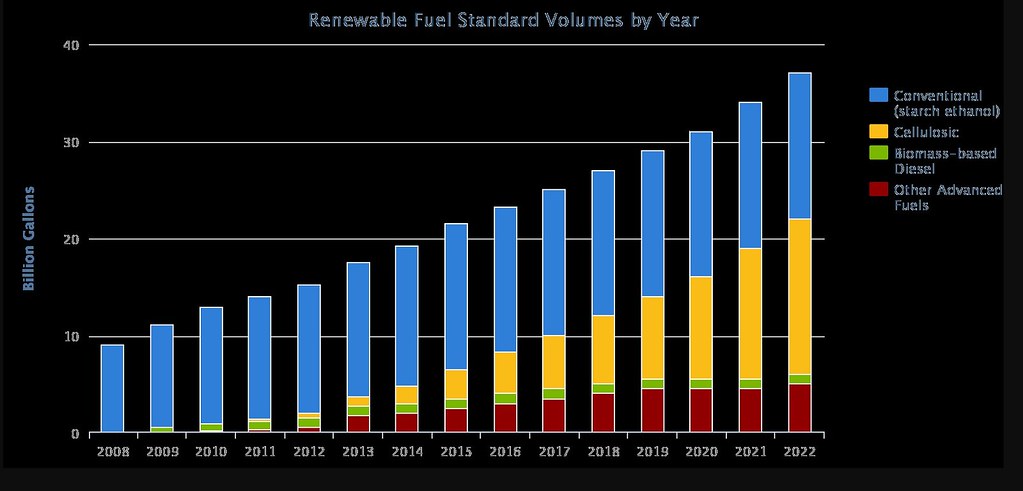
What is the motivation to move from a 'fossil fuel' based economy toward a renewable energy economy? According to an excerpt which arrived in my e-mail box yesterday morning from 'Politico Energy,' farmers are not happy with EPA Administrator Scott Pruitt's handling of the Renewable Fuel Standard as shown below:
ON THE ROAD AGAIN: Following his talks Tuesday with Kansas farmers, EPA Administrator Scott Pruitt is expected to travel today to a sorghum farm in Reliance, S.D., where corn growers will take to their tractors to protest his moves on biofuels. In particular, the farmers are angry about his proposed changes to the Renewable Fuel Standard, and they're accusing him of siding with oil refiners.
Already, Pruitt faced some heat when he met with farmers and ethanol producers in Kansas on Tuesday. "To be honest, Administrator Pruitt, we're mad as hell," Kansas Corn Commissioner Dennis McNinch told Pruitt, according to a KCC press release. "We are under attack once again from the oil industry as they try to unravel the RFS using their latest scare tactic claiming that RINs are about to put them out of business. Big oil is enjoying wide profit margins today. People like Sen. [Ted] Cruz believe that the oil industry needs to be thrown a bone. How many bones do they need?"
From Pruitt's corner, the administrator called the visit "a candid and productive dialogue" on the RFS in a statement. Statements from farmers indicate Pruitt also said EPA has the authority to reallocate blending requirements from exempted small refiners to large refiners, which farmers say would stabilize biofuel credit prices. Bill Pracht, CEO of the East Kansas Agri-Energy, the ethanol producer Pruitt visited, said in a separate statement he told Pruitt that biofuel credit prices had been so volatile over the last year that the company had idled a brand new biofuel plant.
The administrator tweeted out images from his trip Tuesday. "I strongly believe the most effective way to make decisions is to hear directly from stakeholders," he wrote. "The Trump Administration is committed to standing up for the American farmer."
And he tipped some WOTUS news: During his visit to Dedonder Farms in Kansas, the administrator told farmers that he would send the agency's new Waters of the U.S. rule to OMB later this week, according to a tweet from local media at the event.
Still, ahead of his trip today, the American Future Fund, an Iowa-based 501(c)(4) focusing on conservative and free market ideas, announced a new TV ad campaign targeting Pruitt. "Scott Pruitt is a swamp monster," the ad says. "Mr. President, you know what to do," before playing a clip of President Donald Trump declaring, "You're fired." The ad is initially set to air in Nebraska and South Dakota. Watch it here.
ON THE HILL: GOP Sen. John Cornyn says finding common ground on an overhaul of the RFS is "like trying to come up with peace in the Middle East." Cornyn has not yet put pen to paper on a bill, though he's still holding discussions and he hopes to at least introduce a bill this year. "It's not easy," he said. "There's a reason this has been hanging around for a long time. We're just trying to grind it out day by day."
Not into octane: Cornyn is not enthusiastic about swapping out the RFS for a national octane standard, a policy that seems to have taken center stage in talks led by Rep. John Shimkus. The octane standard has some backing from both oil and ethanol interests, but support will depend on the details of the plan. "No decision is made on our side," he said. "I'm not sure we need another government mandate when we're trying to get rid of one, so that's a concern."
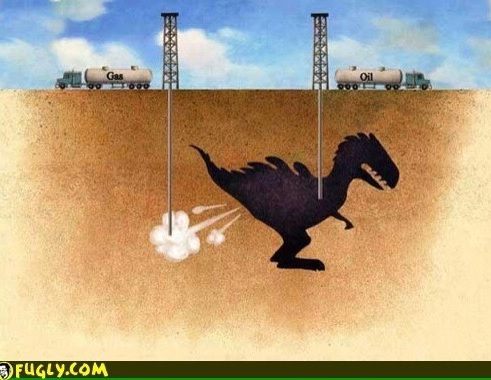
The excerpt above raises the obvious questions: Where does oil come from? The ground. Why is oil in the ground to begin with? Why is oil called 'fossil fuels'? If Google is consulted, then the following answer is shown below:
Which translates to the following picture shown below from the website 'Quora':
A picture is worth a thousand words! There are only a limited number of 'fossils' which were buried many thousands of years ago. If there have been no recent extinction events which have caused a replenishing event, then why would a society think that 'fossil fuels' will be around forever? The world operates on around 94 billion barrels a day. Oil rich regions like Iraq where oil seems to be endless are speculated to only be able to support the world for 4 years. That is, of course, if the world was drawing oil only from Iraq. Given the distribution of oil from around the world, the estimate is probably much longer.
Despite the obvious decline in investment in 'fossil fuel' based energy -- as discussed in this blog post previously, the Trump Administration continues to seek waivers for the refineries to please the oil industry. Why? I am amazed. Even after being criticized heavily by Congress - as noted in the previous blog post on the Renewable Fuel Standard.
Although, presently, the Administration is caught in their own conundrum -- which was brought on by earlier language sent out to please both parties. In earlier discussions, both the White House and the EPA Administrator seemed sincerely interested in 'bailing out' both industries -- which seemed impossible at the time -- and is now coming to light to be impossible. Lesson learned: Watch out what you promise to whom you promise!
As a result, farmers in the Mid West have now started to turn against the White House and the EPA Administrator. The turning tide might not be very strong at the moment. Although, the blatant display of displeasure is certainly a sign of the changing times. The conservative nonprofit group 'American Future Fund' has produced the following video (commercial - 30 seconds in length) calling for EPA Administrator to be fired:
Wow. Maybe the time has arrived for the White House to make changes which are more in line with the changing world. Which is to say, adhere to the targets for the Renewable Fuel Standard set by Congress. Stay within the goals set by the Paris Agreement. And drop support for the aging (and dying) coal and nuclear power plant industries. The world is changing. Why is the U.S. not in line to change with other countries? Lets start demanding change too.
Storms are inevitable in the world. How various countries and nations prepare for them is a unique trait. Here in the United States the main agency is Federal Emergency Management Agency (FEMA). The United States is a 'reactionary' nation rather than a 'proactive' nation. Instead of preparing for a disaster, the disaster occurs and then an evaluation happens after which a political sparring match occurs and finally funding arrives. Yes, I am being negative.
On top of all of that negativity is that there are dangers posed by corporations which have chemicals that need to be regulated and inspected before a storm occurs. That agency is is the Environmental Protection Agency which has been lacking to say the least. Therefore, the 'reactionary' method will employ the Chemical Safety Board. Recently, the head of which has resigned leaving the direction uncertain -- which is not good -- while entering storm season.
Chemical Safety Board
In order to understand the importance of the Chemical Safety Board, here is a short introduction from Wikipedia:
The U.S. Chemical Safety and Hazard Investigation Board, generally referred to[1] as the Chemical Safety Board or CSB, is an independent U.S. federal agency charged with investigating industrial chemical accidents. Headquartered in Washington, D.C., the agency's board members are appointed by the president and confirmed by the United States Senate. The CSB conducts root cause investigations of chemical accidents at fixed industrial facilities.[2]
The U.S. Chemical Safety Board is authorized by the Clean Air Act Amendments of 1990 and became operational in January 1998. The Senate legislative history states: "The principal role of the new chemical safety board is to investigate accidents to determine the conditions and circumstances which led up to the event and to identify the cause or causes so that similar events might be prevented." Congress gave the CSB a unique statutory mission and provided in law that no other agency or executive branch official may direct the activities of the Board. Following the successful model of the National Transportation Safety Board and the Department of Transportation, Congress directed that the CSB's investigative function be completely independent of the rulemaking, inspection, and enforcement authorities of the Environmental Protection Agency and Occupational Safety and Health Administration. Congress recognized that Board investigations would identify chemical hazards that were not addressed by those agencies.[3]
As I mentioned above, the Chemical Safety Board is a 'reactionary' step in the process of solving problems. The Environmental Protection Agency is charged with implementing regulations for keeping safe track (including storage) of chemicals used in industry. Although, over the last year and a half, EPA director Scott Pruitt has carried out 'historical' cuts as discussed in a previous post on this site. The dismissals at the EPA has put the safety of the citizens of this nation at greater risk due to the inability to regulate industries and their safe keeping of chemicals along with dangerous practices in the pursuit of saving money for shareholders. This should be concerning.
Now, according to recent reporting by Politico Energy, heading into hurricane season (or storm season), the nation is in greater danger as shown below:
CSB FAULTS HURRICANE PREP AT CHEMICAL PLANTS: The U.S. Chemical Safety Board said Thursday that chemical plants need to better prepare for hurricanes and potential floods after releasing findings from its investigation into an explosion at the Arkema chemical plant during Hurricane Harvey last summer. "Our investigation found that there is a significant lack of guidance in planning for flooding or other severe weather events," CSB Chairperson Vanessa Allen Sutherland said. "... As we prepare for this year's hurricane season, it is critical that industry better understand the safety hazards posed by extreme weather events."
— Speaking of hurricane season: This year's hurricane season is not expected to be quite as bad as last year, Pro's Ben Lefebvre reports. NOAA forecast a 75 percent chance that this year's hurricane season will be at-or-above normal levels for major storms. The likelihood is that 10-16 named storms will form, with up to four of those liable to become major hurricanes. Read more.
That reporting was over a week ago. Last Tuesday, reporting from "The Scientist" followed up with more bad news regarding the last safety net -- Chemical Safety Board:
Vanessa Allen Sutherland will resign next month as chair of the US Chemical Safety & Hazard Investigation Board. With the vacancy, the board will drop to having only three members—two short of the standard five, C&EN reported earlier this week (May 22).
“The remaining board members will be required to vote on an interim executive, unless and until the White House nominates and the Senate confirms a new Chairperson,” the board, usually referred to as the Chemical Safety Board (CSB), says in a statement. However, that nomination is in doubt, C&EN notes, as the Trump administration has twice tried to shut down the CSB altogether.
This is not great news for the fate of the Chemical Safety Board. Especially, heading into hurricane season. The Chemical Safety Board is an agency which each of us should watch closely since the fate of the organization directly impacts our well-being. Below, a video and excerpt will serve as evidence of the importance of the last chance (reactionary) organization for ensuring safety among industries.
Hurricane Season Approaches
Hurricane season is upon us according to some accounts. The question naturally arise as to whether we (as a nation) have improved our disaster preparedness from last Hurricane Season -- when Hurricane Harvey, Hurricane Irma, and Hurricane Maria ripped through some states. According to Politico Energy, Hurricane season is not going to go well for FEMA as shown below:
THE STORY OF THE HURRICANES: With just days until the June 1st start to hurricane season, a POLITICO investigation into FEMA found numerous low-income families were denied funding from the agency because they lived within a flood zone and failed to carry flood insurance — a legal requirement that many of them were unaware of.
POLITICO’s Danny Vinik reports this morning from Texas’ Kashmere Gardens — a historically African-American neighborhood in Houston that is still trying to recover from Hurricane Harvey — and the hodgepodge of programs that help middle-class neighborhoods bounce back, but leave many poor and minority areas behind. He found that many families struggle with language issues and are inexperienced in dealing with the federal bureaucracy, leaving them to navigate a system that even FEMA officials agree is overly complicated.
And while more federal money is on the way to Texas, it may take a year or more after Harvey struck to reach communities like Kashmere Gardens, which are desperately trying to rebuild, Danny writes. Yet, the problems in Houston aren’t surprising to FEMA experts and others familiar with the complicated quilt of programs designed to help those in need of disaster assistance. “This is a recurring and systemic problem that we find with the delivery of federal recovery dollars,” said Fred Tombar, the senior adviser for disaster recovery at the Department of Housing and Urban Development from 2009 to 2013. Read more here.
AND IN PUERTO RICO: The mayor of one of the island's largest cities worried about the upcoming storm season and how another hit to its fragile power grid could throw the U.S. territory back into the dark. “I’m afraid we are not prepared to receive another [hurricane],” Ponce Mayor Maria Meléndez told Pro’s David Beavers during a visit to Washington last week. “The electricity system will fall down again if we don’t manage it more rapidly.” Read that story here.
Hurricane Harvey ripped through the Houston area to produce massive problems for the area. People have the impression that the area has recovered completely - which is anything but the truth. Although, even during a good economic time in Houston, problems were widespread within the real estate industry. News accounts after the devastation caused by Hurricane Harvey detailed house buyers experience and the added costs of 'flood insurance.' Here is the page (index) for the coverage of Hurricane Harvey by NPR.
Wow. The video above drives home the importance of the Chemical Safety Board. Investigating a disaster after the occurrence is super important for the prevention of future disasters. If the government is short on resources, then who is going to investigate the problem? Furthermore, who is going to make recommendations on future practices which can be funded by Congress and passed on to regulatory agencies for future prevention of such disasters?
The importance of chemical safety regulation cannot be overstated. Chemical safety is saddled on each of us. Which sounds rather discouraging. Although, the safety of the public is at risk. Therefore, if you encounter a dangerous situation in any industry which handles chemicals, say something. Here is a minute long video which demonstrates the simplicity of chemical safety:
Chemical safety impacts all of us at some fundamental level.
Conclusion...
The uncertainty surrounding the Chemical Safety Board should be unsettling to each of us. Any attempt to dismantle this extremely important organization is a threat to each of us. Therefore, the status of the organization is important to track. If the government attempts to shut this down, as the public, we should ensure that there is an equivalent resource in place to investigate disasters and generate future reports on prevention of future disasters.
I woke up yesterday morning and checked my e-mail to find the following summary regarding a conference which spanned the last couple of days hosted by French President Emmanuel Macron called 'One Planet' -- by Politico Energy:
MAKE OUR PLANET GREAT AGAIN? Leaders, moguls, celebrities, activists and more descend on the French capital today to mark the second anniversary of the Paris climate agreement. There will be plenty of photo ops and inspirational rhetoric, but French President Emmanuel Macron hopes the One Planet Summit will add financial meat to the bones of the landmark accord. Expect new and expanding coalitions and initiatives, particularly aimed at shoring up financial aid, peaking emissions, ditching coal and helping countries already coping with the effects of climate change.
In a Monday interview with CBS News, Macron said Trump's decision to withdraw from the Paris accord actually boosted momentum for climate action and slammed the U.S. withdrawal. "It's extremely aggressive to decide on its own just to leave, and no way to push the others to renegotiate because one decided to leave the floor," the French president said. "I'm sorry to say that. It doesn't fly."
Opening the funding spigots: Nearly 1,200 companies aim to align their emissions reduction plans with the Paris agreement by 2019, and 118 have committed to get all of their electricity from renewables (enough demand to power Ukraine), the We Mean Business Coalition announced today. In addition, 54 global companies from different industries put out a joint call on Monday for framework conditions that lay the foundation for a pathway toward limiting the temperature rise to well below 2 degrees Celsius. Domestically, the William and Flora Hewlett Foundation said Monday that it will donate $600 million over a five-year period from 2018 to 2023 to nonprofits working on climate change solutions. And former New York mayor Michael Bloomberg will announce that 237 companies, with a combined market capitalization of over $6.3 trillion, have committed to voluntary recommendations on climate disclosures.
Naturally, this warmed my heart to hear the beautiful words of 'green investment' -- which entails incorporating 'climate risk' into their investment portfolios. Renewable energy is the best alternative to mitigate the risk of climate change. I clicked on the links provided in the e-mail and found former New York Billionaire Mayer Michael Bloomberg speaking on stage about the state of the world. One quote that stood out from Michael Bloomberg regarding climate change is as follows:
If we cannot measure it, then we cannot manage it...
Awesome. President Macron of France called on nations to ensure that large players (corporations and governments) call out entities who are not engaged in divestment toward 'green energy'. Over the last couple of days, the participants of the summit have come up with '12 commitments' -- which were unveiled on Dec. 12, 2017 -- representing the needed steps forward toward a renewable future.
Here is the video of the 4 hour Plenary Session filled with great commitments and needed actions on various parts of the world:
In attendance from the United States along with former Mayor Michael Bloomberg were innovators in philanthropy -- Bill Gates and Arnold Schwarzenegger -- who are driving investment into the future of the renewable energy world. Major philanthropists such as Bill Gates and Arnold Schwarzenegger have the power and influence to get further momentum from large investors like Sir Richard Branson -- who already has an initiative aimed at reducing our carbon footprint called "Carbon War Room". The Carbon War Room is a nonprofit organization aimed at shifting future investments toward renewable energy or cleaner energy away from fossil fuels in hopes of reducing the worlds overall 'carbon footprint'. Here is an excerpt from the website 'Virgin Unite':
Carbon War Room was co-founded in 2009 by Richard Branson and a team of like-minded entrepreneurs wanting to speed up the adoption of market-based solutions to climate change.
In December 2014, Carbon War Room (CWR) merged with the Rocky Mountain Institute (RMI) – a US-based NGO, dedicated to transforming global energy use to create a clean, prosperous, and secure low-carbon future –and together, they work across all energy sectors to accelerate the energy transition and reduce carbon emissions.
RMI brought more than 30 years of thinking, analytical rigor and breakthrough insight, while CWR brought over five years of entrepreneurial action. Together RMI-CWR engages businesses, communities, institutions, and entrepreneurs to make a cost-effective shift from fossil fuels to renewables.
The initiatives and environmental areas spanned by the Carbon War Room are wide as stated on the 'Wikipedia' page:
CWR has various initiatives in operation including Shipping Efficiency, Green Capital, Renewable Jet Fuels and Smart Island Economies.[4]
The focus of CWR includes these major environmental areas: Agriculture, Energy Supply, Forestry, Industry, Buildings, Transport and Waste Management.
Success with all of these initiatives is already on the horizon.
The take home message from the conference in Paris was that money is being gathered in the form of momentum to fund a transition from fossil fuels to a green energy future in the years to come. The transition is already taking place by market forces as highlighted in a video from a recent article in 'CNN' titled "France's Macron announces first 'Make our Planet Great Again' winners" shown below (which is less than 2 minutes in length):
As stated in the video, the United States will have the opportunity to re-engage with the Paris Agreement at any time. Especially, since the levels of greenhouse gas emission reductions are completely arbitrary and chosen by the respective nation at any given time. What is important for the world given that the United States President has announced the U.S. withdrawal is to have these various conferences convene and hear commitments being voiced to reinforce the marketplace - i.e. investors both on Wall Street and Silicon Valley.
Earlier posts which can be found below highlight the reality that there exists real dollar investments for sustainable energy (green energy, clean energy, etc.). The reality just needs to percolate to the entire world over time. Given the resistance is diminishing over time, the market forces will undoubtedly continue (slowly) to drive our investments toward a cleaner energy future. Education is a key factor in spreading the word among the citizens of the world of this reality. Over time, each person will come to realize the transition toward cleaner energy as a friend rather than a threat. Change takes time.