Showing posts with label natural gas. Show all posts

Monday, February 18, 2019

Los Angeles Finally Joins the Transition Away From Fossil Fuel Investment


Source: Carbon Brief


Last October, Governor Jerry Brown signed into law the realization that by 2045 California will be a net zero (carbon neutral) economy/state.  That rocked the news for a while, and news circulated about the transition.  Speculation as to whether that transition was even possible came from the conservative side of the state, whereas the more liberal side of the state claimed that the law was not enough to make the Paris Agreement targets.


Further criticism circulated in the news regarding Governor Brown's treatment of the fossil fuel industry.  Critics charged that he was not being tough enough on them.  These critics included those in favor of shutting down Aliso Canyon Gas Storage Facility located in Porter Ranch, California (the Valley).  The following news from Mayor Garcetti last week in an article from the 'Los Angeles Times' titled "Los Angeles ditches plan to invest billions in fossil fuels, Mayor Eric Garcetti says" outlined the plan to achieve transition away from fossil fuels:


Los Angeles has steadily moved away from coal for electricity, divesting from the Navajo plant in Arizona three years ago and announcing plans to stop buying power from Utah’s Intermountain plant by 2025. But with coal, the most polluting fossil fuel, now nearly removed from the city’s energy mix, it’s time to start planning for a future with zero planet-warming energy sources, Garcetti said Monday — and that means no natural gas.
“It’s the right thing to do for our health. It’s the right thing to do for our Earth. It’s the right thing to do for our economy,” Garcetti said. “And now is the time to start the beginning of the end of natural gas.”
“This is the Green New Deal,” he added, referring to the sweeping climate change policies championed by Rep. Alexandria Ocasio-Cortez (D-N.Y) and endorsed by several contenders for the Democratic presidential nomination. “Not in concept, not in the future, but now.”
The mayor’s decision comes several months after state lawmakers passed a bill requiring California to get 100% of its electricity from climate-friendly sources by 2045, up from a previous target of 50% renewable by 2030.


This comes at the news from Los Angeles Department of Water and Power to the Mayor's office regarding the cost associated with repairing (rebuilding) the seven water cooled (ocean cooled) natural gas power plants along with three other plants at a cost of $3.8 billion.  Whereas the cost to rebuilding the three other plants with solar and energy efficiency would be $2.2 billion.  The time has come to transition toward total (carbon neutral) clean energy.


The Mayor has challenged LA DWP with the task and he is right to do so.  Not just to make incremental adjustments.  A new leader should be bold and insist on LA DWP moving at another speed, preferably WARP speed compared to their normal GOVERNMENT speed -- which is filled with obstacles and potential funding limitations.  I commend Mayor Garcetti for taking a bold action step which is in line with Germany and other nations around the world.  I have written on the obvious fact that the transition toward renewable clean energy is inevitable.  Plus, the capital available for investment was small a few years ago, but has been growing over time.


European nations are taking bold steps to change their dependence on dirty energy.  China has liberated us with the ever dropping price of solar.  Solar is dropping in price as we speak.  In a few years, photovoltaics will be a dominant source of energy generation.  Clean solar photovoltaic energy is on its way.  Current limitations in the renewable energy sector which are screamed by the opposition are 'STORAGE'.  How are we (as a nation) going to efficiently store the clean renewable energy to meet off hours demand?  Batteries?  More research needs to be done, but is not far off.


Both the government and the private sector are racing to meet the demands of the future transition toward renewable energy.  A sustainable environment is what is being asked of our nation's residents.  Now, both the private sector along with the government need to make this happen.  Typically, throughout history, when the pressure is applied to an industry, change happens.  In this case, a range of industries are responding to a global pressure and similar to the improvements which are made during war time, the current global investment is exciting and should yield some amazing results.


The future is exciting.


Related Blog Posts:


Parameters: Germany Plans To Cut Coal Dependence By 2038


Over 600 Environmental Groups write letter to Congress to phase out fossil fuels


Governor Jerry Brown Leads The U.S. With Ambitious Calls For 100% Renewable By 2045 -- Wow!!!


Update: Congress asks Federal Agencies about Dangerous Chemicals -- PFOA and PFOS


Parameters: GM Lays Off Thousands Of Workers -- Why? People Are Not Buying Cars?


EPA Estimates Of Methane - GHG - are off by 60%


135 Climate Scientists Urge Prime Minister Theresa May to Challenge President Trump on his Climate Stance during visit to the UK


Parameters: Oil vs. Corn based Ethanol - A Tug-Of-War between Trump Administration and Congressional Leaders


French President Macron Calls On U.S. Congress To Save The Planet


Parameters: Shells Oil Corporation Invests In Renewable Energy Infrastructure


Parameters: South Korea Uses Renewable Energy For Olympic Games


French President Macron Organizes Climate Conference With Pledges Of Trillions Of Dollars For Climate Risk Management From World Organizations


Do You Need Clean Air To Breathe? An Introduction To Environmental Justice


Environmental Entrepreneurs Weigh In On Repealing The Clean Power Plan


EPA Blatantly Suppresses Scientific Results Regarding Climate Change?


EPA Director Finally Realizes Reality Of Trying To Roll-Back Obama Era Clean Air Act Regulation




Thursday, September 20, 2018

Boston Natural Gas Explosion Reveals Old Piping Needs Replacement - Enough To Travel To Colorado?


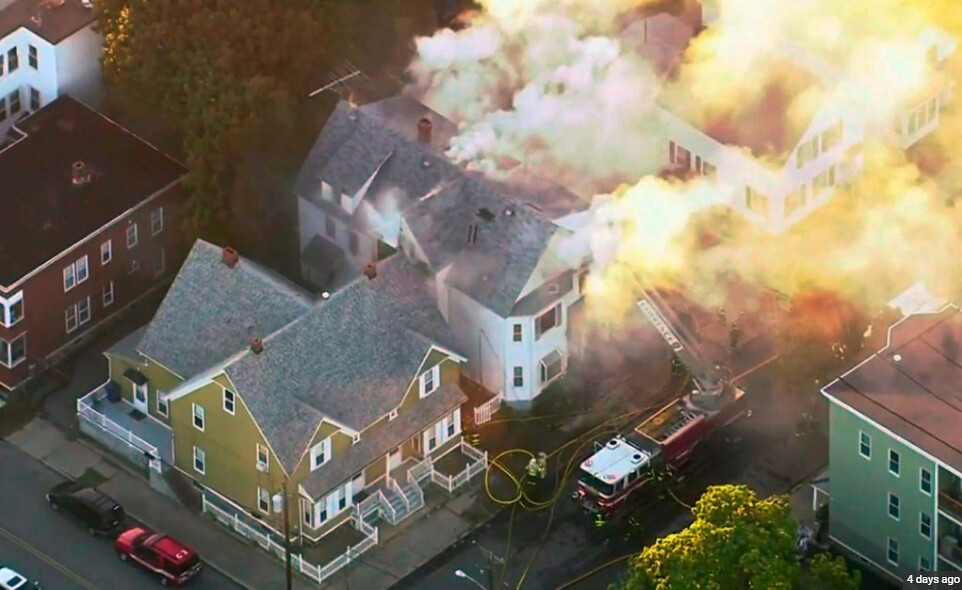
Terrible tragedies occur daily in certain regions.  In other regions, the frequency may be less so.  For the case of an explosion due to a natural gas leak, the frequency is small at the moment.  That frequency could be changing over the course of a decade due to badly aging pipeline (infrastructure) in Boston.  Recently, there was an explosion which destroyed 39 homes in a fire which started as a leak from a natural gas source. In the blog post below, the terrible event is cast into light for the reader to understand the extent of possible future damage that lies beneath the ground.


Aging Pipeline?


According to a news article in 'USA Today' titled "Natural gas explosions: Boston-area gas pipes among oldest and leakiest in US" a natural gas explosion was caused by aging pipes which are abundant in various cities across the United States:


The Merrimack Valley, the area north of Boston that was shaken by dozens of natural gas explosions Thursday, is served by some of the nation's oldest and most leak-prone pipes.
Investigators have yet to determine what caused the gas explosions that burned at least 39 homes in the towns of Lawrence, Andover and North Andover. But the gas utility that serves the area has more miles of old, cast-iron gas mains than all but 15 utilities in the nation, according to a USA TODAY analysis of federal safety data.


 Unfortunately, according to the Pipeline and Hazardous Materials Safety Administration, the replace of the corroded/damaged iron pipes is not required by law.  This is after years of the Pipeline and Hazardous Materials Safety Administration has spent years trying to convince utility companies to replace (i.e. invest) iron piping across the United States.


Currently, Boston has enough pipe which needs to be replaced to cover the ground needed to travel between Boston and Colorado.  Wow! According to the article cited above:


In the Boston area, Boston Gas in the metro area and Columbia Gas in the Merrimack Valley combine to use more than 2,200 miles of old iron mains. That's more iron gas pipe than is still in use in 45 other states combined. 


Of course, in the same article the limiting step (main obstacle) for the utility companies is cost.  The cost to replace the aging pipe with plastic roughly is around $1 million dollars per mile.  Wow! I can see how the utility companies would be resistant toward change at such a cost.  In order to get a more clearer understanding of the cost of $1 million dollars per mile, lets perform a brief dimensional analysis on that figure -- 2,200 miles worth of aging piping.


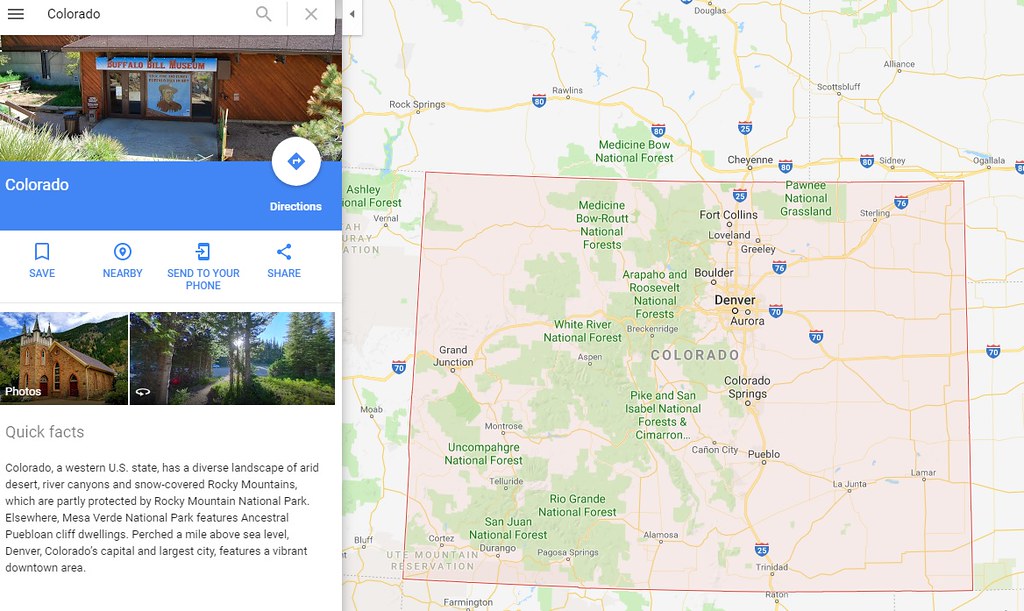
If GoogleMaps is consulted by typing into the search bar "Colorado" then hitting enter, the answer is shown below:


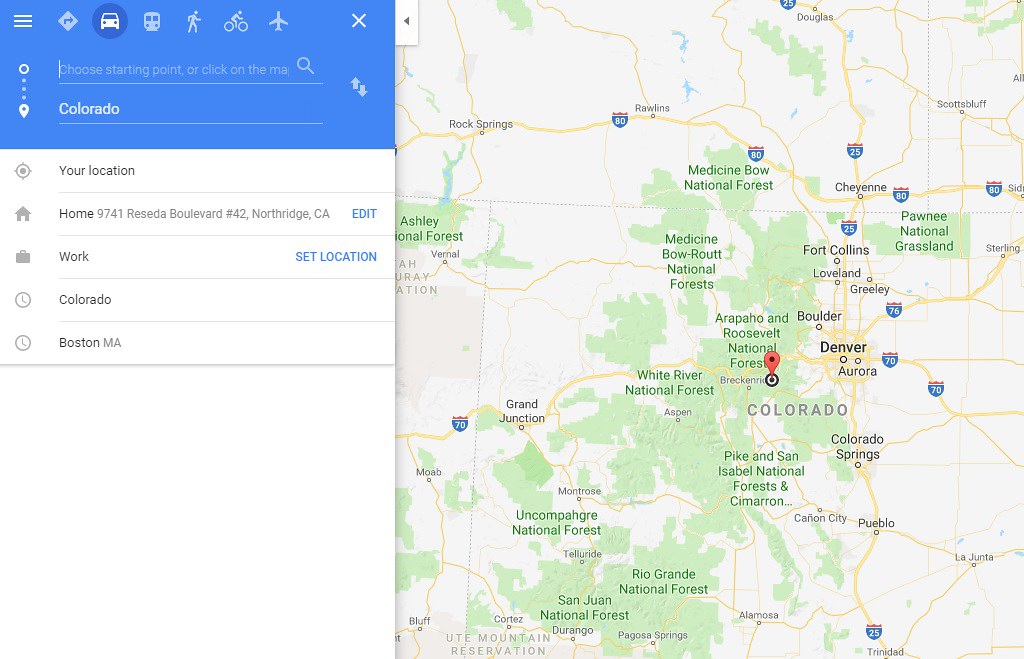
Which shows a map of Colorado.  Now, if we zoom in onto the search function within GoogleMaps on the upper left hand corner of the screen, the picture appears as follows - shown below:


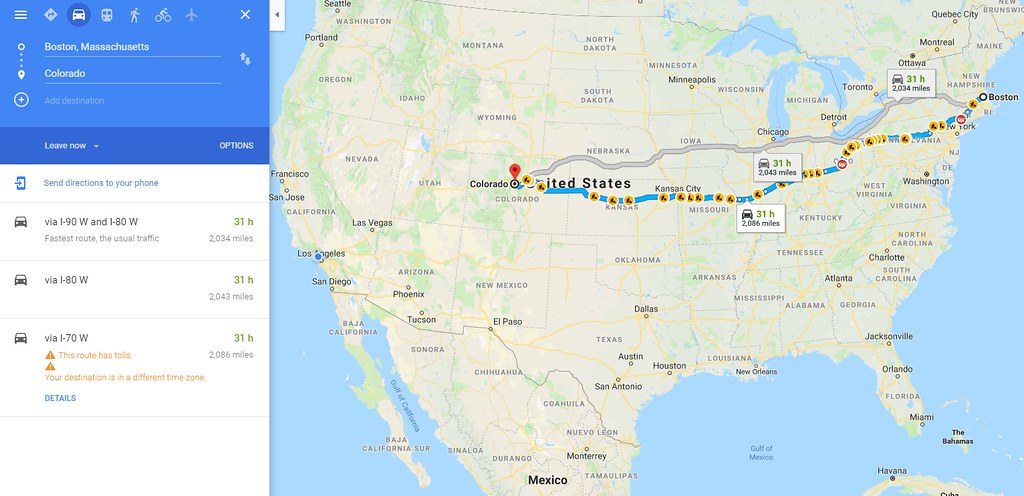
The picture is difficult to resolve the box in the upper left hand corner.  Although, the point is that there is a space to enter the 'starting point' (starting destination) and the ending destination is already filled with 'Colorado'.  Upon entering the entry 'Boston MA' and pressing enter, the map is shown below with different routes between the two points:


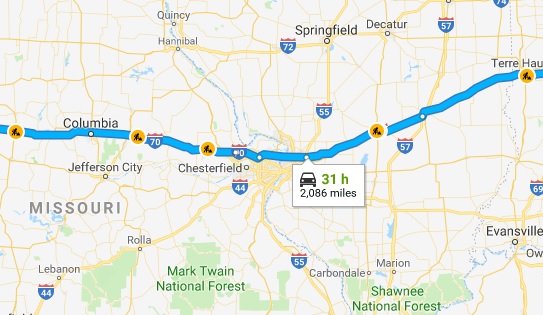
If the route is 'zoomed in on' the image below is shown with the route information - i.e. time, distance - as shown below:


The total distance between Boston (MA) and Colorado is 2,086 miles.  Traveling by car would take an estimated 31 hours.


What does one make of this analysis?


Especially in relation to the article above regarding old iron gas pipes which need to be replaced?


The cost of replacing a mile of old iron pipe cited above was around $1 million - does that make sense?  Possibly with all of the digging and reapplication of asphalt to cover the new pipe (not to mention the cost of plastic piping).  The construction costs can certainly add up over the course of any analysis.  What is important here is the following:


Replacing 2,200 miles of piping is equivalent to replacing a pipe extending from Boston (MA) to Colorado.  


Wow!  Looking at the distance in this respect casts the project into a much different light.


What Contributes to Pipe Degradation?


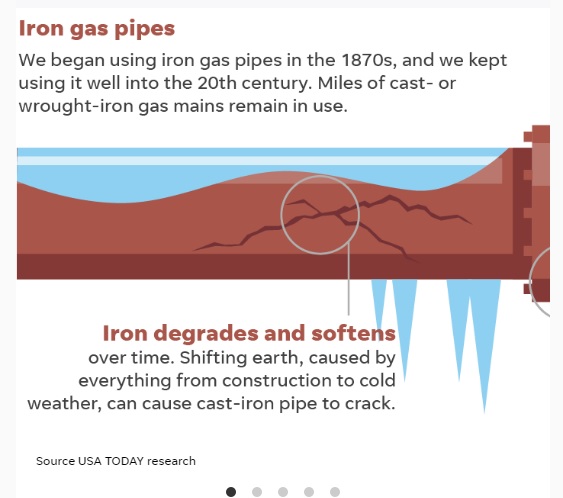
Last but not least, a brief exploration (and I mean brief) into the various causes (parameters) which contribute to the degradation of iron pipes (or steel in other cities) might be useful the reader.  Especially, since a few images were provided in the article cited above with text.  I have taken the images and pasted them below to give a brief tour of parameters which contribute to the degradation of pipes (underground) over time.


Source: USA Today


In the image above, the points are made regarding the aging of iron pipes simply due to shifting earth -- whether caused by weather or local construction is of concern to the residents around the city.  Additionally, city officials should consider the projects and weather patterns when thinking about aging pipes and a timeline to replace such pipes.


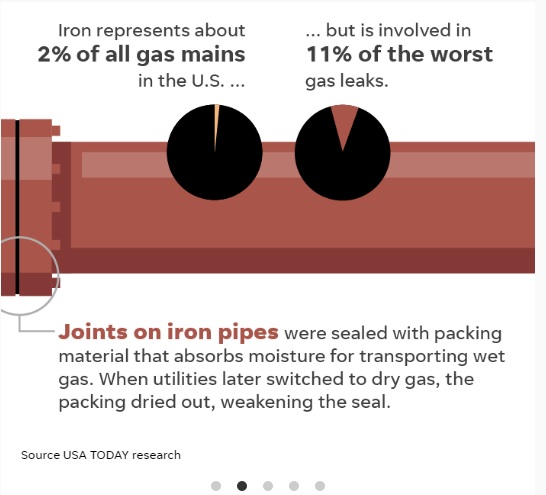
Speaking of weather, the 'joints' in between two sections of pipes used to be made out of a material which absorbed moisture since the natural gas running through the aging pipe contained moisture.  Recently, the moisture has been removed.  With the removal has left the interior 'joint' material to dry out and potentially form a leak as shown below:


Source: USA Today


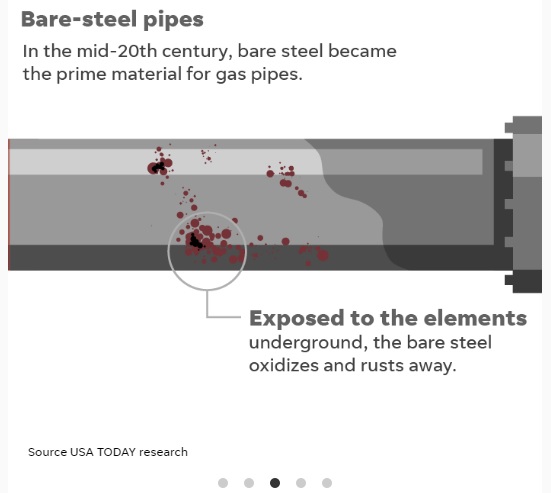
New or replaced piping should not contain such material. Over time, steel piping came into fashion to be used over iron piping.  The issue surrounding steel is that inevitably, the metal surface (exterior) will be subjected to the local elements in the underground.  Such elements will promote oxidation reactions which will cause rust or corrosion and weaken pipes or form leaks as shown below:


Source: USA Today


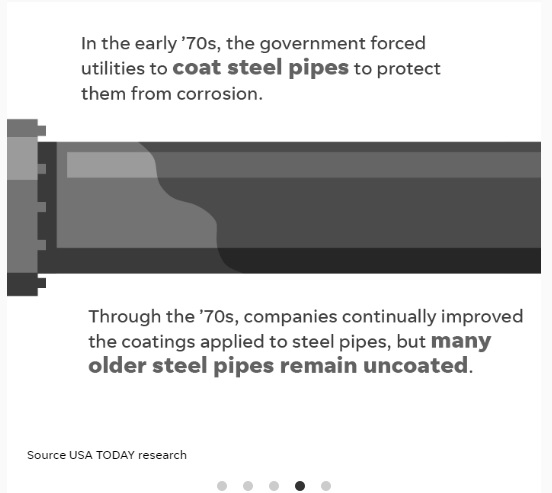
In order to mitigate (reduce) such corrosion or rust reactions from occurring, a 'coating' was applied to the steel pipes before installation.  Of course, sitting under ground which might be shifting or exposed to varying weather patterns, the 'coating' is inevitably going to react and disappear over time.  Further, the older steel was not coated. Which could have other problems listed above:


Source: USA Today


Conclusion...


The terrible tragedy of last weeks explosion due to a leak in the pipes running underneath a city carrying natural gas is devastating to say the least.  In fact, the only observation that is worst than the tragedy is the fact that there exists still 2,200 miles worth of remaining 'aging piping' which could give way at any time and cause another explosion.  In the blog post above, I cast the large number of remaining miles of iron piping still underneath the residents of Boston in terms of a single 'one way' trip from Boston to Colorado.


One has to really stop and pause to comprehend the danger which lies beneath them -- when staring at the map in the blog post above.  Just think of the time and energy costs of replacing the pipe.  The replacement will not happen over night to be sure.  But if nothing happens, then what remains is the potential danger of another tragedy.  Hopefully, the mayor of Boston steps up and implements guidelines to replace the piping in a swift timeline.  The safety of the residents (of the US) is of paramount importance to us all.


Related Blog Posts:


A Forecaster Predicts That Hurricane Florence Will Drop Enough Rain To Fill 18,400 Mercedes-Benz Superdomes

Hurricane Harvey Drops Enough Rain On Houston To Fill 560 Dallas Cowboy Stadiums


How Much Water Is Contained In All Oceans Around The Globe?


Storm Raises Water Level In Lake Cachuma By 31 feet, How Much Water Is That?


How To Make Sense Of Water Flowing At 100,000 Cubic Feet Per Second


Can 11 Trillion Gallons Of Water Fill 14,000 Dallas Cowboys Stadiums?


How Much Rain Did The East Coast Receive From Hurricane Matthew?


How Much Rain Did Haiti Really Receive?


How Much Rainfall Has Dropped On Louisiana?


How Big Was The "Water Bomb" Of Rainfall In Macedonia?


How Much Rain Did Huauchinango (Mexico) receive?


How Much Rain Did Elliot City (Maryland) Really Receive?


If The Mosul Dam Breaks, The City Of Mosul Would Be Under 65 Feet Of Water?


What is the volume of water in a few inches of rain?


Volume of Waste in the Mine Spill (in Brazil) Equivalent to 78 Deepwater Horizon Oil Spills