Over the course of the last few years, manufacturers using lithium ion batteries have run into difficulties with the overheating of the battery leading to a fire. Think of the Boeing Dreamliner Aircraft, Tesla Motors, and more recently Samsung -- each have had their trials and tribulations with lithium ion battery technology. Of course, the downfall of such problems could be fatal and lead to the loss of life. Which leads me to the following question:
Is there any technology to prevent fires in Lithium Ion batteries?
Recent research suggests that new research shows promise of preventing future fires. In the paragraphs below, I will explain with a few pictures taken from the original article of interest.
Why Do Batteries Catch Fire?
A diagram of a lithium ion battery is shown below:
A diagram of the setup of a lithium battery circuit is shown above. The overarching idea behind a battery is to convert chemical energy into electrical energy used to power a circuit (a load) in an electrical device or through the wall socket. In the diagram above, the generic schematic is shown for any battery using lithium ions in the present case. Here are the steps operation to generate electricity from a battery:
1) On the left hand side at the electrode labeled "Anode" an oxidation reaction occurs which generates "free electrons" to move up through the circuit (or load -- i.e., cellphone, iPad, flashlight, etc.).
2) Once the reaction is complete, the lithium ions (now positively charged after losing an electron -- negatively charged) diffuse back through the middle divider (called the separator) to the other side of the battery.
3) When the lithium ions (positively charged) reach the opposite electrode called the "Cathode" and proceed through a reaction called a reduction reaction -- in which the positive ion is reduced back to a neutrally charged lithium ion.
Note: these reactions are reversible giving rise to the ability to recharge the battery -- restore charged state.
In the diagram above, the electrodes are represented by "poles" but in reality, the design of electrodes consists of layers of 'electrodes'. That will be important in understanding the ingenuity of the research results below in the next section.
Problems with the lithium ion battery are centered around the fact that the battery catches on fire. That is a major problem for a car own, a pilot of a commercial jet, and other industries on which depend on lithium ion batteries. The following question comes to mind:
How do the batteries catch on fire? What is the major cause of fires?
The major cause of the fires are related to the rate of charging and discharging of the lithium ion battery. According to an article in the magazine the 'Economist' titled "Why lithium batteries keep catching fire" the reason why the lithium ion batteries catch fire are related to the following properties of the material:
The attraction of a lithium-ion battery is that lithium is the least dense metallic element, which means that weight-for-weight it can pack more power than other types of battery. But lithium is also a highly reactive substance; it belongs to the alkali metal group, which contains sodium and potassium, the high reactivity of which will be familiar from school chemistry classes. Like all batteries, lithium ones consist of two electrodes separated by an electrolyte. Typically for a lithium cell the electrolyte is a solution of lithium salts and organic solvents. When the battery is charged, lithium ions are driven from the electrolyte into a carbon anode. When the battery is discharged they flow back, creating a balancing flow of electrons in a circuit that powers the device. The trouble comes about if there is a small fault or damage is caused to the extremely thin separators that keep the elements of the battery apart. This can lead to an internal short-circuit and a subsequent build-up of heat. This can trigger what is known as a “thermal runaway” in which the battery overheats and can burst into flame. That can cause adjacent battery cells to overheat, which is why groups of cells in some battery packs (such as those used in Tesla cars) are kept in separate protective compartments. Lithium batteries can also be damaged by using them in hot environments, and by excessive discharging and charging—which is why most lithium batteries contain special circuits to prevent this. Catching fire if something goes wrong, then, is in their nature.
Does that explanation make sense?
In order to understand the reason for "thermal runaway" the picture of the battery that we need to have is of a "layered" series of electrodes which sandwich a "separator". Think of a stack of credit cards in your wallet. How each of the cards have their own slot (pocket) in your wallet. The middle pocket would be represented by the "separator" in the above diagram. That would make a thin battery right? Well, look inside of your cellphone some time and you will see that the battery is quite thin.
This means that any "point defect" or misalignment of the electrodes could potentially serve as a point to "short circuit" the battery and cause thermal runaway. Any bump or irregularly rough surface that makes up an electrode can serve as a point for thermal runaway. Furthermore, during the process of charging and discharging, "plating" of atoms occur at either end of the battery at the electrodes during their respective reactions (i.e., oxidation and reduction). Therefore, if the lithium ions or atoms do not attach to the electrode in a smooth manner, then the surface will have defects which can serve as a point for thermal runaway.
In the image below, the surface of the lithium electrode can be seen and is labeled on the right-hand side of the image. The bump or "spur" growing off of the surface of the lithium electrode can serve as a point for 'short circuiting' or 'thermal runaway.'
The growths or 'spurs' have been a problem for researchers of battery technology for quite a long time. Designing a battery which controls growth and simultaneously charges/discharges quickly is very difficult. Like everything else in the world, eventually designers reach a point where they must trade-off one advantage for a disadvantage. Consumers cannot have a fast charging/discharging battery which is perfect and without defects. Which is why the results of the research below are promising.
Now that the basic operation of the lithium battery is known along with the major source of fires, lets explore the new research below which could potentially mitigate the problems mentioned above.
How To Prevent Fires Inside Batteries?
As I mentioned above, recent research has shown the possibility of preventing fires in batteries. In an article from the website "ChemistryWorld" titled "Fire-fighting lithium–ion battery doesn’t compromise on performance" new research surrounding a "built-in" flame retardant system has been discovered. Here is an excerpt describing how the flame retardant will work below from the article:
Now, a team of researchers from Stanford University, US, has developed a safety mechanism that could counter the flammable nature of the liquid organic electrolytes used in these batteries. The team’s work focuses on the batteries’ separator – a membrane which is used to stop a battery’s electrodes from coming into contact, while still allowing charge-carrying ions to move through the cell. In the new separator, a flame retardant phosphate is enclosed in an electrospun polymer casing. If the battery overheats, the casing melts and releases the phosphate into the liquid electrolyte, preventing or extinguishing any flames.
‘Generally, people need to make a trade-off between battery electrochemical performances – capacity, cycle life, etcetera – and flame retardancy of lithium ion batteries, as the flame retardants that are popularly used can significantly damage the batteries,’ explains Yi Cui, who led the research. ‘Using our “smart” separators, the batteries’ electrochemical performances will not be affected… However, once there is potential thermal runaway, the flame retardancy property will be activated, and nip the fire/explosions in the bud.’
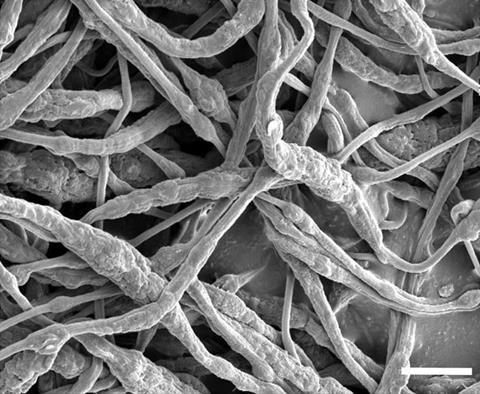
The process by which the material is made is to 'electro-spin' the polymer (the flame retardant) onto the material that acts as a separator. Here is an image of the polymer coating taken from the article but shows a highly magnified picture of the coated fibers below:
The image above shows a rather messy view of the new coated material. Although, the resolution is a fraction of a strand of hair. Yes, you did read correctly. In the lower right-hand corner of the image is a 'white bar' which represents the 'scale' of the image. The original research article lists the scale at 5 micro-meters. A strand of hair is around 70 micro-meters -- that is 0.000070 meters versus 0.000005 meters. Most materials look like the one above at that resolution.
Now that you have an idea of what the material looks like at an up close (microscopic) level, lets look at the system at the macroscopic level. Shown below is video which was embedded in the article mentioned above from "Chemistry World":
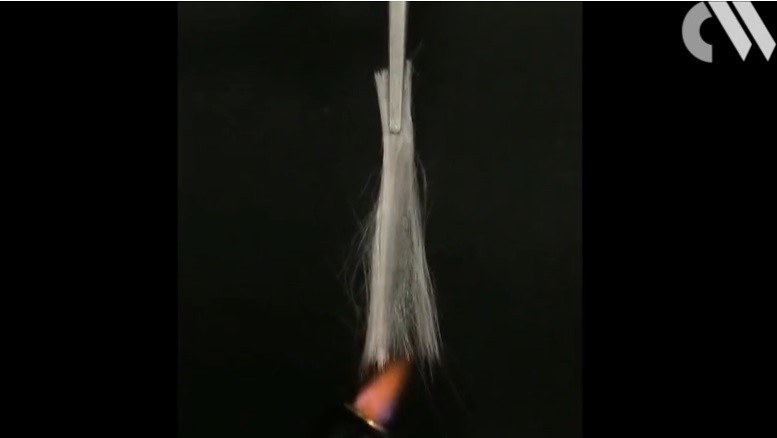
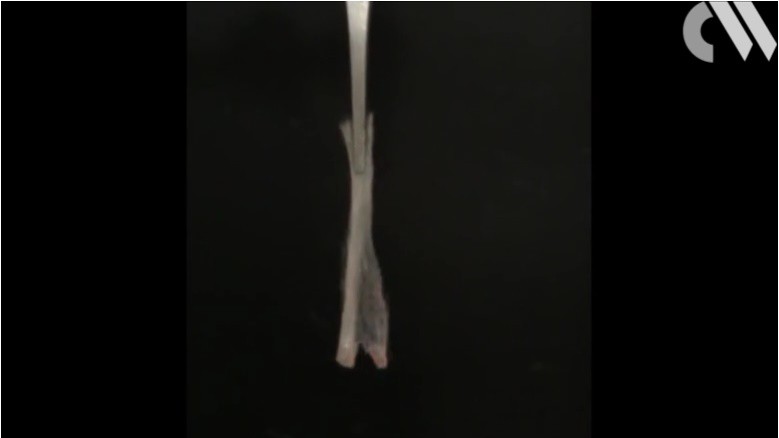
The video above was short. You might miss the effect of the 'flame retardant' (polymer) coating if you were not watching closely. In light of this observation, I decided to break up the video into screenshots below to illustrate the point. Starting with the first image which is of the fiber before combustion:
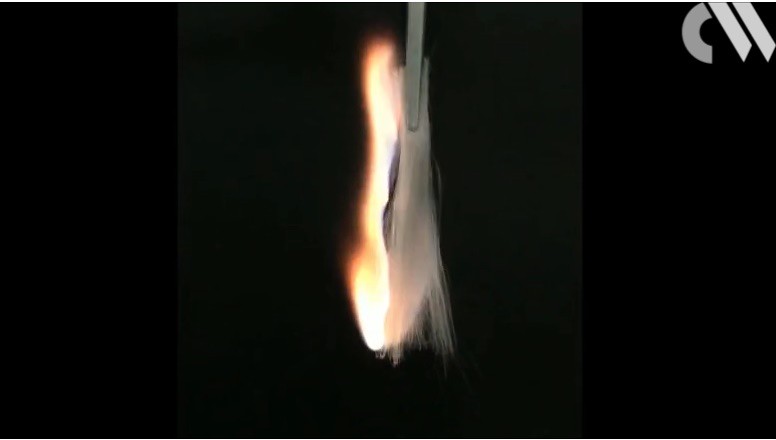
Upon inspecting the image above, you will notice that the flame is right underneath the fiber -- which does not contain any flame retardant coating. Next, the fiber catches fire and starts to burn up the fiber strands as shown below:
Notice how the flame immediate catches on to the entire bundle of fibers. Now, if the fibers were coated in the polymer which contains flame retardant, the situation would be much different. Below is the same bundle of fibers -- except the coating of flame retardant has been applied to the bundle:
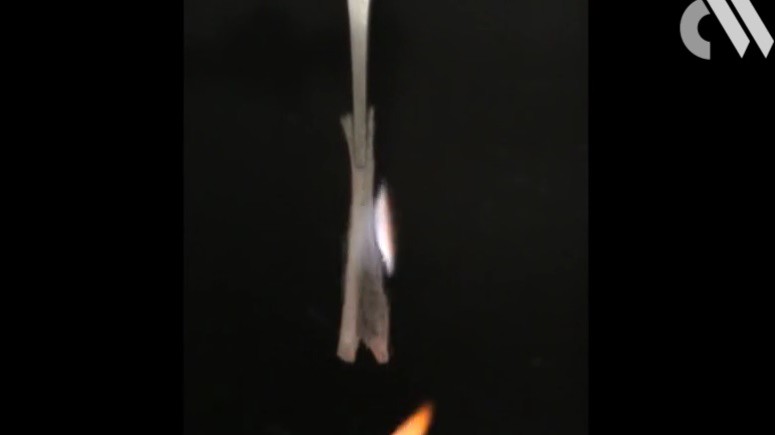
You might be thinking that the flame will catch onto the bundle and ignite. Although, you would be wrong. In the image below, the flame tries to catch on and work up the bundle -- not successfully as shown below:
The flame tries to catch onto any part of the fiber. The flame continues to move up the bundle of fiber with no success of actually igniting due to the release of the flame retardant in the polymer coating. Eventually, the flame is extinguished by the flame retardant that has been released inside of the polymer coating. The coated bundle of fibers remain unharmed as shown below:
These results are promising since the 'separator can play a large role in diffusing a fire that starts in a battery. From the diagram of the lithium battery taken from the website "How Stuff Works" above, you might be asking yourself how can a coated "separator" stop a fire that originates at the electrodes. In the diagram above, there appears to be sufficient space. That is, the battery appears to be a box with space between the electrodes and the separator.
Anyone who owns a cellphone and has taken out the battery will understand that space is very limited. In the image below, the diagram for a lithium ion battery is taken from a cell phone:
With the diagram above, the space restriction is very apparent. Therefore, if the separator in the diagram above was coated with a flame retardant inside of a polymer, then any potent fire would be immediately extinguished.
Conclusion...
Lithium ion batteries have been around for decades. They have been overhauled and studied to perfect a battery that is suitable for the cell phone and other devices where space is limited but power is much needed. The problems that scientists are overcoming today were present from the beginning. Although, with the emergence of the field of 'materials science' -- there are new possibilities present that were seemingly unknown to us decades ago.
The possibility of incorporating a flame retardant into a polymer that will be released on contact with heat is extremely promising to a field which has revenue loss in the millions due to this problem. Hopefully, there will be other systems which will work just as well and we can mitigate any lethal problem associated with lithium ion batteries. To date, the lithium ion battery is most promising. Other systems have been proposed, yet are still in the research phase. Stay tuned.
Last week, I received an email from the trade magazine "Laboratory Equipment" with the daily e-mail alerts to the most recent research being released. Usually, scientists will only read the top science journals like "Nature" and "Science". I like reading those journals too and receive their emails also. Anyways, in this particular e-mail was an article that almost knocked me off my seat behind my desk. The article was titled "Trump Administration Bringing Federal Agencies, Science and Funds to Heel" and contained the following introduction shown below:
The new directives from various federal agencies have started to centralize the message and mission of the various agencies – including the Environmental Protection Agency and the U.S. Department of Agriculture.
The USDA’s Agricultural Research Service and its employees are all banned from sharing information with the press and public, according to a Monday email acquired and published online by BuzzFeed.
“Starting immediately and until further notice, ARS will not release any public-facing documents,” wrote Sharon Drumm, chief of staff for the Service. “This includes, but is not limited to, news releases, photos, fact sheets, news feeds, and social media content.”
All requests for public information are now going through the agency’s office of communications in Washington, D.C., the site reported.
The Environmental Protection Agency has frozen all its grant programs – and also prohibited any contact with the press and the public through releases, statements, social media blasts, and other forms of communication, according to another internal message obtained by The Huffington Post.
The EPA freeze also includes honoring existing contracts, according to ProPublica. The grants and expenditures include research funding, air quality monitoring, pollution cleanups, and other ongoing endeavors. The freeze was unveiled by an anonymous EPA staffer – considered unusual for a transition move of the sort. Myron Ebell, who led Trump’s EPA transition but who has since returned to the Competitive Enterprise Institute, told ProPublica the extent of the Trump administration’s actions to review all policies and expenditures is more extreme than in previous presidential transitions.
After reading the above excerpt from the article, I was shocked. The following questions arose immediately:
1) Can the President restrict the research that the public sees that is 'tax-payer' funded? 2) How will the public access science that is released through federal agencies"? 3) What are the implications of such measures for the public at large?
The questions above are the result of the news. I am still shocked to see that this occurs. Although, in the article, the author did state through interviews that the process is normal with the transition of each incoming Presidential administration. In the paragraphs below, I show through examples of the scope and implications of such measures implemented by President Trump.
An Open Letter to President-Elect Trump and the 115th Congress
Scientific knowledge has played a critical role in making the United States a powerful and prosperous nation and improving the health and well-being of Americans and people around the world. From disease outbreaks to climate change to national security to technology innovation, people benefit when our nation’s policies are informed by science unfettered by inappropriate political or corporate influence.
To build on this legacy and extend the benefits of science to all people, including Americans who have been left behind, the federal government must support and rely on science as a key input for crafting public policy. Policy makers and the public alike require access to high-quality scientific information to serve the public interest. There are several actions Congress and the Trump administration should take to strengthen the role that science plays in policy making.
First, creating a strong and open culture of science begins at the top. Federal agencies should be led by officials with demonstrated track records of respecting science as a critical component of decision making. Further, recognizing that diversity makes science stronger, administration officials should welcome and encourage all scientists regardless of religious background, race, gender, or sexual orientation.
Second, Congress and the Trump administration should ensure our nation’s bedrock public health and environmental laws—such as the Clean Air Act and the Endangered Species Act—retain a strong scientific foundation, and that agencies are able to freely collect and draw upon scientific data to effectively carry out statutory responsibilities established by these laws. They should also safeguard the independence of those outside the government who provide scientific advice.
Third, Congress and the Trump administration should adhere to high standards of scientific integrity and independence in responding to current and emerging public health and environmental threats. Decision makers and the public need to know what the best-available scientific evidence is, not what vested interests might wish it to be. Federally funded scientists must be able to develop and share their findings free from censorship or manipulation based on politics or ideology. These scientists should, without fear of reprisal or retaliation, have the freedom and responsibility to:
1) conduct their work without political or private-sector interference
2) candidly communicate their findings to Congress, the public, and their scientific peers
3) publish their work and participate meaningfully in the scientific community
4) disclose misrepresentation, censorship, and other abuses of science
5) ensure that scientific and technical information coming from the government is accurate
Finally, Congress and the Trump administration should provide adequate resources to enable scientists to conduct research in the public interest and effectively and transparently carry out their agencies’ missions. The consequences are real: without this investment, children will be more vulnerable to lead poisoning, more people will be exposed to unsafe drugs and medical devices, and we will be less prepared to limit the impacts of increasing extreme weather and rising seas.
These steps are necessary to create a thriving scientific enterprise that will strengthen our democracy and bring the full fruits of science to all Americans and the world. The scientific community is fully prepared to constructively engage with and closely monitor the actions of the Trump administration and Congress. We will continue to champion efforts that strengthen the role of science in policy making and stand ready to hold accountable any who might seek to undermine it.
The letter was signed by over 5,500 scientists. The take-home message to President Trump is that scientists are watching made under your guidance to make sure that politics is not interfering with the natural progression of science. Meaning, that science research grants funded by federal agencies are not in any way hindered by the political process. The President can decide which research has priority over other research -- which is a direct interference of politics in science.
In past administrations, there has been varying degree of political interference. Which is why the issue is brought up by scientists at the beginning of every administration. Here is another excerpt from the Union of Concerned Scientists website in an article titled "2300 Scientists from All Fifty States Pen Open Letter to Incoming Trump Administration" which was a precursor to the actual letter above:
The letter lays out several expectations from the science community for the Trump administration, including that he appoint a cabinet with a track record of supporting independent science and diversity; independence for federal science advisors; and sufficient funding for scientific data collection. It also outlines basic standards to ensure that federal policy is fully informed by the best available science.
For example, federal scientists should be able to: conduct their work without political or private-sector interference; freely communicate their findings to Congress, the public and their scientific peers; and expose and challenge misrepresentation, censorship or other abuses of science without fear of retaliation.
There are many gears to the motor which drives science funding. An incoming administration is the master part of the motor -- the circuit board. The various gears are driven by both houses of congress -- which ultimately delivers the funds to the federal agencies to disperse. The houses of congress are driven by elected representatives -- who respond to their constituents who elect them. Therefore, science is funded by the people of the United States. Which leads me to the next point regarding science funding.
To be fair, the lack of funding for science cannot all be laid on the shoulders of government. Scientists themselves are part of the problem. Scientists need to get out of their labs and communicate the work (and its) importance to the public. Further, scientists could point out to the general public that the results of their "tax-payer" funded research is available for free online. I will show you very shortly what I mean by that.
Science outreach is critical to engage the young in pursuing future careers in science. Just a couple of weeks ago, I participated in a science fair contest as a judge. The experience was very meaningful for me along with the 3rd graders with whom I got to engage with (through interviews) regarding their projects. I wrote a blog on the experience which came out recently.
As a disclaimer, I thought that I needed to distribute the blame for lack of funding throughout the science community and government. Part of the issue is how we (scientists) disseminate the work of experimental observation. The results are usually typed up into academic journals which are set up high on a pedestal and unavailable to the general public except through a high paywall. Yes, the dissemination of science is too complicated and out of control as far as cost. Most of the cost goes to the publishers which make scientists more angry.
Try to access an article from a premier journal like "Science" or "Nature" and look at the cost associated with a given article. You will find that an article can run as low as $18 for a copy. Remember, the results of the article were funded by 'tax-payer' dollars.You (the public) funded the research -- should the results not be freely available to you? This is a topic for debate and also a reason for the continuing emergence of "open-access" journals publishing science. The argument against "open-access" journals is the lack of quality. Although, with the audience reading the journals, mistakes are found more readily than before. Especially with the competition among researchers for grant funding. Competition is driving innovation and error detection.
In the paragraphs below, I will show you how to access the published results of our 'tax-payer' funded research from a few regulatory sites. My methodology in searching can be extended to any regulatory agency. Meaning, you can go on any regulatory agency site (FDA, USDA, NIH, NSF, EPA, DARPA, DOE, DOD, etc.) and look for press releases that give a short description of the research and the results along with a reference to the journal in which the work was published.
Where To Find Scientific Results?
As I just mentioned, each regulatory agency (those I just mentioned above) has a website and offers press releases which give the public an idea of the research that was funded by the public and the results along with a reference to the original publication. The dissemination of science funded research is critical for the public. Why?
What if you had a rare type of cancer in which there was an ongoing trial to test a treatment? Would you like to pay money to find out the results which you pre-paid for through your taxes? What about if your town just received a small grant to improve the drinking water? Would you be interested in the amount of the grant and the scope of the project (how the money can be spent)?
Questions like these might be answered by various regulatory agencies sites through their respective 'news room' which offers press releases. Below are a few images (screenshots) of federal agencies websites. I took a screenshot highlighting the press releases.
Regulatory Websites
As I mentioned above in the introduction and elaborated in the first section, restricting the publics ability to view science research which has been published is a serious threat. In this section, I will show you some of the websites from various government regulatory agencies. After viewing and reading this section, the potential threat of shutting down the communication of science to the public will become vary apparent. And remember, the research, grants, and news press releases are all paid by our (the U.S. public) tax-dollars. We own fund the research, we own the results of the research!
The United States Environmental Protection Agency[2] (EPA or sometimes USEPA) is an agency of the Federal government of the United States which was created for the purpose of protecting human health and the environment by writing and enforcing regulations based on laws passed by Congress.[3]....
The agency conducts environmental assessment, research, and education. It has the responsibility of maintaining and enforcing national standards under a variety of environmental laws, in consultation with state, tribal, and local governments. It delegates some permitting, monitoring, and enforcement responsibility to U.S. states and the federally recognized tribes. EPA enforcement powers include fines, sanctions, and other measures. The agency also works with industries and all levels of government in a wide variety of voluntary pollution prevention programs and energy conservation efforts.
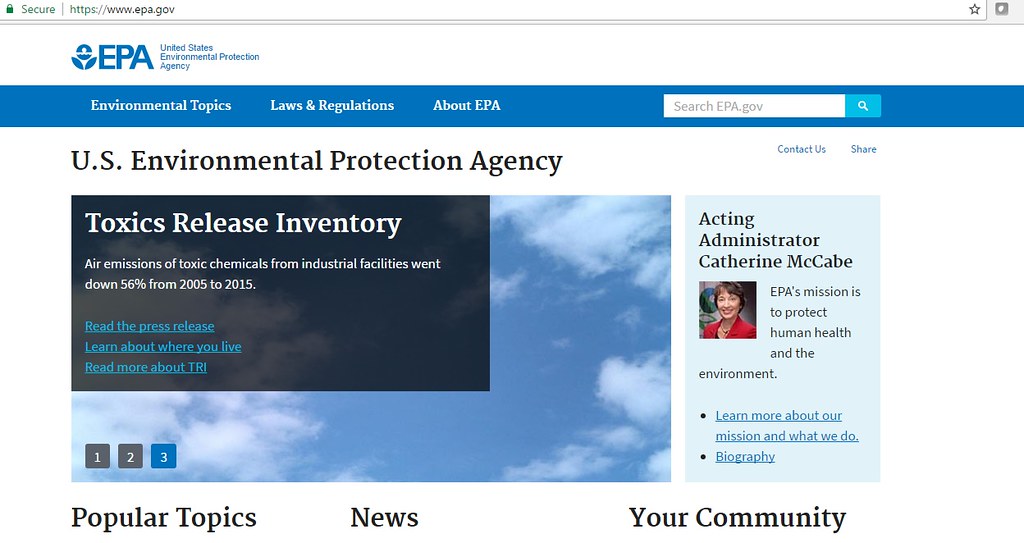
Below I show an image of the webpage that you would encounter if you visited the site "www.epa.gov":
As you can see, the top of the page has a header with the following drop down menus under: "Environmental Topics", "Laws & Regulations", and "About EPA". The amount of information contained within the pages under these menus is absolutely amazing. For instance, under "Environmental Topics" a list includes the following topics to choose from:
1) Air
2) Bed bugs
3) Chemicals and Toxics
4) Environmental Information by Location
5) Greener living
6) Health
7) Land, Waste, and Cleanup
8) Lead
9) Mold
10) Pesticides
11) Radon
12) Water
13) A-Z Index
Imagine if you were wondering about dangerous chemicals like mercury, then proceeding the the 'Chemicals and Toxics' page would lead to a wealth of knowledge. Any new regulations and research into the toxicity of mercury could be found on this site.
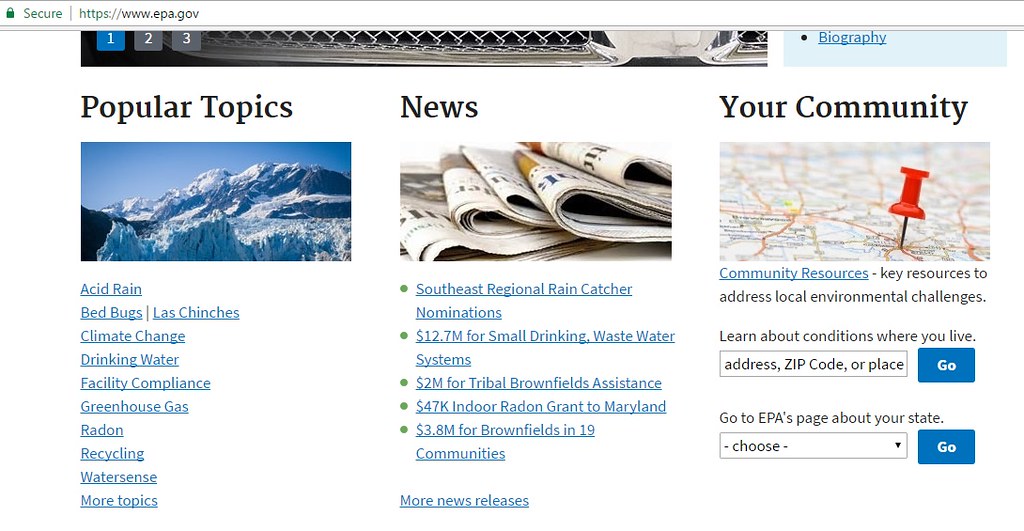
Proceeding down the webpage, there are three subsections shown below: "Popular Topics", "News", and "Your Community".
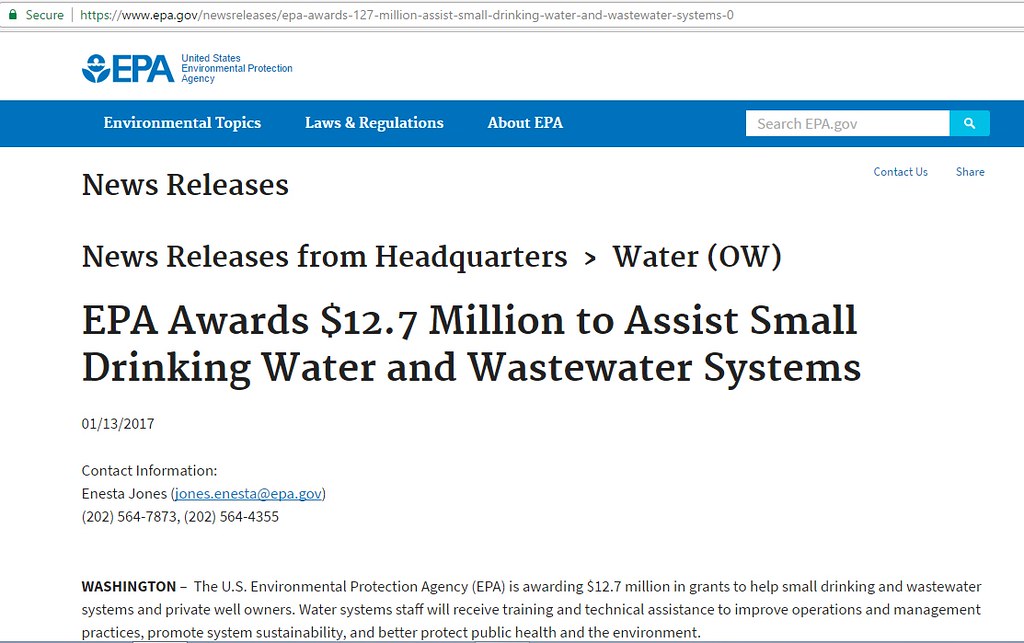
If you were to 'click' on a highlighted news story such as "$12.7M for Small Drinking, Waste Water Systems," you would be directed to the webpage shown below:
This might be of interest to you if you had recently applied for a grant to overhaul your home 'well' and 'wastewater' systems as highlighted in the introduction:
The U.S. Environmental Protection Agency (EPA) is awarding $12.7 million in grants to help small drinking and wastewater systems and private well owners. Water systems staff will receive training and technical assistance to improve operations and management practices, promote system sustainability, and better protect public health and the environment.
These grants sound very useful in providing safe drinking water. None of us need to be reminded of the disaster in Flint (Michigan) with their tainted water supply to know that investments into clean water is a good investment toward a healthy water system later down the line.
Although, grants and regulatory practices are not the only information contained on the EPA's website. There is a blog titled "Our Planet, Our Home" which details various actions taken and success stories by the EPA. Click on the blog page and stories like the one shown below will appear.
Who is not interested in learning about the actions taken by the EPA along with future plans to clean up communities that have been abandoned by factories which moved overseas with their jobs. The EPA site is amazing and paid for by us -- the U.S. Taxpayer dollars -- check it out.
Could you imagine not having access to the information above and relying solely on the words of politicians?
2) U.S. Food & Drug Administration:
The next regulatory agency is the United States Food & Drug Administration which regulates a wide range of topics from everything we eat to everything we inhale. Here is an excerpt from the 'Wikipedia' page for the U.S. FDA below:
The Food and Drug Administration (FDA or USFDA) is a federal agency of the United States Department of Health and Human Services, one of the United States federal executive departments. The FDA is responsible for protecting and promoting public health through the control and supervision of food safety, tobacco products, dietary supplements, prescription and over-the-counter pharmaceutical drugs (medications), vaccines, biopharmaceuticals, blood transfusions, medical devices, electromagnetic radiation emitting devices (ERED), cosmetics, animal foods & feed[5] and veterinary products.
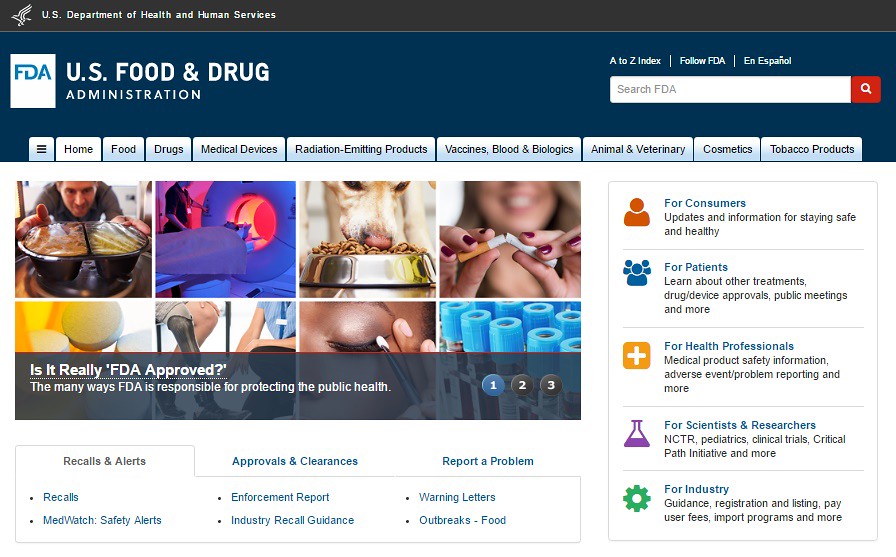
The webpage is shown below:
A few of the topics on the site with drop down menus are:
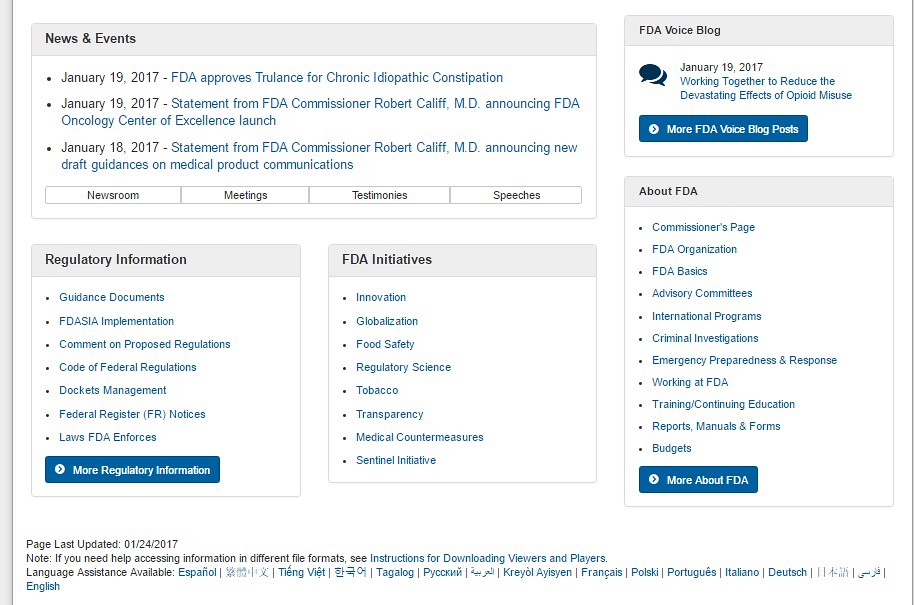
Pretty much all consumer products are covered by the FDA if they involve our body. Shown below is the bottom part of the webpage which is filled with important information.
For instance, if you were a patient who suffers from Chronic Idiopathic Constipation. Furthermore, you just heard about the possibility of the FDA approving a new treatment (drug) called Trulance. You could visit the FDA website and look under the subsection "News & Events" to find a story about the recent approval of the drug on January 19, 2017. How good is that?
Having access to the information contained on the FDA website is a matter of life and death in some cases. Additionally, being able to access critical information on hot topics like 'electronic cigarettes' can help clarify misconceptions and possibly reduce addiction to nicotine products. Understanding where the science is at a given point is the job of the FDA from a regulatory position.
But what about the science research that is ongoing? What if you are interested in basic research into a disease mechanism? Where do you find out information regarding a disease? Where would you find information on different forms of diabetes? Where do you look for that type of information?
The FDA has information regarding the regulatory procedures for treating the ailments listed above. Further, the FDA would approve a drug to be used to treat two different diseases (orphan drugs). But when you are looking for information into the state of government funded research into a disease, you would search on the next two regulatory sites -- which are also publicly funded by our tax-dollars.
3) National Institutes of Health:
The National Institutes of Health has a mission that is stated simply on the "Wikipedia" page shown below:
The National Institutes of Health (NIH) is a biomedical research facility primarily located in Bethesda, Maryland. An agency of the United States Department of Health and Human Services, it is the primary agency of the United States government responsible for biomedical and health-related research. The NIH both conducts its own scientific research through its Intramural Research Program (IRP) and provides major biomedical research funding to non-NIH research facilities through its Extramural Research Program.
With 1,200 principal investigators and more than 4,000 postdoctoral fellows in basic, translational, and clinical research, the IRP is the largest biomedical research institution in the world,[3] while, as of 2003, the extramural arm provided 28% of biomedical research funding spent annually in the U.S., or about US$26.4 billion.[4]
The NIH comprises 27 separate institutes and centers that conduct research in different disciplines of biomedical science. The IRP is responsible for many scientific accomplishments, including the discovery of fluoride to prevent tooth decay, the use of lithium to manage bipolar disorder, and the creation of vaccines against hepatitis, Haemophilus influenzae (HIB), and human papillomavirus (HPV).[5]
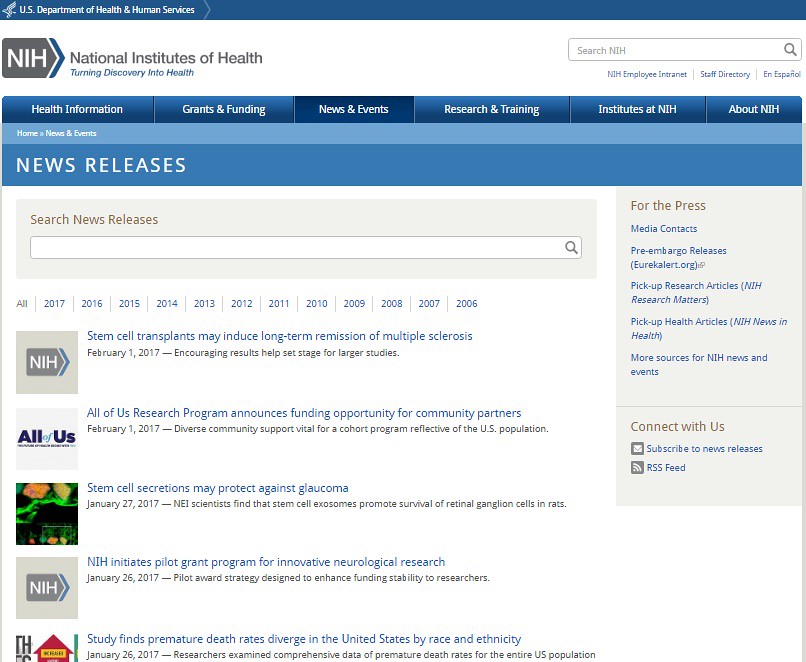
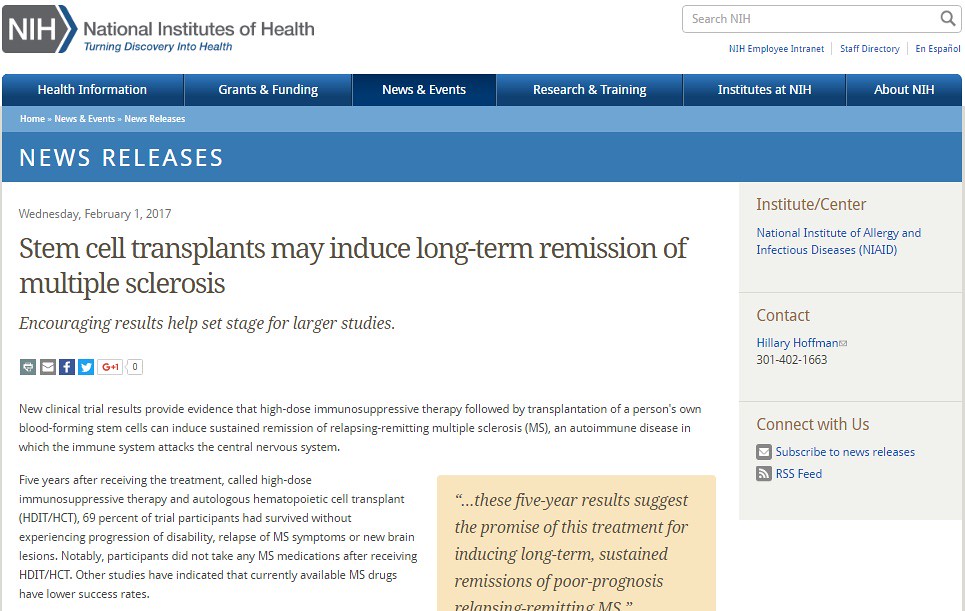
The webpage for the National Institutes of Health is shown below:
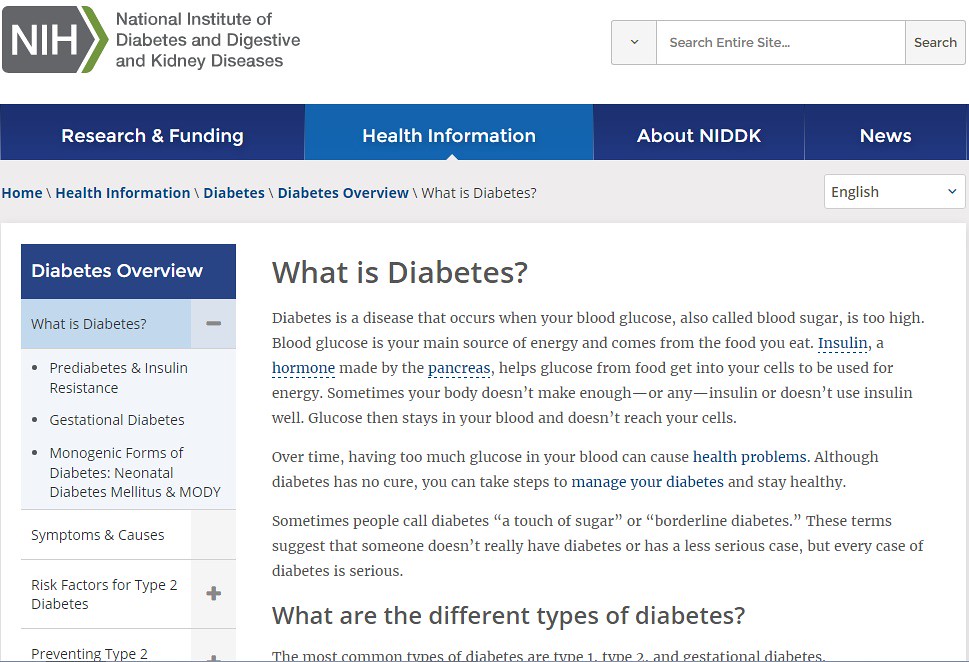
The header on the top of the website contains the following topics for 'drop down menus': .... Notice on the lower set of boxes are titles of diseases which have information and updates about the research behind them. If you clicked on the highlighted text for 'diabetes' the following webpage would pop up on your screen which is shown below:
Information regarding the nature of diabetes along with the various types of diabetes that exist.
What if you suffered from the debilitating disease of 'multiple sclerosis' and were searching for a new treatment? This page would interest you -- specifically the first topic titled "Stem cell transplants may induce long-term remission for multiple sclerosis."
The following introduction reads:
New clinical trial results provide evidence that high-dose immunosuppressive therapy followed by transplantation of a person's own blood-forming stem cells can induce sustained remission of relapsing-remitting multiple sclerosis (MS), an autoimmune disease in which the immune system attacks the central nervous system.
Five years after receiving the treatment, called high-dose immunosuppressive therapy and autologous hematopoietic cell transplant (HDIT/HCT), 69 percent of trial participants had survived without experiencing progression of disability, relapse of MS symptoms or new brain lesions. Notably, participants did not take any MS medications after receiving HDIT/HCT. Other studies have indicated that currently available MS drugs have lower success rates.
The rest of the brief article describes the study further in depth and gives the original journal where the research was published. Information like the results above are hope of life for a certain portion of the population who suffer from Multiple Sclerosis. The following question comes to mind when thinking of the value of the excerpt above:
Imagine if you had a form of Multiple Sclerosis that did not respond to any of the medication or treatment available on the market today?
Investing in the research performed through the funding by the National Institutes of Health is extremely important. We need to continue to support these agencies. The research above is steered toward the field of biomedicine. What about other areas of science? Physics? Chemistry? Who funds these areas of research? Read on below to find out.
4) National Science Foundation (NSF):
Next is the basic research counterpart to the NIH, the National Science Foundation. The mission of the National Science Foundation is shown below taken from the "Wikipedia" page:
The National Science Foundation (NSF) is a United States government agency that supports fundamental research and education in all the non-medical fields of science and engineering. Its medical counterpart is the National Institutes of Health. With an annual budget of about US$7.0 billion (fiscal year 2012), the NSF funds approximately 24% of all federally supported basic research conducted by the United States' colleges and universities.[2] In some fields, such as mathematics, computer science, economics, and the social sciences, the NSF is the major source of federal backing.
The research conducted that is funded by the National Science Foundation is wide in scope. Topics span from physical science through the life science along with engineering and computer science to name a few. For example, a recent blog post that I wrote regarding how chemists discover drugs has a short video which explains how funding for new drugs emerge from agencies like the NSF and NIH.
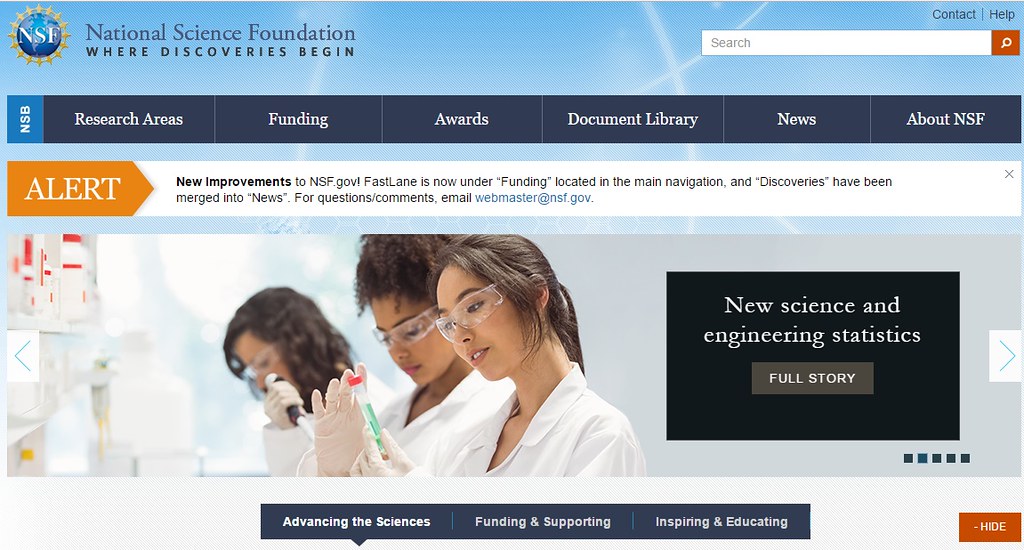
The webpage for the National Science Foundation is shown below:
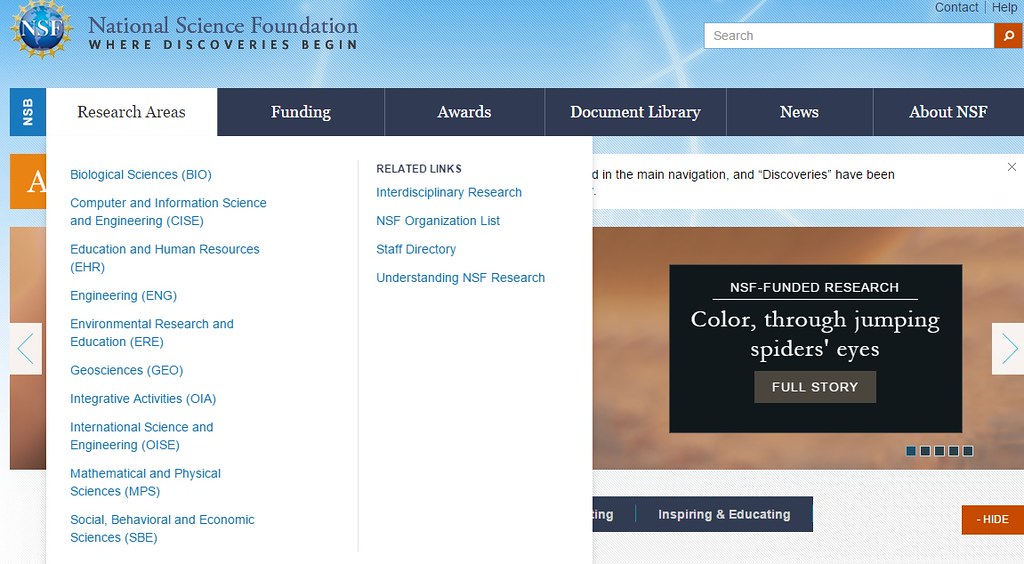
Across the top of the page are the following drop down menus: "Research Areas," "Funding," "Awards," "Document Library," "News," and "About NSF." If you were to choose the first drop down menu the following image would appear as shown below:
With the following choices of subjects to choose from:
1) Biological Sciences (BIO)
2) Computer and Information Science and Engineering (CISE)
3) Education and Human Resources (EHR)
4) Engineering (ENG)
5) Environmental Research and Education (ERE)
6) Geosciences (GEO)
7) Integrative Activities (OIA)
8) International Science and Engineering (CISE)
9) Mathematical and Physical (MPS)
10)Social, Behavioral and Economic Sciences (SBE)
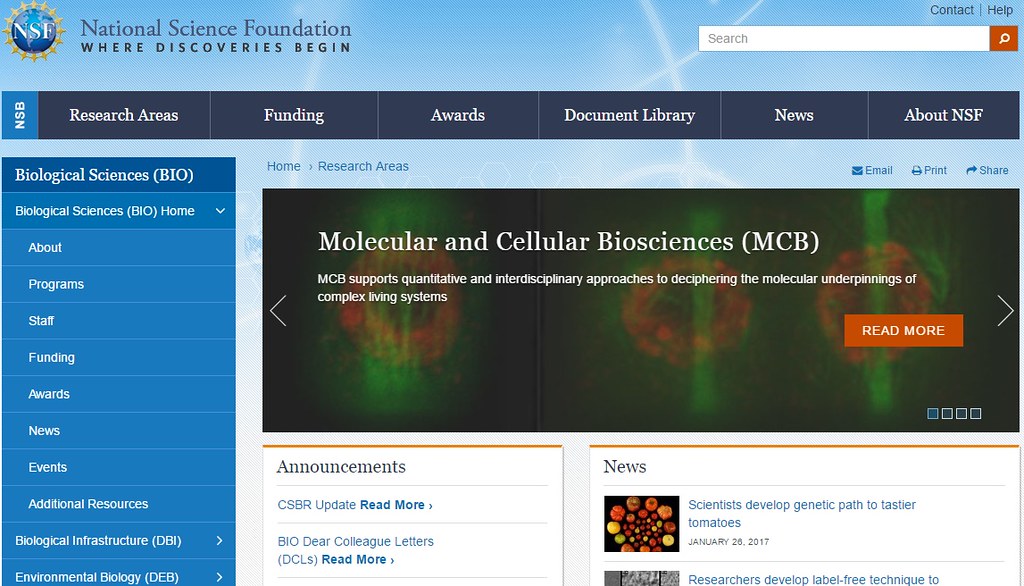
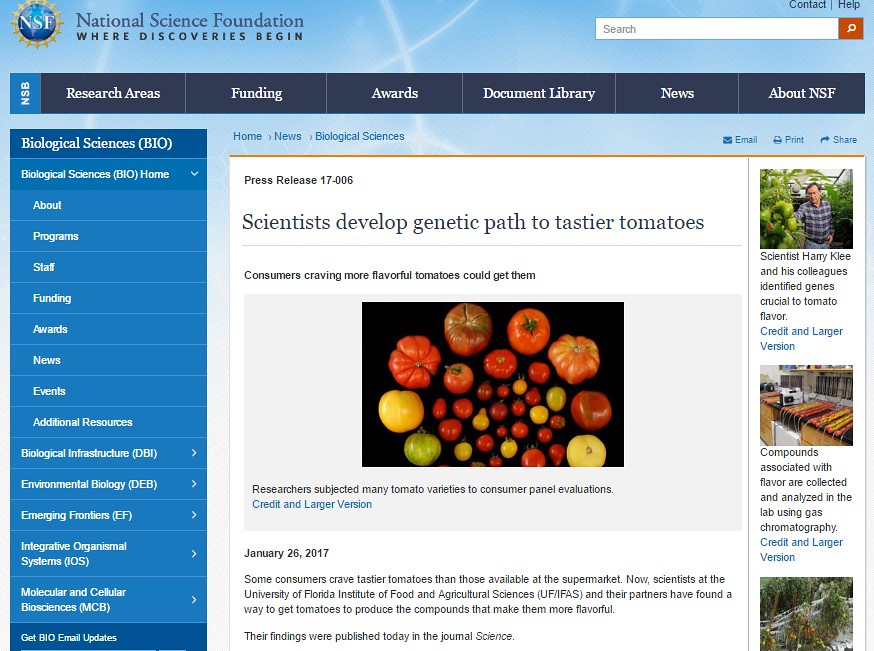
If you were to choose the first subject "Biological Sciences" then the following webpage would appear below:
Notice that there is a section titled "News" in the lower right-hand corner of the image above. If you were to click on that story, the following webpage would appear with a development in the area of genetically modified tomatoes -- a breakthrough:
The story reported is brief and to the point regarding the funded research and its importance:
Some consumers crave tastier tomatoes than those available at the supermarket. Now, scientists at the University of Florida Institute of Food and Agricultural Sciences (UF/IFAS) and their partners have found a way to get tomatoes to produce the compounds that make them more flavorful.
Their findings were published today in the journal Science.
"Around the world, the tomato is one of the most popular foods," says Gert de Couet, director of the National Science Foundation (NSF) Division of Integrative Organismal Systems, which supported the research. "This state-of-the-art analysis sets the stage to return it to the taste of decades ago by breeding informed by molecular genetics."
Step one for UF/IFAS horticultural scientist Harry Klee and his colleagues involved finding out which of the hundreds of chemicals in a tomato contribute the most to taste.
Next, Klee said, they asked: "What's wrong with modern tomatoes?" As it turned out, modern tomatoes lack sufficient sugars and volatile chemicals critical to better flavor. Those traits have been lost over the past 50 years, says Klee, the Science paper's lead author.
The researchers began looking at tomato alleles (one of two or more alternative forms of a gene that arise by mutation and are found at the same place on a chromosome). Alleles determine specific traits in organisms, whether tomatoes or people. Klee likened this to how different versions of genes in humans influence traits such as height, weight and hair color.
"We wanted to identify why modern tomato varieties are deficient in flavor chemicals," Klee said. "It's because they have lost the more desirable alleles of a number of genes."
The scientists then zeroed in on the locations of those alleles in the tomato genome. Using a technique called a genome-wide association study, they mapped genes that control synthesis of all the "tasty" chemicals. Informed by genetic analysis, they replaced undesirable alleles in modern tomato varieties with desirable alleles.
"We identified the important factors that have been lost and showed how to move them back into modern types of tomatoes," Klee said. "We're just fixing what has been damaged over the last half-century to push them back to where they were, taste-wise. We can make the supermarket tomato taste noticeably better."
Breeding a more flavorful tomato could benefit consumers as well as the tomato industry. According to the Department of Agriculture, the U.S. is second only to China in worldwide tomato production.
Florida and California account for up to three-quarters of all commercially produced fresh tomatoes in the U.S. As of 2014, Florida growers produced 33,000 acres of tomatoes worth $437 million annually, according to UF/IFAS research.
But breeding a better tomato will take time, Klee says. The genetic traits discovered in the study may take three or four years to produce new varieties.
Can you imagine if we were still stuck in the 'dark ages' of growing tomatoes without science?
There would be a significant amount of loss of crops due to infestation of insects to start with. Weathering would account for more loss. Additionally, not all crops survive the travel from farm to grocery store aisle. Genetically modifying our food has saved us a large amount of trouble in terms of loss of food in the super market.
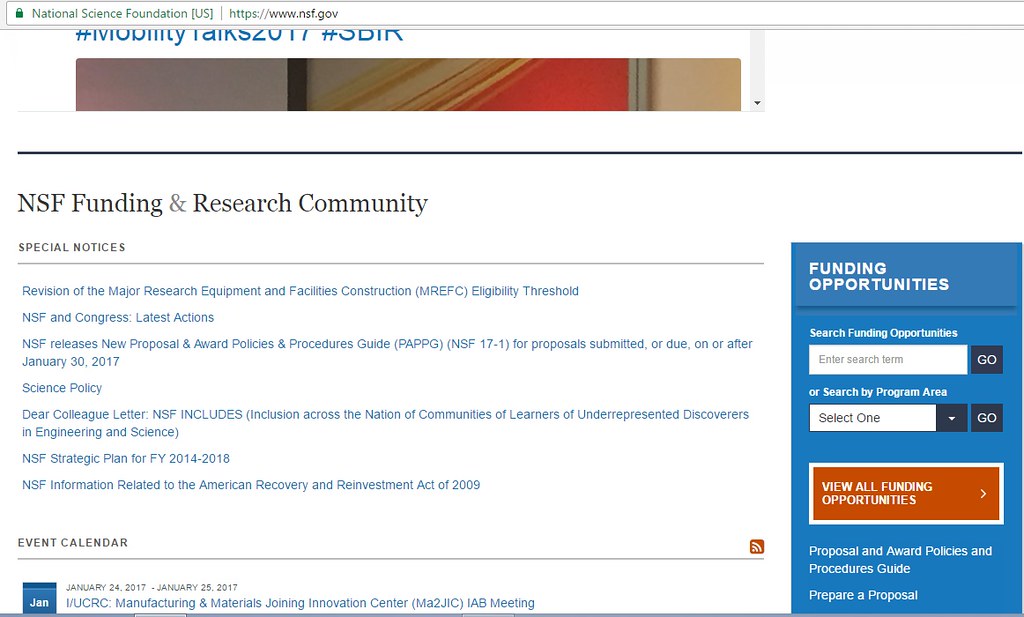
The science outlined above is amazing. The fact that scientists were able to discover the genes associated with the production of chemicals which give tomatoes their flavor is awesome and a testament to the advancement that we have seen with science over the decades. That was just one section of the NSF website. Another part of the front webpage is shown below -- which states the awards of grant applications. If you wanted to research a basic science project, you could write the NSF:
Without the NSF and the NIH, there would be literally very few science research projects underway in the United States. These two agencies are responsible for a large component of our educational system. The grants that are awarded to universities around the country help educate students studying at the university and give them an opportunity to engage in research. The funding that comes out of these agencies creates the scientists and engineers of tomorrow!
5) United States Department of Agriculture (USDA):
The United States Department of Agriculture has a mission that is focused around food sources. Here is an excerpt from the introduction on the "Wikipedia" page for the agency:
The United States Department of Agriculture (USDA), also known as the Agriculture Department, is the U.S. federal executive department responsible for developing and executing federal laws related to farming, agriculture, forestry, and food. It aims to meet the needs of farmers and ranchers, promote agricultural trade and production, work to assure food safety, protect natural resources, foster rural communities and end hunger in the United States and internationally.
In case, you are wondering how the work of the USDA differentiates from basic research by the NIH and NSF, here is the overview:
Many of the programs concerned with the distribution of food and nutrition to people of America and providing nourishment as well as nutrition education to those in need are run and operated under the USDA Food and Nutrition Service. Activities in this program include the Supplemental Nutrition Assistance Program, which provides healthy food to over 40 million low-income and homeless people each month.[3] USDA is a member of the United States Interagency Council on Homelessness,[4] where it is committed to working with other agencies to ensure these mainstream benefits are accessed by those experiencing homelessness.
The USDA also is concerned with assisting farmers and food producers with the sale of crops and food on both the domestic and world markets. It plays a role in overseas aid programs by providing surplus foods to developing countries. This aid can go through USAID, foreign governments, international bodies such as World Food Program, or approved nonprofits. The Agricultural Act of 1949, section 416 (b) and Agricultural Trade Development and Assistance Act of 1954, also known as Food for Peace, provides the legal basis of such actions. The USDA is a partner of the World Cocoa Foundation.
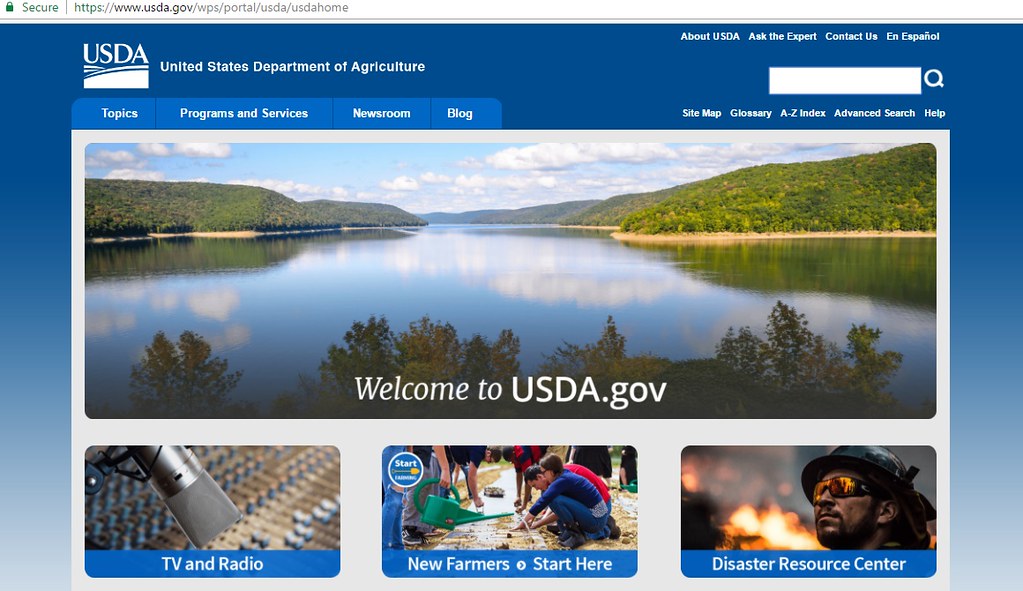
The webpage for the U.S.D.A is shown below:
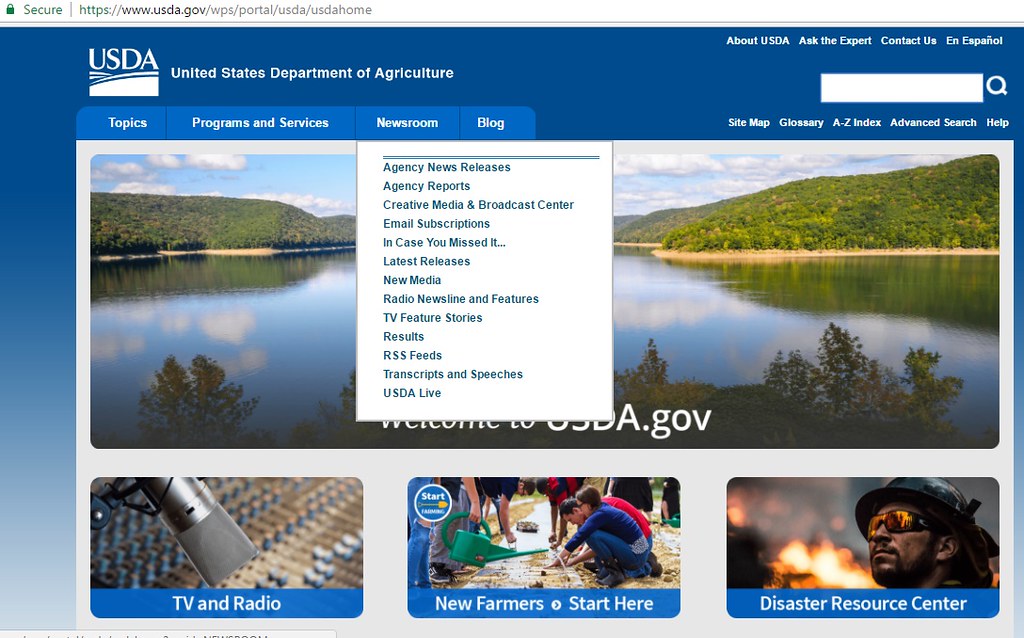
Across the top of the webpage are a few drop down menus with the following options: "Topics," "Programs and Services," "Newsroom," and "Blog." If you were to choose the option "Newsroom," the following list would appear as shown below:
With the following choices:
1) Agency News Releases
2) Agency Reports
3) Creative Media & Broadcast Center
4) Email Subscriptions
5) In Case You Missed It...
6) Latest Releases
7) New Media
8) Radio Newsline and Features
9) TV Feature Stories
10) Results
11) RSS Feeds
12) Transcripts and Speeches
13) USDA Live
If you were to choose the first option "Agency News Releases" the following webpage would appear as shown below:
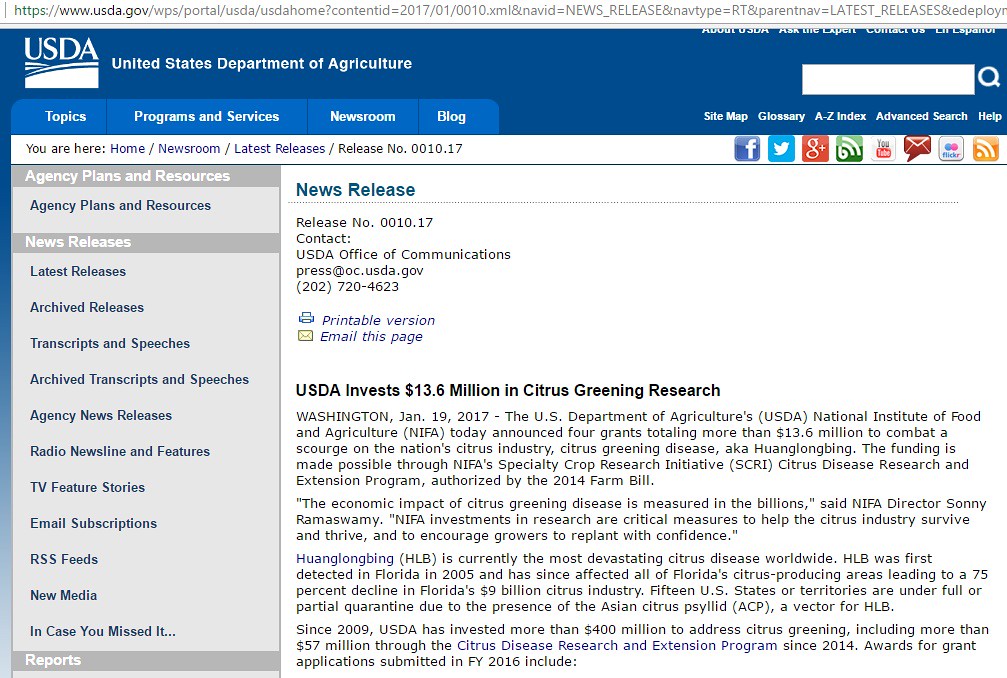
The webpage is full of news releases which are up to date results of money spent by the USDA. If you were looking to see if the government was interested in investigating the problem of 'citrus greening' which plagues citrus farmer, this is the page where you would visit to find out. By clicking on the first story titled "USDA Invests $13.6 million in Citrus Greening Research" the following webpage would appear with the up to date news regarding the research that is being funded by the USDA.
For those who are not familiar with the problem of 'Citrus Greening' here is the first few paragraphs of the story above for an introduction:
WASHINGTON, Jan. 19, 2017 - The U.S. Department of Agriculture's (USDA) National Institute of Food and Agriculture (NIFA) today announced four grants totaling more than $13.6 million to combat a scourge on the nation's citrus industry, citrus greening disease, aka Huanglongbing. The funding is made possible through NIFA's Specialty Crop Research Initiative (SCRI) Citrus Disease Research and Extension Program, authorized by the 2014 Farm Bill.
"The economic impact of citrus greening disease is measured in the billions," said NIFA Director Sonny Ramaswamy. "NIFA investments in research are critical measures to help the citrus industry survive and thrive, and to encourage growers to replant with confidence."
Huanglongbing (HLB) is currently the most devastating citrus disease worldwide. HLB was first detected in Florida in 2005 and has since affected all of Florida's citrus-producing areas leading to a 75 percent decline in Florida's $9 billion citrus industry. Fifteen U.S. States or territories are under full or partial quarantine due to the presence of the Asian citrus psyllid (ACP), a vector for HLB.
Wow! I was not aware of the amount of money in losses that was due to the disease of HLB. The next time that you eat an orange or drink a glass of orange juice take a minute to think about the citrus disease of HLB. Further, about how the funding that your tax-payer dollar went toward is to find a cure to the disease. Enjoy that citrus!
What about food labeling? Would that be covered by the FDA? Or the USDA?
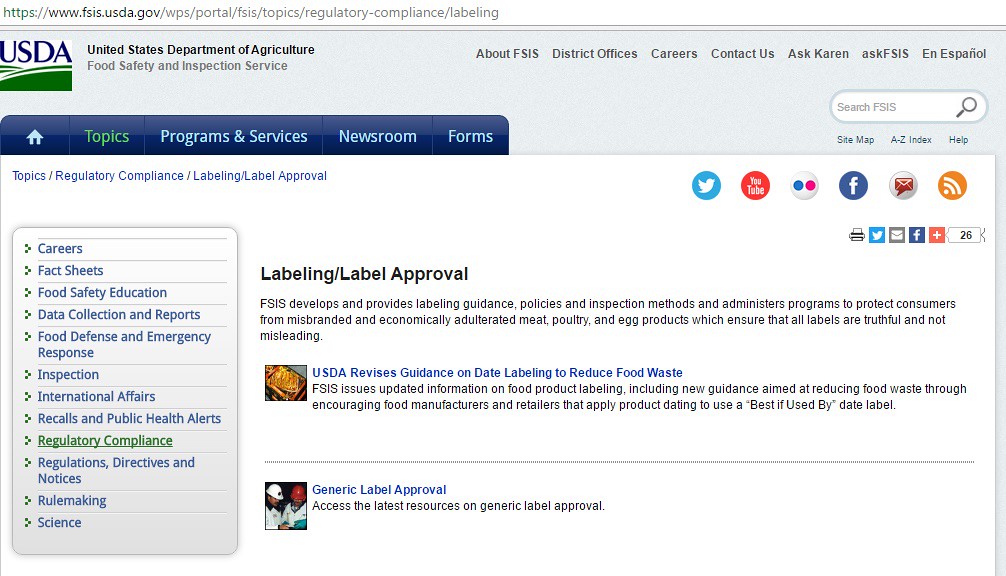
The "Food Safety and Inspection Services" operates underneath the USDA. By navigating the USDA site in search of food labeling, the following webpage would appear as shown below:
Clicking on the first story titled "USDA Revises Guidance on Date Labeling to Reduce Food Waste" will take you to the webpage below with the story:
The news release is of a law that will go into effect soon to ensure all food products contain the label "best if used by":
WASHINGTON, Dec. 14, 2016 – The U.S. Department of Agriculture’s (USDA) Food Safety and Inspection Service (FSIS) today issued updated information on food product labeling, including new guidance aimed at reducing food waste through encouraging food manufacturers and retailers that apply product dating to use a “Best if Used By” date label.
“In an effort to reduce food loss and waste, these changes will give consumers clear and consistent information when it comes to date labeling on the food they buy,” said Al Almanza, USDA Deputy Under Secretary for Food Safety. “This new guidance can help consumers save money and curb the amount of wholesome food going in the trash.”
Except for infant formula, product dating is not required by Federal regulations. Food manufacturers frequently use a variety of phrases, such as “Sell-by” and “Use-by” on product labels to describe quality dates on a voluntary basis. The use of different phrases to describe quality dates has caused consumer confusion and has led to the disposal of food that is otherwise wholesome and safe because it is past the date printed on the package.
FSIS is changing its guidance to recommend the use of “Best if Used By” because research shows that this phrase is easily understood by consumers as an indicator of quality, rather than safety.
USDA estimates that 30 percent of food is lost or wasted at the retail and consumer level. This new guidance builds on other recent changes FSIS has made to facilitate food donation and reduce food waste. In January 2016, FSIS issued Directive 7020.1, which made it easier for companies to donate products that have minor labeling errors, such as an incorrect net weight. FSIS has also begun recognizing food banks as “retail-type” establishments, which allows food banks (under certain circumstances) to break down bulk shipments of federally-inspected meat or poultry products, wrap or rewrap those products, and label the products for distribution to consumers. In 2016, FSIS enabled 2.6 million pounds of manufacturer donations.
Comments on this revised guidance may be submitted through the Federal eRulemaking Portal at www.regulations.gov or by mail to the U.S. Department of Agriculture, FSIS, Docket Clerk, Patriots Plaza III, 355 E St. S.W., 8-163A, Mailstop 3782, Washington, DC 20250-3700. All comments submitted must include docket number FSIS-2016-0044. FSIS will accept comments for 60 days.
Reducing food loss and waste is core to USDA’s mission. Since 2009, USDA has launched new and ongoing initiatives to reduce food waste. In 2013, USDA the Environmental Protection Agency (EPA) launched the U.S. Food Waste Challenge, creating a platform for leaders and organizations across the food chain to share best practices on ways to reduce, recover, and recycle food loss and waste. In 2015, USDA and EPA set the first-ever national food waste reduction goal of 50 percent by 2030 to reduce the amount of wasted food in landfills.
Food waste is a major issue plaguing the world. In 2015, the amount of food waste added up to $165 billion which equates to a total of 35 million tons of food. If we had a better idea of when the food would actually "spoil" by then more food would end up nourishing us rather than in our landfills. Information regarding rules and regulations are put on the site for the consumers to ensure the maximum use of food for nourishment. Additionally, if a vendor does not have the proper labeling, you can report the manufacturer to the USDA.
6) Department of Energy (DOE):
The Department of Energy is primarily concerned with all aspects of energy as highlighted in the introduction offered on the "Wikipedia" page for the agency:
The United States Department of Energy (DOE) is a Cabinet-level department of the United States Government concerned with the United States' policies regarding energy and safety in handling nuclear material. Its responsibilities include the nation's nuclear weapons program, nuclear reactor production for the United States Navy, energy conservation, energy-related research, radioactive waste disposal, and domestic energy production. It also directs research in genomics; the Human Genome Project originated in a DOE initiative.[3] DOE sponsors more research in the physical sciences than any other U.S. federal agency, the majority of which is conducted through its system of National Laboratories.[4]
By the description in the excerpt above, one might be tempted to think that the primary goal of the DOE is to control nuclear material. The agency is tasked with the energy production for the United States and energy security as well. These two tasks alone are a huge feat if you think about providing electricity for the entire nation and secure energy too (a potential national security issue).
Below is an image of the webpage for the Department of Energy:
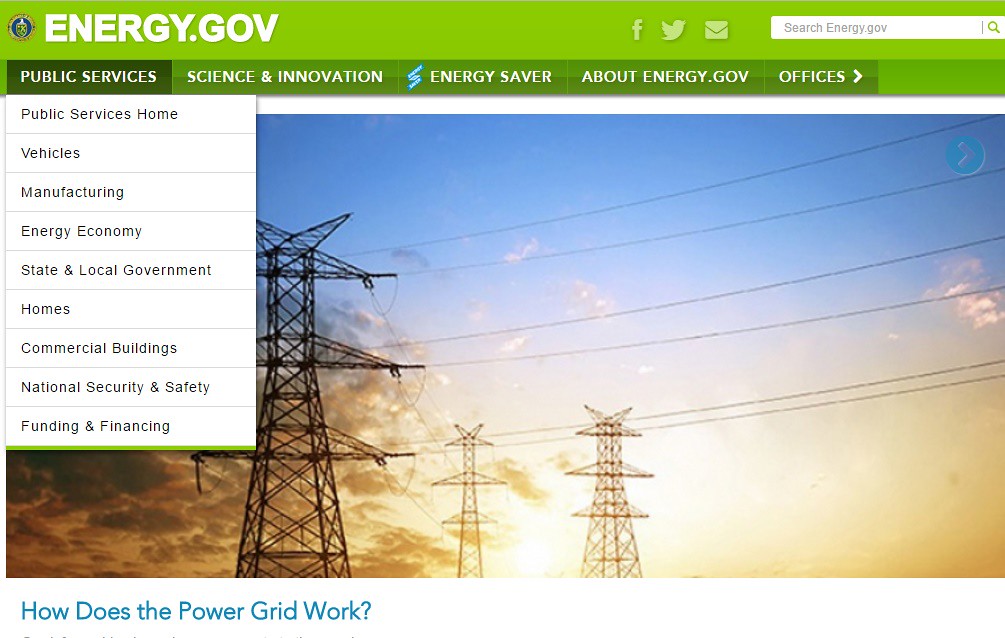
The information available on the site is accessible through the drop down menus above: "Public Services," "Science & Innovation," "Energy Star," "About ENERGY.GOV," and "Office." If you were to choose the drop down menu labeled "Public Services" would appear shown below:
The following options are:
1) Public Services Home
2) Vehicles
3) Manufacturing
4) Energy Economy
5) State & Local Government
6) Home
7) Commercial Buildings
8) National Security & Safety
9 ) Funding & Financing
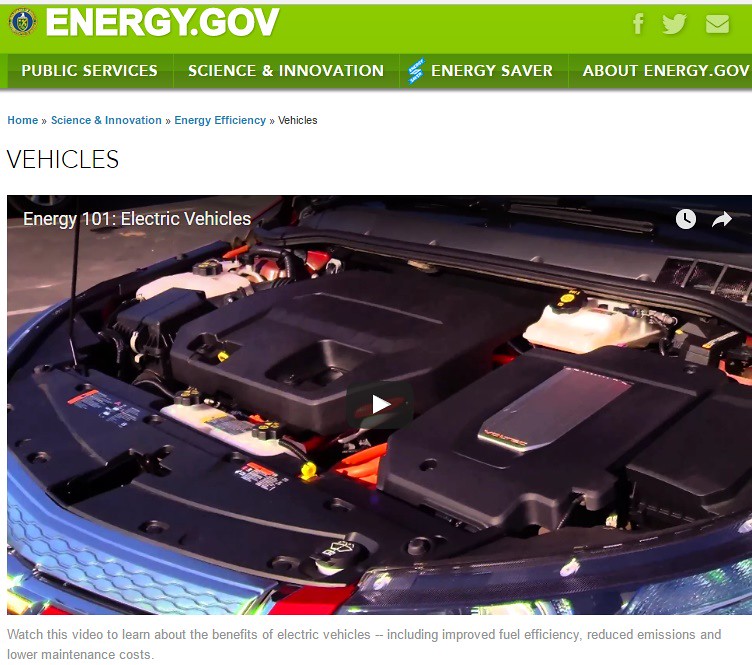
Upon choosing the option "Vehicles" the webpage below appears:
The image above is of a video made by the DOE to educate the public on the subject of "Electric Vehicles." The video is shown below -- less than 3 minutes in length:
Remember that in each of these agencies, education is a major component. There is no use introducing a new technology to the public if the public is not informed on the use of the technology. Often the public will instantly want to cut funding to these agencies forgetting that grant funding is only part of the expense. Others are education, regulation, and national security along with administration costs.
The debate over how much electric vehicles should play a role in our society is based on their efficiency and reliability. If the vehicle cannot get us to our destination, then the car is useless (no really, some people think this). Electric vehicles are improving at an unprecedented rate and playing a greater role in today's society. And information regarding the energy developments in the United States are held for FREE on this site. How lucky are we? Super lucky.
To put this wealth of information and resources into context, lets briefly look at another country. In a recent article from the website "Issues" titled "Of Sun Gods and Solar Energy" India is profiled for the emergence of solar energy. The author studies the diffusion of solar energy technology across the nation. Here is an excerpt to think about:
The impact of the availability of lighting was so great that even children’s test scores were improved. “When I first started teaching here five years ago, most of the children couldn’t even write their names properly, and they would fail their tests even with only 50%-60% required for passing,” stated the village school teacher. “It took me one and a half years to just get them to memorize the prayer we do in the morning before starting school.” According to some accounts, the extended hours of study provided by the lighting systems has led to a 70% improvement in retention of knowledge, and, on average, students in Dabkan are studying one to three hours longer than they did before. The introduction of solar energy into an energy-starved community is not a mere convenience but can contribute to improved literacy rates and workforce skills for a new economy in geographies otherwise dominated by agriculture.
American citizens take for granted the ability to 'flip a switch' to draw light from any number of sources. The excerpt above brings up the following questions regarding funding agencies in the United States:
What happens if the government chose not to invest in energy or other federal agencies highlighted in the above paragraphs? What happens if we did not have research into cures for diseases? What happens if we did not invest in research for clean water?
I think that you get the point that investment in research agencies is an investment in your well-being!
Conclusion...
The agencies introduced above contain a vast resource of our tax-payer money. Money that was spent to advance the health of the planet and its inhabitants. Additionally, the funds push the boundary of science to produce technology which was unthinkable just decades ago. A super computer in the sixties is not too far off from the tablet which you hold in your hand today. The emergence of exciting fields such as nanotechnology which is beginning to offer cures (for diseases) and device miniaturization continues to astound the world with its realization. The momentum of science funding needs support from you and I --- everybody.
As I mentioned above, the available content on various agencies sites (FDA, EPA, NIH, etc) affects the well-being of each of us. Science impacts every aspect of the world around us -- whether we choose to believe this fact or not. We must continually try to hold politicians accountable when the facts are on the wall in support of science. Additionally, we must not let politicians restrict our access to the content that has been paid for by our hard earned dollars. We fund the science, we own the results.
In closing, I was reading an editorial from the journal 'Nature' titled "Stand Up For Science" recently and the closing of the article was pertinent to the conclusion of this blog post. Therefore, I will end with the excerpt from the article shown below:
Although the Trump team reportedly repudiated its own request for the DOE list, scientists must be wary in the years to come of attempts to prevent scientific information from reaching the press and the US public. We have seen such attempts before, during the George W. Bush administration. They will not necessarily be obvious; as in Canada, they may come in the form of draconian procedures that delay communication with the press for so long that such communication becomes worthless. Or they may come in the form of intimidating researchers, as in the recent furor over work that requires fetal tissue.
If the US wants to remain a leader in biomedical research, the incoming government will need to keep funding it (including basic research) over the long term. And in all fields, scientists must be able to speak freely about their work if science is to be vigorous, the public informed, and policy decisions based on knowledge rather than ideology. The scientific community is watching and waiting.
Science impacts every aspect of our world. There is not any part of the world where science plays no part. When politics interferes with the science world, science is then localized and trivialized to a simple problem that can be solved with a stroke of a pen. Since science is not localized, but global, executive orders like the recent ban on immigrants entering the United States potentially will harm science. A recent article in the trade magazine 'Laboratory Equipment' titled "Trump’s Immigration Ban Hurts Research, Science" reminded me of this very crucial fact. In the paragraphs below, I offer a few thoughts on the matter.
Politics Affects Science
People vote to elect politicians to both houses of congress. Those elected representatives decide based on their constituents beliefs how to fund science research. As you will see in a couple of days (next blog post), politicians need to be more educated on the importance of science. Science is a global operation. Scientists try to convey the message to Washington on the importance of science and its role in society.
Last November, I wrote a blog post that had the "20 questions" from the organization "ScienceDebate.org" -- which contained the top 20 questions each candidate should answer regarding the most pressing needs of science. In a follow up blog post, there were other groups that followed with additional questions regarding science funding. Of course, this was all before the election. Since then, a lot has changed in the sense that science funding is completely up in the air.
As I mentioned above in the introduction, a recent article in the trade magazine 'Laboratory Equipment' reminded me of the importance that immigrants play in the role of science research in the United States. Here is an introduction of the article highlighting the point:
Politics aside, speaking solely in the context of scientific research and innovation, President Trump’s recent Executive Order to ban citizens of seven Muslim-majority countries, including green card holders*, is harmful to America’s research, development and innovation pipeline.
Today’s research is inherently global. Scientists collaborate with foreign researchers for a multitude of reasons, whether it’s because their foreign counterpart is a leader in a specific area of interest, or because the foreign researcher is the perfect complement to the intended research. Either way, a foreign collaborator’s contributions to the research cannot be understated.
International travel is also a major component of modern research. Not only are scientists expected to travel abroad for conferences; they also often have to travel to fulfill their job and research requirements.
For example, hundreds of U.S. scientists flocked to Sierra Leone and other West African countries during the Ebola outbreak of 2014/2015. If the current Executive Order was enacted then, any U.S. researcher that traveled to help stop the deadly virus—but was born in Iraq, Iran, Syria, Somalia, Sudan, Libya or Yemen—would have been denied reentry into the U.S., despite their visa category.
International and national meetings are extremely important. Networking in person is critical. Recently, at a science fair, those skills kicked in with other science judges and proved extremely useful. I wrote about that experience in a recent blog. Without those interactions, science is left to be communicated through the digital and print landscape. Journal articles are a great way to disseminate scientific results. Although, there are a tremendous amount of details (experimental methods, obstacles, lessons, etc.) regarding experiments which are never transmitted in the journal article, but available through 'person-to-person' interaction. Need I say more?
Communicating science at meetings is crucial to forwarding science research and funding. Collaborations are made which can last a lifetime. On the same plane of importance, accepting international graduate students into our graduate programs is critical toward advancing science around the world. International graduate students either stay after obtaining their degrees or leave to return to their country of origin. Either way, science is influenced in an unspeakable way for the benefit of man and the world. I wrote a blog about this highlighting the importance of international graduate students making American scientists stronger.
The author highlighted this in an excerpt shown below:
“Immigration strengthens the fabric of this nation and our University. Immigrants spark innovation, launch new businesses, and enrich our culture and arts. They are a precious national resource and invaluable to Penn,” she said.
As of this writing, 50 Nobel Laureates have signed a petition and open letter opposing the Executive Order. The Laureates are joined by 443 members of the National Academies of Sciences, Engineering, Arts; 82 winners of Fields/Dirac/Clark/Turing/Poincare Medals, Breakthrough Prize, Pulitzer Prize and/or MacArthur Fellowship; 14,800 U.S. academic faculty members; and over 18,000 academic supporters.
Enhancing our culture and arts is just a couple of many aspects in which are lives are improved. Scientists take an executive order very seriously. Especially, since the executive order can have such a drastic impact on all of academic progress -- not just science. The group of academic supporters have signed a petition which is shown below from the website "NoToimmigrationBan.com":
President Donald Trump has signed an Executive Order (EO) proposing a 90-day suspension of visas and other immigration benefits to all nationals of Iran, Iraq, Syria, Sudan, Yemen, Libya and Somalia. The unrealistic conditions required for discontinuing the suspension make it very likely that this EO will turn into a permanent ban. We, the undersigned academics and researchers from a variety of fields of study, backgrounds, and personal convictions, would like to voice our concern and strongly oppose this measure on three grounds:
1. This Executive Order is discriminatory. The EO unfairly targets a large group of immigrants and non-immigrants on the basis of their countries of origin, all of which are nations with a majority Muslim population. This is a major step towards implementing the stringent racial and religious profiling promised on the campaign trail. The United States is a democratic nation, and ethnic and religious profiling are in stark contrast to the values and principles we hold.
2. This Executive Order is detrimental to the national interests of the United States. The EO significantly damages American leadership in higher education and research. US research institutes host a significant number of researchers from the nations subjected to the upcoming restrictions. From Iran alone, more than 3000 students have received PhDs from American universities in the past 3 years. The proposed EO limits collaborations with researchers from these nations by restricting entry of these researchers to the US and can potentially lead to departure of many talented individuals who are current and future researchers and entrepreneurs in the US. We strongly believe the immediate and long term consequences of this EO do not serve our national interests.
3. This Executive Order imposes undue burden on members of our community. The people whose status in the United States would be reconsidered under this EO are our students, friends, colleagues, and members of our communities. The implementation of this EO will necessarily tear families apart by restricting entry for family members who live outside of the US and limiting the ability to travel for those who reside and work in the US. These restrictions would be applied to nearly all individuals from these countries, regardless of their immigration status or any other circumstances. This measure is fatally disruptive to the lives of these immigrants, their families, and the communities of which they form an integral part. It is inhumane, ineffective, and un-American.
These bans, as proposed, have consequences that reach beyond the scope of national security. The unethical and discriminatory treatment of law-abiding, hard-working, and well-integrated immigrants fundamentally contravenes the founding principles of the United States.
We strongly denounce this ban and urge the President to reconsider going forward with this Executive Order.
The above letter is an example of what academics can do when 'academic freedom' is under fire.
Conclusion...
The above letter is a sign that adverse effects come with restricting science. Please cut and past the letter above and send an e-mail to the following e-mail address with the following instructions:
To add your name, please send an email to [send AT NoToImmigrationBan DOT com] from your academic email.
The subject of your email must be one line: name, award/distinction, title, affiliation
(e.g. John Doe, Nobel Laureate (Physics 1999), Professor, Harvard University)
Thank you for your support. You are part of making the world a better place by ensuring that science is a global effort. Science needs to be elevated. I have written about the fact that science usually ends up buried on the back of the newspaper. Science should be front and center. If the public were aware that their tax-payer money is what drives research into creating new treatments for diseases, space flight to the outer limits of our understanding, along with building new technologies at the limits of detection (nanoscale) -- maybe they would feel differently about learning and motivating science research. At the very least, this executive order has brought out the scientific community to rise up and shout to the world that an injustice is occurring.
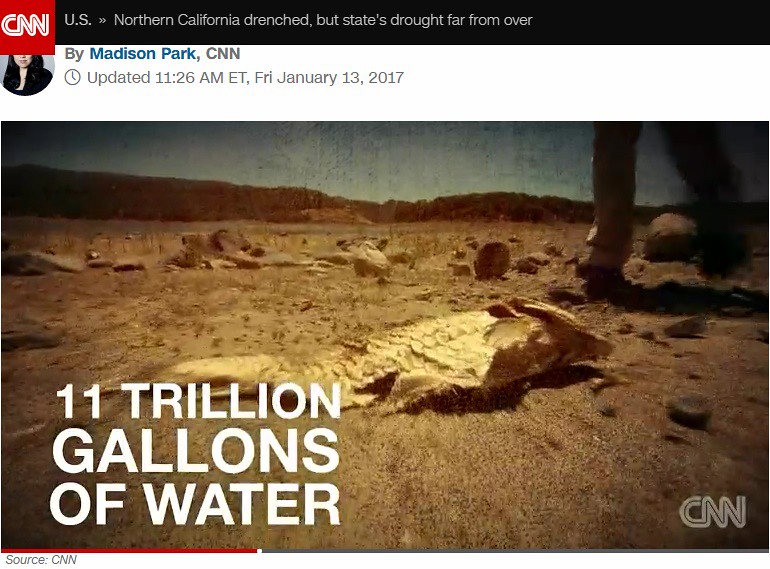
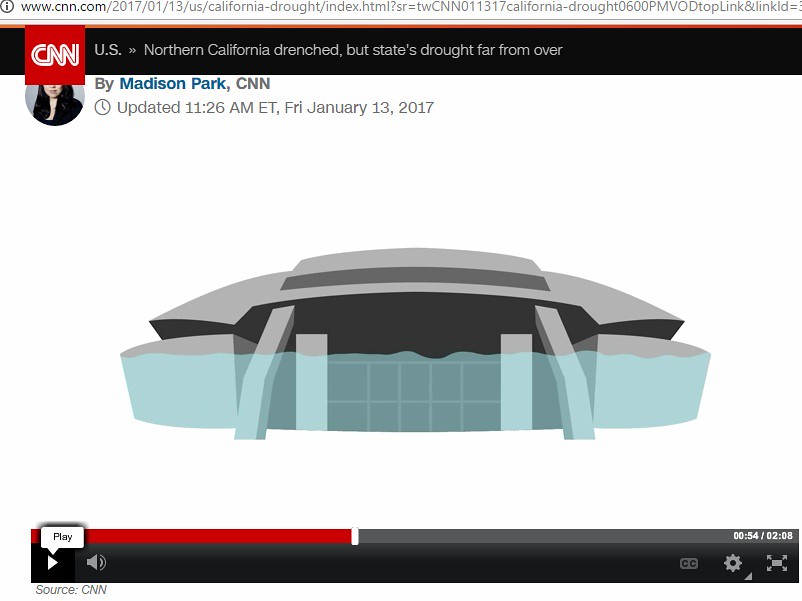
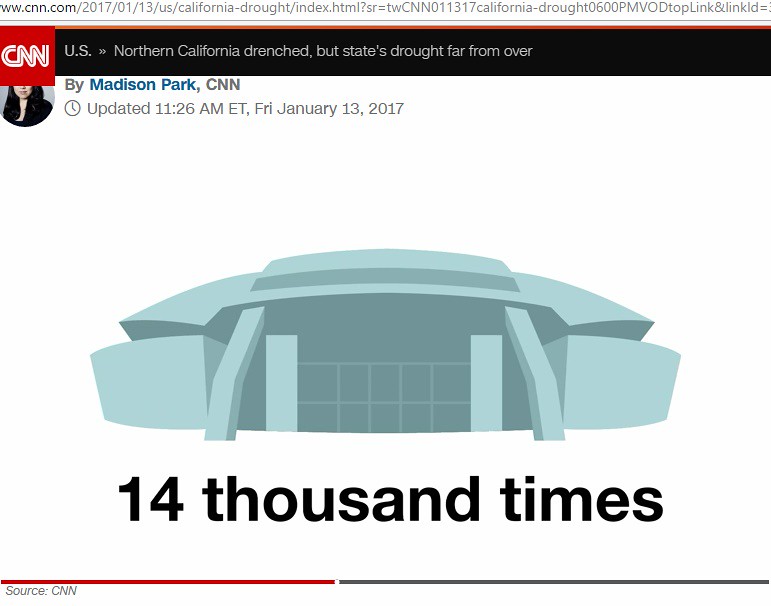
Over the last few weeks here in California, there has been an unusual amount of rain dropped on the region. Despite this large volume of water (which I will write about in a week or two), the state of California remains in need of a substantial (enormous) amount of water to get out of the drought. According to a news article from "CNN" titled "Northern California drenched, but state's drought far from over" the total rainfall needed to relieve the state from the long drought is around 11 trillion gallons of water. Show below are three slides (screen shots) from the video embedded in the article that highlight the massive amount of water needed:
According to their estimates, the enormous volume of water equates to the following volume:
Filled 14,000 times:
I could not get this out of my mind for obvious reasons. At the time of the article, I was busy with work and could not take the time out to verify the claim. The time has come to verify the claim by the news agency "CNN". In the paragraphs below, I will show you (the reader) how to work out the math to verify the claim -- that 11 trillion gallons of water equals the volume required to fill the Dallas Cowboys Stadium 14,000 times.
Dallas Cowboys Stadium Volume?
Last week, I was at a science fair as a judge. I wrote about this wonderful experience. As I mentioned in that post, one of the best parts of the experience is to discuss various ideas with other judges and teachers. I was throwing out the statistic of 11 trillion gallons being able to fill the Dallas Cowboys Stadium 11,000 times to an elementary school teacher.
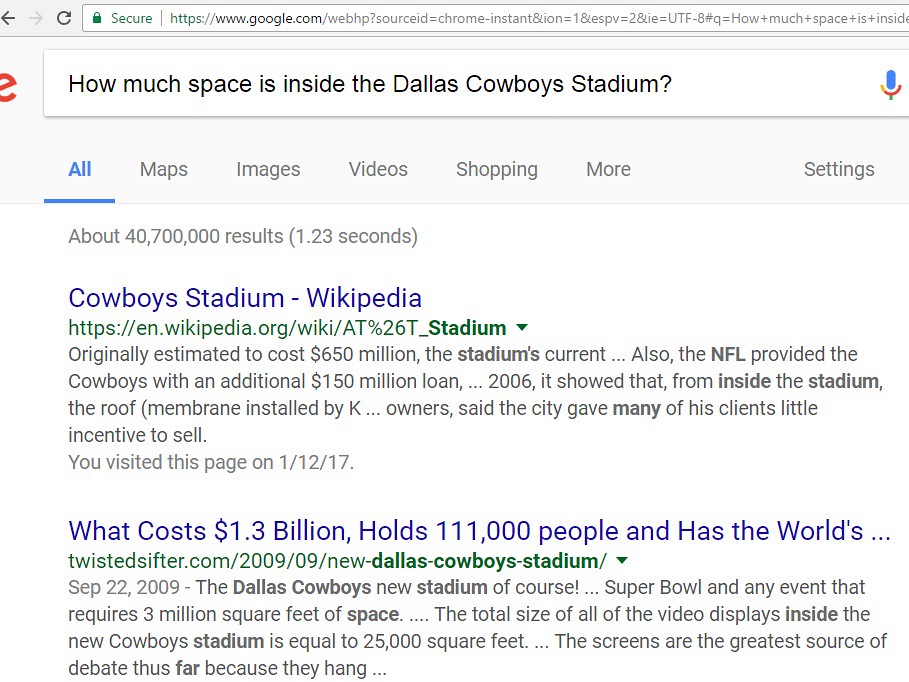
At first, she was confused as to how I would find the volume of the stadium. I said the process is quite easy. Just ask Google the following question:
How much space is inside the Dallas Cowboys Stadium?
Here is the image of the response that I see shown below:
Either source has the appropriate amount of information to determine the volume of the Dallas Cowboys Stadium. Although, a search through each article will reveal that the site "TwistedSifter" has the volume stated as equal to 104 million cubic feet. That is easy right?
Next, with the volume of the Dallas Cowboys Stadium known, the units in which the values are expressed need to be the same before dividing them by each other. As the parameters that are given stand at the moment, the following are true: A) The total water needed to relieve the drought is 11 trillion "gallons" and B) the interior space of the Dallas Cowboys Stadium is equivalent to 104 million "cubic feet." Not the same units.
Either, the total volume of water expressed in units of "gallons" needs to be converted to units of 'cubic feet' or the opposite before we can proceed with the calculation. For the purposes of this blog, lets go with converting the value of the volume of the Dallas Cowboys Stadium from units of 'cubic feet' to units of 'gallons' as shown below:
Now we have the interior volume of the Stadium in units of gallons rather than units of cubic feet. Which is to say, 104 million cubic feet of interior space is equivalent to 778 million gallons of space.
The calculation is straightforward from here. The two volumes needed to divided over to yield the number of Dallas Cowboys Stadium could be filled with 11 trillion gallons -- supposedly 14,000.
According to our calculation, the answer is that 11 trillion gallons of water would fill 14,139 Dallas Cowboys Stadium. That is not the same as 14,000 Dallas Cowboy Stadiums. Inspecting this answer led me to ask the following questions:
1) Why were the initial calculations off by the volume equivalent to 139 Stadiums? 2) What is the difference in volume between 14,000 Stadiums and 14,139 Stadiums?
To answer the above question the following calculation is performed as shown below:
The results of the calculation revealed that to ignore the 139 Stadiums is to ignore 108 billion gallons of water!
Conclusion...
The results of the calculations revealed that there was a difference between what was reported and the actual value. In the video cited produced by the news agency 'CNN' stated that 11 trillion gallons would be equal to filling up the Dallas Cowboys Stadium 14,000 times. The results obtained above show that actually the number of Stadiums which could be filled is closer to 14,139 times. Further, that the difference is equal to 108 billion gallons of rain. Although, to be fair, the methodology of the news agency employees who calculated the statistic is not known. Which raises the following questions:
Maybe the employees at 'CNN' used a slightly different volume? Maybe the employees at 'CNN' decided to 'round off' to the nearest thousand and neglect 108 billion gallons of water?
Regardless, as I have shown you in the above paragraphs, arriving at an answer that is close to or more approximate to the reported value is possible. You can do this yourself. The information is freely available as I showed. I encourage you to practice by yourself. Additionally, if you find an interesting statistic that you would like me to repeat, then place a note in the 'comment' section below.