Showing posts with label produce. Show all posts

Friday, August 10, 2018

Trade War Hurts Farmers -- From The Farmer's Mouth Directly


Source: Big think


Readers might be wondering why I carry on intermittently about the trade war when I am a scientist.  The answer involves an early post which I wrote this year stating the obvious -- that everything is tied to one another by one or two links per se.  I do not expect you to believe me in any manner.  In fact, do the research yourself and see for yourself.  Science is not exclusively about being in a laboratory and performing experiments to push research and discovery ahead (i.e. the boundary of research forward).  Life is full of interconnected parts.  In this post, a farmer remarks (in a super short video) about the damaging effect of the tariffs imposed by President Trump.


Below is a video from 'The New York Times' titled "I Am a Soybean Farmer Hurt by Trump’s Trade War. I Can’t ‘Take It.’"directly from a farmer talking about the policies (tariffs) which President Trump has enacted and the direct adverse impact which has followed to his farm:


Wow! People do not really consider that decisions made by President Trump are having a real adverse impact on a human being's well-being.  Furthermore, when a person views produce at a grocery store, typically, the thought of the entire supply chain is probably absent from their mind.  More importantly, is the final product (meal or meals) which will be prepared with the produce for sale in front of them.


What does that supply chain look like?  Here are some questions which might shed greater light on the cost of eating produce at our grocery stores:

Is there a boat (ship) involved as in the case of shipping cherries to China (as exports from U.S.A.)?  

Are there trucks involved?  

Diesel semi-trucks which are emitting large amounts of greenhouse gases?  

Or are the trucks (semi-trucks) electric and environmentally friendly?  

How far does the produce (commodities) have to travel to arrive at my local supermarket?  

Who unloads these trucks?  

Who unloads ships onto the docks?  


Just think -- all of these components have a real person (a worker) behind them.  Some person goes to work to drive the produce across country after picking up a shipment at the port of Los Angeles.  Another person goes to work to stock the shelves at night with beautiful rich produce for you -- when you arrive at the grocery store.  Yet another person gets rid of produce which is not purchase and has been shipped but is out of date (spoiling).  All of these components which make our produce supply chain have a real person (possibly with a family) behind them.  Furthermore, these people depend on the supply chain.  Trade wars hurt supply chains.


Additionally, the research and discovery which is behind the movement toward sustainable farming to produce food is always a dynamic target.  Which means that there are always parameters which are changing that challenge researchers to produce a better crop.  Who are these people who do research into crops?  Plant biologists might be conducting research into the viability of drought resistant crops.  Or genetic modification might be sought after in the near future in geographical regions where the land is not tolerant of traditional crops.


When all said is done, decisions which are made at the top of the Administration have a variety of adverse impacts to the public at large.  Some are obvious, whereas others might not be apparent at all.  With this in mind, the service industries are not even considered in the 'trade war'.  Each of us as citizens of the United States of America and the world at large contained on Planet Earth should be interested in understanding the issues with policy decisions at hand.  This would allow decisions to be made down the line in the future which will result in a better environment.  One which is better for each of us to live in.  Start listening to everyone (even the farmers).


Related Blog Posts:


"Trade Not Aid" -- The Answer For Trade War!


How Many Cherries Are In 1.5 Million Shipping Boxes?


Parameters: Trade Tariffs Will Affect International Science


Parameters: Tariffs Affect Trade In Both Directions -- In And Out Of The USA


Parameters: Steel And Aluminum Tariffs Are Not Isolated - They Are Tied To Trading Of Other Vital Goods


Parameters: One Parameter Change In The Trade Machine Leads To A 'Re-Adjustment' Of Another


Monday, March 26, 2018

Parameters: One Parameter Change In The Trade Machine Leads To A 'Re-Adjustment' Of Another
Source: Ottumwa Courier


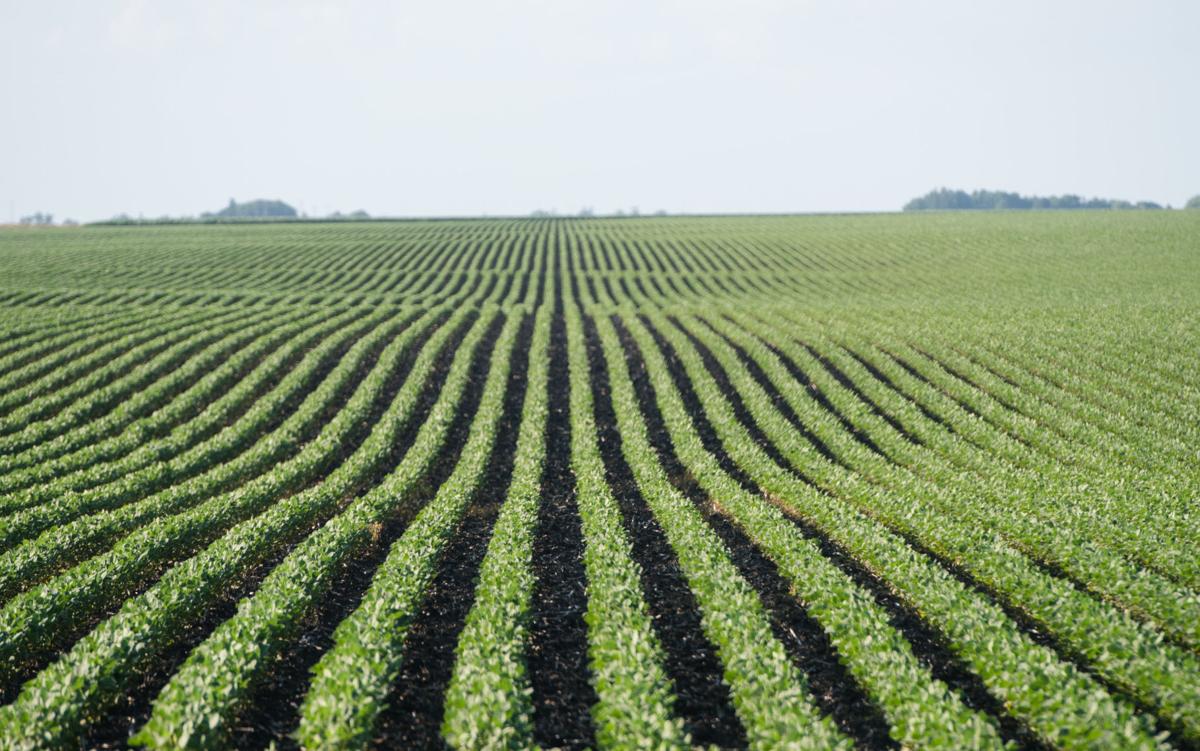
Over the last few weeks after President Trump announced imposing tariffs on Steel and Aluminum, there has been talk of 'retaliatory measures' on exports leaving the United States.  Yes, our farmers will pay the prices for the decision to impose tariffs on indirect products which are tied together on a commodity level.  I wrote about this in a previous post.  How does this affect the U.S. consumer?  Get ready for quite possibly higher food costs -- agricultural produce to start with.  I recently received the following excerpt in my e-mail box from 'Politico Agriculture' shown below:


HOW A TRADE WAR THREAT COULD SQUEEZE AG: Farmers and ranchers, and their representatives in Washington, have spent much of President Donald Trump's 14 months in office warning that the agricultural industry would be collateral damage in a tit-for-tat trade war. It seems their fears have been confirmed, after China released a lengthy list of $3 billion worth of products it has set up for reciprocal tariffs - including pork, nuts, fresh and dried fruits, and wine, Pro Ag's Catherine Boudreau and Helena Bottemiller Evich report this morning.
China's action was in response to Trump slapping new tariffs on steel and aluminum imports, which took effect on Friday for countries that the president decided not to exempt. Additional retaliatory measures aimed at U.S. farm products could be on their way after Trump unveiled another action last week that could impose tariffs on $50 billion in Chinese goods over intellectual property concerns.
Pork producers - and prices - are already feeling the strain, even without the threatened tariffs in place. The U.S. shipped more than $1 billion of products to China last year, making it the No. 3 destination for exports after Japan and Mexico.
"This is an incredibly risky gamble on the president's part, and quite frankly, I wish he was gambling with someone else's money," said Brian Duncan, who raises 70,000 hogs and grows 4,000 acres of corn in Ogle County, Ill. He noted that the market price of lean hogs dropped $9 in two days last week. "There are real people's lives at stake in this game of brinkmanship."
Dennis Nuxoll, vice president of federal government affairs for Western Growers, told POLITICO that the president could use other avenues - such as the World Trade Organization - to address trade disputes with China without sending ag markets on a rollercoaster.
Talks still going: The Wall Street Journal reported Sunday evening that China and U.S. officials were quietly discussing issues ranging from financial services to manufacturing. That could serve to de-escalate trade tensions.
The talks may not be all that secret, though. Treasury Secretary Steven Mnuchin said on Fox News Sunday that the administration was moving forward with imposing tariffs on Chinese imports and restricting Chinese investment, but said he was "cautiously hopeful" that the two countries could reach an agreement.
"We're simultaneously having negotiations with the Chinese to see if we can reach an agreement," Mnuchin said.


I am not that impressed over the last sentence.  The reason being is that our country got us into this mess.  The concept of 'free trade' has benefits which cannot be understated.  Each country benefits from security of goods (traded goods) by ensuring trust through relationships.  As I mentioned in a previous post, the complex machine will make adjustments (the trade machine) if adjustments are made to any one part of the system at a given time.  The overall adjustments (outcomes) of the small adjustments are not always predictable -- i.e. a trade war.


This is serious business when the administration plays with the lives and well being of the farmers of our nation.  The farmers who supply goods -- food to us - consumers who purchase goods at the market (grocery store).


Conclusion...


The next time that you find yourself in the grocery store wondering why the cost of soybeans or other crops have gone up, remember the decision made by President Trump - tariffs on Steel and Aluminum -- which caused instability in the global trade market.  Where do we go from here?  Who knows?  We will see in the months to come as each nation responds in their respective manner with tariffs on U.S. exports.  Regardless, instability in the trade system (global trade system) is not good for anyone - regardless of what is said in the newspaper or in Washington.


Recent Blog Posts:


Was The Recent Oil Spill in China The Largest In History?


How Resilient Is Your Body Toward Infections?


Chemistry Reactions Are Amazing - See For Yourself


Parameters: Steel And Aluminum Tariffs Are Not Isolated - They Are Tied To Trading Of Other Vital Goods


Thoughts: How Did People Talk In 1929?


LimeBike Dockless Bikeshare Riders Travel A Distance Of 13,000 Miles In Just Over 3 Weeks?