Showing posts with label Medical Research. Show all posts

Thursday, January 31, 2019

Parameters: Role of 'Stress Gene' revealed in relation to Chronic Pain


Chronic pain is a problem which many Americans currently live with.  Further, chronic pain management has led to the uprising of increased opioid use in the last few decades.  Which has become a major problem.  Especially, with regard to the unusually large amount of pain managing medication illegally entering the United States -- such as 'Fentanyl' -- which can be read about here.  With pain management in mind, researchers have been searching endlessly for a cure or treatment which will reduce addiction issues.  A possible solution might just have been found.  In the blog post below, the new research is highlighted.


Chronic Pain?


According to recent research unveiled a few months ago in a brief blog post on Director Dr. Francis Collin's web page on the National Institutes of Health's website, the new method stands to improve pain management which arises from stressful/traumatic events as described below:


For most people, pain eventually fades away as an injury heals. But for others, the pain persists beyond the initial healing and becomes chronic, hanging on for weeks, months, or even years. Now, we may have uncovered an answer to help explain why: subtle differences in a gene that controls how the body responds to stress.
In a recent study of more than 1,600 people injured in traffic accidents, researchers discovered that individuals with a certain variant in a stress-controlling gene, called FKBP5, were more likely to develop chronic pain than those with other variants [1]. These findings may point to new non-addictive strategies for preventing or controlling chronic pain, and underscore the importance of NIH-funded research for tackling our nation’s opioid overuse crisis.
The research team, led by Samuel McLean at the University of North Carolina, Chapel Hill, first found evidence of an association between the FKBP5 gene and chronic pain in 2013 [2]. Those studies of about 1,000 white men and women found at least six different FKBP5 variants. They also showed that each variant could be used to predict the severity of a person’s pain after a car accident or other trauma. In fact, those who carried one particular gene variant, the less common DNA spelling at a location called rs3800373, were especially prone to chronic pain long after the traumatic event.


That is promising news, but what about other races, ethnicities, and cultures?  Are the results just as promising for those populations too?  Actually, yes.  Again, from the Director's web page:


In the follow-up study now reported in the Journal of Neuroscience, the team took advantage of the recently completed NIH-funded Project CRASH . This multi-state project evaluated the recovery process of more than 1,600 white and black Americans who were seen in an emergency room within 24 hours of a traffic accident [1]. Each study participant provided a blood sample and answered questions about their pain just after the crash and then again six weeks later. The researchers also received permission to review data from participants’ medical records detailing the nature of their injuries and treatment.

The new evidence confirms that people who carry the pain-susceptibility variant at rs3800373 are more likely to develop chronic pain after a trauma. That’s true across gender and in people regardless of their race. Though the frequency of this variant is still unclear, the researchers estimate that about 33 percent of Americans have it.


Great.  When can we expect a drug? Where do people with chronic pain go to now?  What methods exist for those who suffer from chronic pain?


With opioid use at an all time high, other methods are being sought out to reduce chronic pain among those who suffer.  Alternative methods include: physical therapy, yoga, mind-body therapies, complementary methods (acupuncture, meditation, etc.), and medical interventions.


For more information regarding the management of chronic pain, visit either: (1) Harvard Health and/or (2) WebMd.  Keep checking back to see updates on the research listed above regarding new technology/research surrounding the treatment of chronic pain.


Related Blog Posts:


How many people would be killed if 1,485 pounds of Fentanyl were distributed onto the streets in the U.S.?


NIDA Director Nora Volkow: How Health Communicators and Journalists Can Help Replace Stigma with Science


What is the next big step in Mental Health Research?


Want To Improve Science Communication: Add Artists!


Should you consider science while before voting next Tuesday?


NIAID Director Anthony Fauci: How Should We Communicate About Crises?


NIH Director Francis Collins Makes A Statement Regarding Sexual Harassment In Science


Ralph Nader: Warner Slack - Doctor for the People Forever


Friday, January 25, 2019

How Do Scientists Track Bees Inside BeeHives? Use QR Codes?


Source: C&E News


Tracking bees can be a complicated job.  Especially, when from the macroscopic level (human eye), each bee appears to be the same in appearance.  Which causes a person (at least me), how would a scientist studying bees track individual bees within a bee colony (or beehive)?  Further, why would a scientist want to keep track of individual bees within a beehive?  Well, in short, your answers are below.


How Do Insecticides Affect Bees?


Over the last couple of decades, there has been controversy surrounding the use of insecticides (certain classes of insecticides).  An insecticide is a substance (chemical or compound) which is used to kill an insect.  The difficult question is whether certain insecticides which are aimed to kill specific insects also have adverse (negative) impacts on unintended target insects (such as bees).  The specific class of chemicals in question are the 'neonicotinoids' which are shown below on this graphic:


The chemical structures of the neonicotinoid family of compounds shown on the left hand side of the infographic above are shown below in greater detail:


(1) Acetamiprid,
Acetamiprid Structural Formulae V.1.svg


Source:  Jü - Own work, CC0, Link


(2) Clothianidin,


Partially condensed, Kekulé, skeletal formula


Source: Jü - Own work, CC0, Link


(3) Imidacloprid,


Imidacloprid.svg

Source: NEUROtiker  Link


(4) Nitenpyram,


Nitenpyram

Source:Jü - Own work, Link


(5) Nithiazine,


Nithiazine.svg

Source: Ed (Edgar181) - Link


(6) Thiacloprid 


Thiacloprid structure.svg


Source: Edgar181 -  Link


(7) Thiamethoxam


Thiamethoxam.svg

Source:Epop -  Link


The compounds above are classified as neonicotinoids due to their chemical similarity to the chemical structure of nicotine shown below:


Nicotine.svg


Source: Nicotine - Harbin - Link


As a chemist, I always tend to wonder what aspects of each molecule make that molecule great for binding to a given receptor.  You may think that I am speaking gibberish at the moment, but let's take a brief exploration into the mechanism (mode of action) by which these chemicals operate in the insects body (to become toxic) provided by Compound Chemistry:


This leads us on to how neonicotinoids exert their effects on insects. They are effective against a wide range of different pests, and all act in a similar manner. Neonicotinoids are systemic insecticides – meaning they are water-soluble, and can be absorbed by plants and distributed through their tissues. When insects ingest them, they bind to and block nicotinic receptors for the neurotransmitter acetylcholine in the central nervous system of insects. Acetylcholine is a neurotransmitter in many organisms, including humans. The effect of blocking the receptors for this neurotransmitter is overstimulation, which leads to paralysis and eventual death for the insects.
We also have nicotinic acetylcholine receptors, both in our central nervous system and the peripheral nervous system, so you might wonder why the neonicotinoids don’t pose just as big a danger to us. This is because, although both insects and us have the receptors, they are differently structured, and the upshot of this is that the neonicotinoids don’t bind to our receptors as strongly as they do to those of the insects. As such, they are much more toxic to insects than they are to us, or other mammals.
An insect doesn’t need to ingest a great deal of a neonicotinoid pesticide for it to exert its deadly effect. The exact figure is, of course, variable, depending on the specific species of insect. Values for the median lethal dose (the dose that kills 50% of test subjects) range from 1 to 90 nanograms per insect. For comparison, the lethal dose figure for neonicotinoids is several orders of magnitude lower than for older insecticides such as the controversial DDT.


The current study (discussed briefly below) aims to check to see the lower limit of exposure to the toxic insecticides.  At what concentration, does a change of behavior occur?  How long does the exposure take to translate into adverse effects on beehive colonies.


What about the current scientific study of bees?


You may have thought that the content above is a 'divergence' from the study at hand.  The title of the current study is Neonicotinoid exposure disrupts bumblebee nest behavior, social networks, and thermoregulation.  The study which aimed to track the behavior of bees as a result of 'dosing' the bees with different concentrations of insecticides.  Why is this important?


Because the insecticides which are commonly used on crops have been associated with adverse (negative impacts) phenomenon such as 'colony collapse disorder' -- which is when the majority of the 'worker bees' leave a beehive and the colony (or hive) will eventually perish.  Why does this phenomenon occur?


One contribution (a part of the aim for the current study) is the exposure of the 'worker bees' to the insecticide (in this case imidacloprid) while carrying out their duty as 'pollinators'.  Pollination is the process of fertilizing the flower to produce seeds (offspring) -- i.e. the next generation.  The importance of pollination to the agriculture industry cannot be overstated. 


For the study published, the insecticide of choice was imidacloprid.  The range of concentrations varied between 0.1 nanograms and 9 nanograms.  What?  Yes, the lowest concentration which served as the control group was between 0.0000000001-0.000000001 grams.  Whereas for the group being dosed with a toxic dose was around 9 times the top of the control group range = 9 nanograms or 0.000000009 grams.  Or stated in terms of 'parts per billion' -- control group = 0.1-1 parts per billion...and the toxic dose was 9 ppb (parts per billion).


A recent write up of the study appeared in a trade journal -- Chemical & Engineering New.  Here is the brief which appeared in a recent (late last year) issue of C&E News:


Source: C&E News


Wait...How did the scientists track the bees in the beehive?  The scientists glued small QR codes onto the bees.  Then the tracking was accomplished by using robotic platform with an imaging system known as BEEtag.  An example is shown below (24 seconds in length):


What were the results of the study published?


The results of the study using the BEEtag imaging platform were straightforward.  At the control concentration of 0.1 ppb of imidacloprid, no change in bee behavior was observed.  Whereas at concentrations of 6-9 ppb showed noticeable change (adverse effect) in beehive behavior.  The indication was that the bees exposed to toxic amounts of imidacloprid were observed to move eventually toward the outside of the beehive.  Additionally, the workers were less active and became more sedentary.


Nonetheless, the imaging technology used above has opened the door to observing negative impacts of chemical exposure previously only speculated about.  This is tremendously exciting to say the least.  For further details of the study, click on the title of the study above.  Next steps include to see if the other compounds (chemicals) in the neonicotinoid family of substances produce the same adverse effects at the equivalent doses.  Stay tuned.


Related Blog Posts:


NIDA Director Nora Volkow: How Health Communicators and Journalists Can Help Replace Stigma with Science


What is the next big step in Mental Health Research?


Astrophysicist Neil deGrasse Tyson explains why 'Space Force' is nothing new...


Scientists should find similarities rather than focus on differences


Why Chemistry Matters from the mouths of Nobel Laureates!


President Trump finally fills the Office of Science and Technology Policy position - Yeah!


Saturday, October 20, 2018

White Blood Cells in action destroying Cancer Cells!


Cancer is a nasty disease.  Cells which have been hijacked are out of control of the human system and are under the control of the cancer.  If a single cell were out of control, then the body's natural immune system would kill the cancerous cell.  The cells in the body responsible for doing so are the white blood cells.  Specifically, the cytotoxic T cells as introduced by Wikipedia page as follows:


A cytotoxic T cell (also known as TC, cytotoxic T lymphocyte, CTL, T-killer cell, cytolytic T cell, CD8+ T-cell or killer T cell) is a T lymphocyte (a type of white blood cell) that kills cancer cells, cells that are infected (particularly with viruses), or cells that are damaged in other ways.
Most cytotoxic T cells express T-cell receptors (TCRs) that can recognize a specific antigen. An antigen is a molecule capable of stimulating an immune response, and is often produced by cancer cells or viruses. Antigens inside a cell are bound to class I MHC molecules, and brought to the surface of the cell by the class I MHC molecule, where they can be recognized by the T cell. If the TCR is specific for that antigen, it binds to the complex of the class I MHC molecule and the antigen, and the T cell destroys the cell.
In order for the TCR to bind to the class I MHC molecule, the former must be accompanied by a glycoprotein called CD8, which binds to the constant portion of the class I MHC molecule. Therefore, these T cells are called CD8+ T cells.


What does this recognition and destroying process look like in real time?  Here is a short video (less than a minute in length) outlining the process with animation:


Nice - right?  With the progress that has been made, one would naturally wonder why cancer has not been eradicated all together.  The short answer is that there are many different forms of cancer.  Cancer is dynamic and constantly changing up to overcome destruction and prevention.  Although, some cancers have been successfully eliminated.


This is a short stop (brief post) in a complicated disease and topic to cover.  In future posts, more will be said of research being conducted to eliminate cancers and successful efforts along with failures.  Failures are really not failures, but learning steps in the path of understanding how different cancers arise, take over cells, and successfully evolve to avoid destruction.  That is a broad overview of the problem.  Of course, when we consider that each person is unique in their genetic make up, then the consideration of cancer (as a disease) becomes even more exponentially more complicated.  With that being said, the work toward understanding and overcoming the disease is worth every step taken in science -- research and discovery.  More to come on this fascinating and terrible disease.


Related Blog Posts:


A Virtual Tour Of A Human Cell?


A Virtual Tour Of A Plant Cell? Really?


NIAID Director Anthony Fauci: How Should We Communicate About Crises?


NIH Director Francis Collins Makes A Statement Regarding Sexual Harassment In Science


National Institutes of Health - Anti-Sexual Harassment Web site


National Science Foundation Sexual Harassment of Women Study


Thoughts: What Does National Institute of Health Director Francis Collins get asked in front of Congress?


Parameters: What is the 'mission' of the National Institute for Aging?


NIH Director Updates Congress On Research Progress


Dr. Francis Collins and Bill Gates Discuss Global Health And Genomics


How Much Do New Drugs Cost To Bring To The Pharmacy Counter?


Is Disease Or Treatment Different In Women?


Unraveling The Resistance Of Antibiotics!


How Do Chemists Discover New Drugs? A Brief Introduction!


Saturday, August 25, 2018

Ralph Nader: Warner Slack - Doctor for the People Forever


Have you ever been frustrated while trying to access your medical records?  Considering the abundance of medical records sitting in doctors' offices across the world, why has there not been a system (or systems) devised to give patients the access that is necessary to calm their minds.  Further, why have those same records not been 'anonymized' and made available to medical researchers to gather data across a greater patient population that could result in better medical care -- i.e. better medicine?  Surely, one of the many great physicians over the past few decades have conceived of such a system -- especially with the rise of technology is society.  In the blog post below, the iconic activist Ralph Nader introduces us to his good friend -- Dr. Warner Slack -- who passed away recently.  Dr. Warner Slack is one such physician who not only conceived of such a system, but worked tirelessly to advance the medical field to implement Electronic Health Records.


Electronic Health Records?


'Big Data' is a hot topic today.  The field of data mining with computers is taking on a new role from analyzing 'likes' on social media platforms to analyzing large data sets of pharmaceutical companies over the research and discovery of a new potential drug.  Which is why Electronic Health Records would be transformative for society and Dr. Warner Slack is honored for his ambitious pursuit over the decades as highlighted below in Ralph Nader's letter.  But first, let's take a step back and realize why having access to health records would make our lives better in the future.


In order to design a more effective drug, pharmaceutical companies need more information on the reactivity (i.e. efficacy, side-effects, costs, etc.) of a certain drug.  As I pointed out in the original post on drug discovery in an earlier post (over a year ago - here), the cost is tremendous -- around $1 billion dollars to bring the drug to market place over the course of 20 years.  Yes I said the process takes up to 20 years to get the drug from the university to the marketplace.  This covers the range of costs associated with discovery to patent through clinical trials -- which is no easy task.


Remember as I point out in an earlier post, the target (drug target) is discovered at the university level.  From there the drug target is tested against a wide variety of patented or proprietary test targets from a given pharmaceutical company. If a suitable match is found -- meaning a drug (or medicine) from a company is found to hit the target. Then the pharmaceutical company may be willing to take the drug to market - through clinical trials.  During clinical trials, the drug is tested on a specific population (limited but verifiable to U.S. standards).  Last but not least, the real 'data' on the drug comes from years of testing the drug in various doctors' offices across the world.  Which is why the data that is dispersed throughout the world could be fed back to the pharmaceutical company to optimize (refine or make a better) the drug which was brought to the market place.


People do not realize that as patients, they are testing the efficacy of the newly released medicine too.


Why are we still using a paper-based system of keeping track of patient's health rather than electronic health records?  At first sight, the answer might be related to the complexity with the whole process.  We are talking about hundreds of millions of patients just inside the United States -- not to mention other countries.  Or different countries might choose to use different file types which might not compatible across large populations to mine for researchers.


Global medicine is a topic among the upper echelons of the government and can be read about here.  Race, ethnicity, culture, and gender are increasingly important considerations when looking for effective and reliable treatment options for a given disease.  The more information we have to work with, the better the outcome.  Dr. Warner Slack has made this realization an issue which society has been forced to deal with and embrace in the pursuit of personalized medicine.  Don't take my word for it, read the letter below along with the cited article at the end of the letter about the wide range of Dr. Warner Slack's accomplishment for people during his career in medicine.


Without further ado, here is the letter written by Ralph Nader about his good friend -- Dr. Warner Slack shown below:


Warner Slack was a humble, multi-faceted great American physician at Harvard Medical School’s affiliated hospitals. Yet after he passed away last month at age 85, Dr. Slack did not receive the news coverage accorded numerous late entertainers, athletes, writers and scoundrels. In fact, his life was ignored by the Boston Globe, New York Times and the Washington Post.
Dr. Slack, in his pioneering, brilliant humane work, always focused on the lives of the American people whom he served in the millions, directly and indirectly.
It has been said that in a celebrity culture, we honor whom we value. Along the way the most important human beings who give us the blessings of liberty, justice, health, safety, knowledge and overall well-being mostly are missed or slighted by the priorities of a commercially driven culture. These people lift up our society every day on their largely anonymous, selfless shoulders.
In his final days, struggling with pulmonary fibrosis, I called Dr. Slack to express my deepest admiration and said: “For all your adult life, Warner, you have been a physician’s physician, a patient’s physician, a student’s physician, a citizen’s physician, and a champion of peace and justice.” This gentle, many-splendored medical doctor achieved such excellence in an age of specialization and amorality.
Dr. Sidney Wolfe, the nationally known long time director of Public Citizen’s Health Research Group, called Warner “a hero of mine.”
Just what did Warner Slack do to receive such encomiums? First, he was an early vocal medical practitioner who supported universal health insurance, when few were urging such humanity. He was among the first physicians in the world to see and apply the potential of computers in healthcare delivery but declared that advances mattered only if they advanced patients’ wellbeing. He insisted on patients being informed, on being empowered, and he led the way from his clinical practice in ending the absurdity of prohibiting patients from accessing their own medical records. Over the opposition of most of his profession and hospitals, he pressed on until this basic patient right was enacted as part of the Health Insurance Portability and Accountability Act.
Dr. Slack founded the Division of Clinical Computing from which flowed many professional articles and studies including prescient warnings about how computers misused can invade patients’ privacy and waste a ton of taxpayer money. He also pointed out that mindless converting from paper records to digital records might ill-serve the patients.
Once in a rare while, we meet relentlessly honest and courageous people who instinctively and cognitively see through the ruses, the snares and the delusions, and the profiteering propaganda that harm innocent, trusting people in so many grave ways.
Unlike many innovators, who bask in the limelight of praise, Dr. Slack humbly kept at it pressing for how his breakthroughs could actually benefit patients and not be hijacked for the all-mighty dollar. Human beings were never to be reduced to numbers.
As his son, author Charlie Slack wrote:
[Warner Slack’s] article “The Patient’s Right to Decide,” published in the British journal The Lancet, put forth a then-radical idea of “patient power”—encouraging patients and physicians alike to overturn the traditionally paternalistic nature of healthcare. Patients, Dr. Slack believed, should play a crucial part in determining their own care. Their insight, he often said, was “the least utilized resource in healthcare.
As an original thinker, a visionary, and a rigorous conveyer of medical ethics and responsibility to the hundreds of young clinicians he mentored or trained, Dr. Slack, maintained his steadfastness with a remarkable congeniality and the human touch.
In pain and hospitalized for weeks, he never complained. His demeanor and continual regard for the orderlies, nurses, and physicians, who took loving care of him, revealed his authentic character.
An early inchoate defender of the underdog, he was among the first physicians to publically oppose the Vietnam War, to go down South to help injured civil rights marchers, even working to help ease the integration of the University of Wisconsin football team. While in his seventies, he twice went to Honduras to provide medical assistance to residents of remote, impoverished villages.
A Princeton classmate of mine, Warner and I got to know each other better in 1980 when he and our Center independently issued tough critiques of multiple-choice standardized testing (SATs, etc.). As the author or co-author of many articles, book chapters, newspaper op-eds and books, such as Cybermedicine: How Computing Empowers Doctors and Patients for Better Health Care, Warner was very aware of phony studies, deceptive statistics, and other technical ways to manipulate persons.
Together with his colleague, Douglas Porter, he authored, in the Harvard Educational Review, the myth-busting article, “The Scholastic Aptitude Test: A Critical Appraisal.” They demonstrated that, contrary to ETS’s defiant assertions, aptitude was not frozen and its test scores could be raised by study and training for the tests. They also showed that SAT scores are poor predictors of college academic performance compared with high school grades.
Our study, “Reign of ETS: The Corporation That Makes Up Minds,” added that non-quantifiable traits, such as diligence, creativity, stamina, and even motivational idealism, can be more important as predictors of college performance.
This year, Warner’s critiques were further vindicated by the news that, joining some other colleges, the University of Chicago, has dropped these standardized tests as a requirement for admission.
Warner managed his interests and professional activities and duties without sacrificing being with his wife, Carolyn, their three children, and seven grandchildren. He relished these gatherings where he expressed his limitless curiosity about the world and continued to be, in Charlie’s words, “a person defined mainly by his youthfulness.”
Someone once said that “the only true aging is the erosion of one’s ideals.” No one who knew and worked with Warner viewed him as “elderly.” He couldn’t have been more contemporary and forward-looking with his classmates whenever they gathered for meetings regarding their unique alumni class organization—Princeton Project 55, which placed Princeton undergraduates and graduates with systemic civic groups around the country.
Dr. Slack was as complete a brainy, humane, down-to-earth, big picture human being as you could ever meet.
He left this life in Carolyn’s arms on the morning of their 62nd wedding anniversary.
His legacy is strong, deeply rooted in his many students and colleagues, and is lastingly conveyed in his writings and exemplary career, under pressure and controversy.
A biography of Warner Slack and his times needs to be written.


Conclusion...


Dr. Warner Slack has been hailed by others as the 'pioneer' of electronic health records.  Read here about his envision of artificial intelligence and computers playing transformative role in medicine.  With the rise of technology coupled with Dr. Warner Slack's vision, we have arrived at pursuits toward precision medicine like "All of Us" trial being conducted by the National Institutes of Health.  In the future, we will thank heroes like Dr. Warner Slack who have paved the way toward a better understanding of health by giving access (and better care) to patients through making the data (medical records) available to both patients and researchers.  The future of medicine should be exciting through both participants eyes.  Thank you Dr. Warner Slack for your work.  And Thank you Ralph Nader for bringing our attention to lesser known heroes like Dr. Warner Slack.


Related Blog Posts:


NIH Director Updates Congress On Research Progress


Does your brain move throughout the day?


Parameters: Race, Ethnicity, and Gender Needed In Health Research


Ralph Nader: MAGA is really MADA?


Ralph Nader: Has Corruption Become Institutionalized?


Ralph Nader Says 10 Million People Could Change Healthcare Policy - That Few?


Ralph Nader Suggests To Consumers Reading 'Consumer Reports' Before Impulse Buying


Thoughts: Ralph Nader On A Cashless Economy


Ralph Nader Asks "Will the Federal Civil Service Defend Us?"


Activist Ralph Nader Gives Politicians Advice Post Hurricane Harvey


Activist Ralph Nader Calls To Each Pillar Of Society - A Call To Action.


Can One Community Organization Change Regional Transportation Habits?


Monday, July 23, 2018

Parameters: Race, Ethnicity, and Gender Needed In Health Research


Are all humans the same?  The "same" in what way?  Let me rephrase my question: Do all humans respond the same way toward a given medical treatment? Based on historical accounts, the answer is a big NO.  Over the last few decades, medical research has advanced to a large extent.  Although, just now, researchers are realizing that differences in race, ethnicity, and gender play a greater role in treating diseases encountered in medicine.  This is quite surprising to me to say the least.


Recently, on the National Institutes of Health blog, a blog post appeared titled "Communicating the Value of Race and Ethnicity in Research" authored by Dr. Eliseo J. Pérez-Stable, M.D., Director, National Institute on Minority Health and Health Disparities.  He writes of the importance of the inclusion of research on different races, ethnicities, along with women.


Until recently, researchers assumed that what they learned about White male participants could be safely applied to anybody, regardless of gender, race, ethnicity or other variables. We now know that this isn’t true. When you’re communicating about research results, it’s vital not only to explain how a study was done, but who was being studied.
Unfortunately, racial and ethnic minorities experience more preventable diseases and poorer health outcomes—referred to as “health disparities (link is external)”—yet they are not included in research studies as often as White people are. This is true even though researchers who get NIH funding have been required since 1993 to report race, ethnicity, and gender of participants in their biomedical research. African Americans and Latinos make up 30% of the U.S. population but account for less than 10% of participants in genetic studies.  
We know now that when it comes to medical research, there is no standard or average human. No single group can truly represent us all. In fact, many differences have already been identified.
The FDA has approved drugs which were proven to be safe and effective for overwhelmingly White study participants. However, we found out later that these drugs do not necessarily work the same for minority populations. For example, clopidogrel, an anti-platelet drug, is no better than a placebo for 75% of Pacific Islanders who take it. The most common asthma-controlling medications were approved by the FDA based on how they performed in studies that included mostly White people. But later studies showed that they often don’t work as well for Puerto Ricans and African Americans, who have the highest rate and greatest severity of asthma. Carbamazepine, a drug used to treat seizures and nerve pain, is more likely to cause Stevens-Johnson syndrome in Asians than in other racial groups.
Despite the growing evidence that race and ethnicity play an important role in the risks for many diseases and responses to environmental exposures, my fellow researchers and I still devote much of our time to explaining why scientists should include more racial and ethnic minorities in their studies. Clinical research has the potential to help advance health for everyone. But for that to work, it must include people from all groups.
Clinical trials of diabetes medication should include Mexican Americans and Puerto Ricans—populations with high rates of diabetes. Prostate cancer trials would be remiss if they fail to enroll African American men, who are twice as likely as White men to be affected by and die from the disease.
Many studies do show differences in health outcomes between racial and ethnic groups. When we interpret these studies, we should also consider the underlying factors causing those discrepancies. At NIH’s National Institute on Minority Health and Health Disparities (NIMHD), we sponsor many researchers who study the various factors that influence health.
The easiest reaction to a study finding a health difference between, say, African Americans and White Americans might be to think the difference is due to something biological related to race. Sometimes there is a genetic element; for example, people of African descent are more likely to have high blood pressure and lung cancer (link is external). But we know that the health disparities experienced by minority populations can have many other causes. People of different races and ethnicities often grow up in different cultural environments, with diverse diets and health practices. Economic opportunity is not evenly distributed among all races, and different populations have unique histories that can contribute to health differences today. We can’t work to reduce these disparities if we don’t understand the mechanisms underlying them. To do that, our scientific research must include those groups that have historically been excluded or underrepresented.
The inclusion of minorities affects more than minority health and health disparities. It is also a question of social justice—and of good science. To be truly thorough and meaningful, our clinical studies must include diverse populations.
When you write about a study, consider who is included. Did ethnic and racial minorities participate in the study? If not, why not? If the study population is overwhelmingly White, you should be skeptical. If the researchers found differences between people of different populations, did they consider all the reasons why such differences can occur, or just jump to a conclusion that it must be because the races are biologically different? By asking these questions, we can help improve clinical research and ultimately help end health disparities.


I find the fact that traditional research was limited to that conducted on White males - to be very strange.  Although, in an earlier post on health outcomes in different genders, I have told the brief story about a professor who taught me the chemistry of polymers.  The story drives home a time that hopefully has passed in testing by pharmaceutical companies.


My polymer chemistry professor had previously worked in industry before returning to teach at a university.  He told a story of a time when he participated in 'drug trials' which were conducted in house before clinical trials for extra pay.  He participated as usual one weekend and found himself hanging on to a toilet -- vomiting -- all weekend.


Confused, but relieved to return to work, he was debriefed by the company about his experience taking the experimental medication.   He stated that he was nauseous all weekend.  The fellow employee at the company empathized with him.  Later in the interview, he asked what the intended purpose was for the experimental medication.  The answer was that the medication was a new experimental form of 'birth control' treatment.  No wonder he was sick all weekend.


Conclusion...


Why was he given a medication intended for a 15 year old girl? Or a woman?  Clearly, this story highlights another problematic dimension of the above change in the medical research community's best practices.  The need to test medication on the proper 'gender group' is extremely imperative.  Why would an experimental contraceptive treatment ever be given to a man?  Further, what conclusion can be drawn with such results?


With the above comments from Director Perez-Stable, definite changes need to be implemented as society moves forward in time.  The gigantic recent effort "All of Us" is a great place to start by collecting 1 million participants (of difference races, ethnicity's, and gender).  All of the data collected in this effort will shed light on differences which were previously unnoticed or unknown.  The future of medical research is exciting as scientists expand the dimensions of scope to include race, ethnicity, and gender in their search for better treatments and preventative measures for society.


Related Blog Posts:


 Is Disease Or Treatment Different In Women?


Thoughts: What Does National Institute of Health Director Francis Collins get asked in front of Congress?


"All Of Us" - The Best Medical Knowledge Update Effort - Please Join!


What Is Going On Inside That Cell?


How Do Scientists Think?


Parameters: 3D Printed Human Hearts?


Parameters: Obesity Short Circuit Discovered Leads To Overeating


NIH Director Updates Congress On Research Progress


Dr. Francis Collins and Bill Gates Discuss Global Health And Genomics


Why Not List Adverse Effects On Drug Labels?


World Health Organization Suggests More Funding For Antibiotic Resistance Research


Unraveling The Resistance Of Antibiotics!


Why Should You Study Chemistry?


Friday, June 29, 2018

Does your brain move throughout the day?


Source: YouTube


Over the last few years, the news has been preoccupied by a number of important stories.  One of which is the phenomenon known at CTE - ccc - also known as 'Brain Slosh'.  Researchers have uncovered that the brain actually moves in a regular pattern which is aligned with the heart beat.


In a recent blog post by the Director of the National Institutes of Health, Dr. Francis Collins highlights the research (imaging) behind the video shown below:


Wow.  Up until now, the discussion surrounding the movement of the brain has been centered around the controversial condition in NFL football players (and other football player of all ages too) known as "Chronic Traumatic Encephalopathy" -- due to repeated 'hits' to the head during the game. In the near future, I will write more about this subject and the research which is funded by the National Football League.  With this taken center stage, developments in imaging have been emerging as a result.  This is an example of such a benefit of conducting research into other questions surrounding the brain.  After watching the video above, the natural question is the following:


How is the imaging done for the video above?


The research behind this imaging is described as follows in the blog post:


In the video, a traditional series of brain scans captured using standard MRI (left) make the brain appear mostly motionless. But a second series of scans captured using the new technique (right) shows the brain pulsating with each and every heartbeat.
As described in the journal Magnetic Resonance in Medicine, the team started by measuring the pulse of a healthy person. They synchronized the pulse with MRI images of the person’s brain, stitching the scans together to create a sequential video. Their new MRI approach then relies on a special algorithm developed by another group to magnify the subtle changes.
The new report demonstrates application of the technique to MRI scans of a healthy person and someone with structural abnormalities of the skull and the brain’s cerebellum known as Chiari malformations. Remarkably, those amplified MRI images revealed obvious differences in brain motion. The researchers also showed in another investigation which parts of the brain move the most.
The researchers hope this new approach will help physicians capture potentially important changes in the brains of people with conditions such as hydrocephalus (“water on the brain”), which influence brain pressure and motion. One thing is already clear: we’ve never seen the brain quite like this before.


Amazing.  The work described above will undoubtedly improve the entire field of medical imaging as a whole.  Each unique question asked by researchers holds the potential to add to the field of imaging in a number of unexpected ways.  Which is why scientist have difficulty with under funded science as a whole.  Not to say that certain projects could not be tailored down to save money.


Any time a research pursuit is followed, a flow of information will result.  Whether that information is useful or not is unknown in some cases.  Research into imaging techniques will have a direct and observable effect on patient care.  Unlike other types of research, shedding more light on the happenings in the region of the skull (i.e. the brain) is greatly needed and under funded.  Which means that the opportunity for improvement along with the potential to unveil vast amounts of information is huge and worthy of pursuing.  The future is exciting to say the least.


More Blogs Can Be Found Here:


Science Topics, Thoughts, and Parameters Regarding Science, Politics, And The Environment!


Dimensional Analysis Of Statistics And Large Numbers - Index Of Blog Posts


Friday, November 18, 2016

Is Disease Or Treatment Different In Women?

As modern medicine moves toward the field popularized by the term "personalized medicine," along the way, the first stop will be gender specific medicine.  At least, that seems likely as the field of medicine continues to evolve and research unveils gender specific treatments and disease types.


Gender Specific Diseases?


Each of us have encountered different statistics in the healthcare field for diseases based on gender.  One such example is the occurrence of cardiovascular disease in adults over the age of 40 years.  For women, the occurrence is 1 in every 2 whereas for men it is 2 in every 3.  The obvious question arises:


Why do these differences arise?


Recently, I was listening to a TED talk titled "His and Hers ... Healthcare" by Dr. Paula Johnson.  The video runs less than 15 minutes in length and is worth watching.


In her talk, she starts off with citing statistics in occurrence of mental illness between men and women.  Which ultimately leads her to the visionary statement of the differences lie at the molecular level leading to "sex differences in each cell".  This is visionary way of thinking.  Before I tell you more about the TED talk by Dr. Paula Johnson and the differences in treatment for men and women in medicine, lets look at Dr. Paula Johnson's TED talk profile.  Here is an excerpt from the page:


Dr. Johnson is the Executive Director of the Connors Center for Women's Health and Gender Biology, Chief of the Division of Women's Health at Brigham and Women's Hospital in Boston, Massachusetts and a Professor of Medicine at Harvard Medical School. As an entrepreneurial leader in medicine, she has built organizations which stand at the leading edge of hospital-based interdisciplinary healthcare delivery, discovery and disease prevention. Dr. Johnson started and grew the Connors Center for Women's Health and Gender Biology. This nationally-recognized center, includes an interdisciplinary health care practice model that solidifies the important connection between healthcare delivered to each patient and the health of entire communities.


Read more by clicking the hyperlinked sentence introducing the excerpt above which came from the personal profile composed by the TED talk organization.  I just wanted to give the reader some background on the evolution of Dr. Paula Johnson.  Dr. Johnson introduces through a brief account of the emergence of the National Institutes of Health's (NIH) 'Revitalization Act of 1993' -- which was critical to the inclusion of minorities and women into clinical trials.  Here is a summary amended in 2001 from the NIH website:


SUMMARY: This notice updates the NIH policy on the inclusion of women and minorities as subjects in clinical research. It supercedes the 1994 Federal Register notice (https://grants.nih.gov/grants/guide/notice-files/not94-100.html) and the August 2000 notice in the NIH Guide to Grants and Contracts (https://grants.nih.gov/grants/guide/notice-files/NOT-OD-00-048.html). It incorporates the definition of clinical research as reported in the 1997 Report of the NIH Director’s Panel on Clinical research. Also, this notice provides additional guidance on reporting analyses of sex/gender and racial/ethnic differences in intervention effects for NIH-defined Phase III clinical trials. The guidelines ensure that all NIH-funded clinical research will be carried out in a manner sufficient to elicit information about individuals of both sexes/genders and diverse racial and ethnic groups and, particularly in NIH-defined Phase III clinical trials, to examine differential effects on such groups. Since a primary aim of research is to provide scientific evidence leading to a change in health policy or standard of care, it is imperative to determine whether the intervention or therapy being studied affects women or men or members of minority groups and their subpopulations differently.

In June 2001, NIH adopted the definition of clinical research as: (1) Patient-oriented research. Research conducted with human subjects (or on material of human origin such as tissues, specimens and cognitive phenomena) for which an investigator (or colleague) directly interacts with human subjects. Excluded from this definition are in vitro studies that utilize human tissues that cannot be linked to a living individual. Patient-oriented research includes: (a) mechanisms of human disease, (b) therapeutic interventions, (c) clinical trials, and (d) development of new technologies; (2) Epidemiologic and behavioral studies; and (3) Outcomes research and health services research http://www.nih.gov/news/crp/97report/execsum.htm.


Imagine that before the inclusion of minorities and women, all of medical trial data was based on men?


Is that really possible?


Upon the first read, this might be impossible to believe.


Even drug testing?


Yes, this is possible.  I know from direct experience.  Back in 1995, I was taking a polymer chemistry course from an old chemist named Professor Roy Kreiger.  Professor Kreiger had been in industry as a bench chemist before he returned to academia to teach.  During our lecture he told of a weekend which was spent as a bench chemist having an extreme case of feeling nauseous.  Here is the story.


He was working as a bench chemist at a pharmaceutical company.  Over the weekend (during time off), the company offered its employees an opportunity to earn "extra money".  Sometimes he would participate and during other weekends he would not.  The participation would entail taking the experimental medicine over the weekend and returning to work on Monday to fill out a detailed questionnaire regarding the experience.  He did this up until he had a bad reaction.


After vomiting all weekend, he returned to work to report that the voluntary medication caused him to be nauseous all weekend.  When he asked what the experimental medication was that he had been ingesting all weekend, the response was that he was administered a new type of "birth control."


After that experience, he no longer participated in earning "extra money".  Upon seeing the TED talk by Dr. Paula Johnson, I was reminded that there was a time when drugs were only tested on  men.  That time was when Professor Kreiger worked in the pharmaceutical industry.


Returning to the video above, Dr. Paula Johnson provides two distinct examples of physiological differences between men and women in disease.  Below the picture is a description of the differences of the two images by Dr. Paula Johnson taken from her TED talk above.


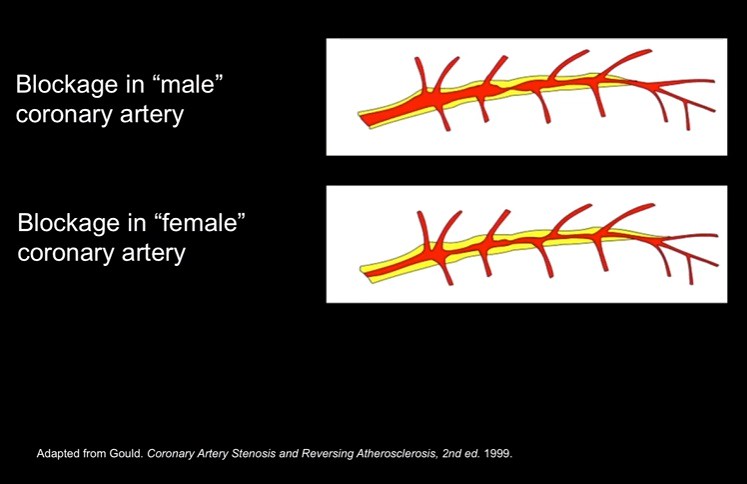
The first example is the difference in plaque build up in the artery as shown below:


Here is the description of the difference by Dr. Paula Johnson of the slide above:


Let's start with heart disease. It's the number one killer of women in the United States today. This is the face of heart disease. Linda is a middle-aged woman, who had a stent placed in one of the arteries going to her heart. When she had recurring symptoms she went back to her doctor. Her doctor did the gold standard test: a cardiac catheterization. It showed no blockages. Linda's symptoms continued. She had to stop working. And that's when she found us. When Linda came to us, we did another cardiac catheterization and this time, we found clues. But we needed another test to make the diagnosis. So we did a test called an intracoronary ultrasound, where you use soundwaves to look at the artery from the inside out.
And what we found was that Linda's disease didn't look like the typical male disease. The typical male disease looks like this. There's a discrete blockage or stenosis. Linda's disease, like the disease of so many women, looks like this. The plaque is laid down more evenly, more diffusely along the artery, and it's harder to see. So for Linda, and for so many women, the gold standard test wasn't gold.


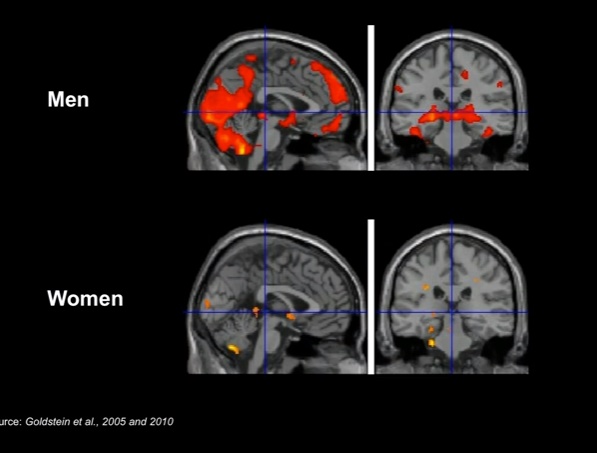
and the second example is a functional MRI (Magnetic Resonance Imaging) image of depression in both men and women.  The brain areas highlighted in distinct regions as shown below:


Here is the description of the slide by Dr. Paula Johnson in her TED talk above:


So let's go back to depression. Depression is the number one cause of disability in women in the world today. Our investigators have found that there are differences in the brains of women and men in the areas that are connected with mood. And when you put men and women in a functional MRI scanner -- that's the kind of scanner that shows how the brain is functioning when it's activated -- so you put them in the scanner and you expose them to stress. You can actually see the difference. And it's findings like this that we believe hold some of the clues for why we see these very significant sex differences in depression.
But even though we know that these differences occur, 66 percent of the brain research that begins in animals is done in either male animals or animals in whom the sex is not identified.
So, I think we have to ask again the question: Why leave women's health to chance? And this is a question that haunts those of us in science and medicine who believe that we are on the verge of being able to dramatically improve the health of women. We know that every cell has a sex. We know that these differences are often overlooked. And therefore we know that women are not getting the full benefit of modern science and medicine today. We have the tools but we lack the collective will and momentum.


There are other factors that could contribute to differences in the above images.  Although, overall, there are major difference as shown above.  These two examples are among many that highlight the need to have different clinical trials and treatment for different sexes.  Dr. Paula Johnson makes a compelling case to change the system based on the examples that she uses in her TED talk.  She also points out that the system has yet to change completely -- which is surprising to me.  If differences were apparent, why would we as a society not want to treat everyone equal -- find a treatment for each of us.  This is a bridge toward providing "personalized medicine".


In the paragraphs below, I show an example of private funding, published research, and new research arising which are addressing the differences in sexes with regard to research and development.


In order to change the system, the challenge will take time.  Although, as you will see, progress is being made which suggests motivating evidence of a change.  If you are interested in reading on and looking at the various abstracts of journal articles and books, please feel free to do so.  Additionally, a few foundations and their work are shown below which cast light on the much needed research due to differences in gender.


Today, research with the inclusion of sex and minorities is nowhere where it needs to be -- in terms of taking into account the sex differences of disease.  Why?  Is the cost to expensive?  Do some researchers feel like they are duplicating a trial?  Who knows.


Supplemental Material below:


Organizations Concerned About Gender Medicine


Dr. Paula Johnson highlights in her talk that despite the obvious data from various studies (some of which) introduced in her talk, 60 % of studies are still using either men or rats as test subjects.  Why?  Obvious, the inclusion of women and minorities is still at its infancy.  More discussion and relevancy needs to be brought to the forefront of the decision making process.


How do we accomplish this as a society?


The process could begin with funding projects from private funding.  Part of the money which comes from private funding sources may originate from a foundation.  Below are a couple of foundations which are built to elevate the importance of gender or sex in carrying out research clinical trials.


1) Foundation for Gender-Specific Medicine:


OUR MISSION

To use the study of gender to foster the development of new sciences and improve health care for all patients
The Foundation for Gender Specific-Medicine supports the investigation of the ways in which biological sex and gender affect normal human function and the experience of disease. One of the discipline’s pioneers, Marianne J. Legato, FACP, MD established the Foundation as a continuation of her work with The Partnership for Gender-Specific Medicine at Columbia University.

OUR GOALS

1. Support original scientific research in gender-specific medicine:
Each year, the Foundation provides fellowships to untenured, young faculty members with the goal of fostering their interest in gender-specific medicine at the beginning of their investigative careers.  Currently, we award two-year research grants at the Columbia University College of Physicians and Surgeons and one-year grants at the Johns Hopkins School of Medicine.  However, we are always looking for new scholars.
2. Create an evidence-based set of protocols to guide physicians:
The Foundation is working to assemble a critical mass of evidence-based criteria for optimal gender-specific treatment within each specialty of medicine.  We have finished recommendations for gender-specific care of diabetics and are currently working on cardiovascular disease.

Gender-specific care centers around the globe will receive our completed guidelines.  We will then observe and summarize the impact of these guidelines based on the morbidity and mortality of patients treated according to our recommended protocols.  Columbia University’s Office of Clinical Trials will collaborate with us in organizing and supervising our clinical studies on the impact of sex and gender on the efficacy of new drugs and medical devices.
3. Educate of the lay public and the scientific/medical community:
The Public
The Foundation understands that science does not operate outside of the rest of society, and we consider education a central part of our mission. The interests of the lay public drive medical research and practice. Rather than simply serving as an informational vehicle, the Foundation creates an open dialogue between patients and the medical community. In addition to the many books that Dr. Legato has written for the lay public, the Foundation promotes gender-specific medicine through lectures, symposia, and social media.

The Foundation for Gender-Specific Medicine is heavily invested in elevating awareness of the differences arising from sex or gender in diseases and treatments.  Columbia University is not a 'unknown' university and stands at the forefront of research in medicine.  Also listed on the page "about us" is the range of organizations that the foundation is affiliated with.  Many are home to Nobel Prize winners.  More and more people are interested in finding out the answer of how much contribution gender or sex plays into the role of disease or treatment.


2) FONDAZIONEISTUD:


Below is an abstract for a review of Gender Medicine titled: "Gender Medicine: A new approach for healthcare"


Abstract:


Gender Medicine is a fascinating newly emergent approach of medicine aimed at recognizing and analyzing the differences arising from gender in several aspects: anatomical, physiological, biological, functional, social and in the field of the response to pharmacological treatment. The term gender is to be intended as the definition issued by the World Health Organization (WHO), according to which gender refers to the socially constructed roles, behaviors, activities, and attributes that a given society considers appropriate for men and women. Therefore, Gender Medicine deals with a wider area than simply taking into account sex differences, which are merely the biological characteristics that define men and women.
Several studies have demonstrated that the physiology and the psychology of men and women are different and this diversity has a profound impact on the development, diagnosis and treatment of a disease and also on how the patient deals with that pathology. Gender Medicine applies these concepts in order to ensure everyone the best available treatment, with several benefits: it reduces the level of error in medical practice, promotes therapeutic appropriateness for both genders and improves personalized therapies, finally lowering the costs of the National Health Services (NHS), in a long term perspective.
The aim of this project is to drive awareness of this emergent topic. We firstly defined Gender Medicine, by analyzing the contents and by a historical overview, from its first steps to concrete applications, both in Italy and in the international context, thanks to interviews with national and international experts. We then moved to the analysis of clinical features: when, how and why the outcomes of drug therapies are different according to gender? We also described the perceptions of the involved stakeholders (physicians, patients, institutions, etc.) and we finally asked people for their opinion on the topic, through an online questionnaire.


Foundations and projects which emerge from them are crucial to the emergence and mainstream inclusion of women and minorities into clinical and research trials.  Although, until different studies start to show up in the scientific journals as "published articles" -- the idea will remain at a distance.  Even when the evidence is present.  Below are a few published reviews or papers highlighting the need for inclusion of sex differences in to research that have emerged in the last few years:


1) Handbook of Experimental Pharmacology:


"Sex and gender differences in clinical medicine"


Abstract:


Sex and gender differences in frequent diseases are more widespread than one may assume. In addition, they have significant yet frequently underestimated consequences on the daily practice of medicine, on outcomes and effects of therapies. Gender medicine is a novel medical discipline that takes into account the effects of sex and gender on the health of women and men. The major goal is to improve health and health care for both, for women as well as for men. We give in this chapter an overview on sex and gender differences in a number of clinical areas, in cardiovascular diseases, pulmonary diseases, gastroenterology and hepatology, in nephrology, autoimmune diseases, endocrinology, hematology, neurology. We discuss the preferential use of male animals in drug development, the underrepresentation of women in early and cardiovascular clinical trials, sex and gender differences in pharmacology, in pharmacokinetics and pharmacodynamics, in management and drug use. Most guidelines do not include even well-known sex and gender differences. European guidelines for the management of cardiovascular diseases in pregnancy have only recently been published. Personalized medicine cannot replace gender-based medicine. Large databases reveal that gender remains an independent risk factor after ethnicity, age, comorbidities, and scored risk factors have been taken into account. Some genetic variants carry a different risk in women and men. The sociocultural dimension of gender integrating lifestyle, environment, stress, and other variables cannot be replaced by a sum of biological parameters. Because of this prominent role of gender, clinical care algorithms must include gender-based assessment.


The wide range of diseases where sex differences is prominent are so large that one would think that the field of 'Gender Medicine' would explode.  Catchy titles like the following were used to get the attention of professionals in order to get traction.


2)  Clinical Chemistry Laboratory Medicine:


Research Article: "Gender medicine: a task for the third millennium"


Abstract:


Gender-specific medicine is the study of how diseases differ between men and women in terms of prevention, clinical signs, therapeutic approach, prognosis, psychological and social impact. It is a neglected dimension of medicine. In this review we like to point out some major issues in five enormous fields of medicine: cardiovascular diseases (CVDs), pharmacology, oncology, liver diseases and osteoporosis. CVDs have been studied in the last decades mainly in men, but they are the first cause of mortality and disability in women. Risk factors for CVD have different impacts in men and women; clinical manifestations of CVD and the influence of drugs on CVD have lot of gender differences. Sex-related differences in pharmacokinetics and pharmacodynamics are also emerging. These differences have obvious relevance to the efficacy and side effect profiles of various medications in the two sexes. This evidence should be considered for drug development as well as before starting any therapy. Gender disparity in cancer incidence, aggressiveness and prognosis has been observed for a variety of cancers and, even if partially known, is underestimated in clinical practice for the treatment of the major types of cancer. It is necessary to systematize and encode all the known data for each type of tumor on gender differences, to identify where this variable has to be considered for the purposes of the prognosis, the choice of treatment and possible toxicity. Clinical data suggest that men and women exhibit differences regarding the epidemiology and the progression of certain liver diseases, i.e., autoimmune conditions, genetic hemochromatosis, non-alcoholic steatohepatitis and chronic hepatitis C. Numerous hypotheses have been formulated to justify this sex imbalance including sex hormones, reproductive and genetic factors. Nevertheless, none of these hypothesis has thus far gathered enough convincing evidence and in most cases the evidence is conflicting. Osteoporosis is an important public health problem both in women and men. On the whole, far more epidemiologic, diagnostic and therapeutic studies have been carried out in women than in men. In clinical practice, if this disease remains underestimated in women, patients' and physicians' awareness is even lower for male osteoporosis, for which diagnostic and therapeutic strategies are at present less defined. In conclusion this review emphasizes the urgency of basic science and clinical research to increase our understanding of the gender differences of diseases.


3) World Journal of Gastroenterology:


Research Article: "Gender specific medicine in liver diseases: a point of view"


Abstract:


Gender medicine focuses on the patho-physiological, clinical, prevention and treatment differences in diseases that are equally represented in men and women. The purpose of gender medicine is to ensure that each individual man and woman receives the best treatment possible based on scientific evidence. The concept of "gender" includes not only the sexual characteristics of individuals but also physiological and psychological attributes of men and women, including risk factors, protective/aggravating effects of sexual hormones and variances linked to genetics and corporal structures that explain biological and physiological differences between men and women. It is very important to consider all the biological, physiological, functional, psychological, social and cultural characteristics to provide patients with individualized disease management. Herein, we critically analyze the literature regarding gender differences for diseases and acquired conditions of the most representative hepatic pathologies: primary biliary cirrhosis, autoimmune hepatitis, primary sclerosing cholangitis, non alcoholic fatty liver disease and alcoholic liver disease, and viral chronic hepatitis B and C. The last section addresses hemochromatosis, which is a prevalent iron overload disorder in the Caucasian population. This review aims to describe data from the literature concerning viral chronic hepatitis during pregnancy, management during pregnancy and delivery, and new effective drugs for the prevention of maternal infection transmission without significant adverse effects or complications.


4) Journal Atherosclerosis:


Research Article: "Sex differences in cardiovascular risk factors and disease prevention"


Abstract:


Cardiovascular disease (CVD) has been seen as a men's disease for decades, however it is more common in women than in men. It is generally assumed in medicine that the effects of the major risk factors (RF) on CVD outcomes are the same in women as in men. Recent evidence has emerged that recognizes new, potentially independent, CVD RF exclusive to women. In particular, common disorders of pregnancy, such as gestational hypertension and diabetes, as well as frequently occurring endocrine disorders in women of reproductive age (e.g. polycystic ovary syndrome (PCOS) and early menopause) are associated with accelerated development of CVD and impaired CVD-free survival. With the recent availability of prospective studies comprising men and women, the equivalency of major RF prevalence and effects on CVD between men and women can be examined. Furthermore, female-specific RFs might be identified enabling early detection of apparently healthy women with a high lifetime risk of CVD. Therefore, we examined the available literature regarding the prevalence and effects of the traditional major RFs for CVD in men and women. This included large prospective cohort studies, cross-sectional studies and registries, as randomised trials are lacking. Furthermore, a literature search was performed to examine the impact of female-specific RFs on the traditional RFs and the occurrence of CVD. We found that the effects of elevated blood pressure, overweight and obesity, and elevated cholesterol on CVD outcomes are largely similar between women and men, however prolonged smoking is significantly more hazardous for women than for men. With respect to female-specific RF only associations (and no absolute risk data) could be found between preeclampsia, gestational diabetes and menopause onset with the occurrence of CVD. This review shows that CVD is the main cause of death in men and women, however the prevalence is higher in women. Determination of the CV risk profile should take into account that there are differences in impact of major CV RF leading to a worse outcome in women. Lifestyle interventions and awareness in women needs more consideration. Furthermore, there is accumulating evidence that female-specific RF are of influence on the impact of major RF and on the onset of CVD. Attention for female specific RF may enable early detection and intervention in apparently healthy women. Studies are needed on how to implement the added RF's in current risk assessment and management strategies to maximize benefit and cost-effectiveness specific in women.


The research has been covered for at least the last 9 years, but remains invisible to the public.  Specific journals cover the field (as is the case in other specialized areas of science).  Although, with the importance arising between sex differences, one would think that the research would be broadcasted to a wider audience.


Journal that is discontinued after running for 9 years is "Gender Medicine" with the last issue highlighting the transition toward the use of genomics in medicine shown below:


1) Publication: Gender Medicine


Research Article: "Mainstreaming Sex and Gender Analysis in Public Health Genomics"


Abstract:


The integration of genome-based knowledge into public health or public health genomics (PHG) aims to contribute to disease prevention, health promotion, and risk reduction associated with genetic disease susceptibility. Men and women differ, for instance, in susceptibilities for heart disease, obesity, or depression due to biologic (sex) and sociocultural (gender) factors and their interaction. Genome-based knowledge is rapidly increasing, but sex and gender issues are often not explored.


2) Handbook of Clinical Gender Medicine :


Book Description:


A new vision to understanding medicine
Gender medicine is an important new field in health and disease. It is derived from top-quality research and encompasses the biological and social determinants that underlie the susceptibility to disease and its consequences. In the future, consideration of the role of gender will undoubtedly become an integral feature of all research and clinical care. 

Defining the role of gender in medicine requires a broad perspective on biology and diverse skills in biomedical and social sciences. When these scientific disciplines come together, a revolution in medical care is in the making. Covering twelve different areas of medicine, the practical and useful Handbook of Clinical Gender Medicine provides up-to-date information on the role of gender in the clinical presentation, diagnosis, and management of a wide range of common diseases.

The contributing authors of this handbook are all experts who, in well-referenced chapters, cogently and concisely explain how incorporation of gender issues into research can affect the medical understanding and treatment of heart disease, osteoporosis, arthritis, pain, violence, and malaria among other conditions. This intriguing and unique medical textbook provides readers with a valuable new perspective to understand biology and incorporate gender issues into the different branches of medicine.


And last but not least, an emerging field (little late after 20 years) is the International Society of Gender Medicine whose mission is stated below:


Aims of the IGM
The specific purpose of the society is to establish and develop gender medicine in an international context by promoting gender –specific research in basic sciences, clinical medicine and public health. This is based on the insight, that the two sexes may have different experiences of the same disease: they may present with different symptoms, respond differently to therapy and tolerate/cope with the disease differently.  The pathophysiology of disease may also vary as a function of genetics, epidemiology and biological sex/gender.
Therefore, the society will aim to:
1) Advance the understanding of sex/gender differences by bringing together scientists and clinicians of diverse backgrounds;
2) Strive to implement gender in the medical curriculum, prepare and allocate gender-specific learning materials, curricula and gender trainings for instructors
3) Promote gender-specific public health issues such as  information for persons, institutions and organizations in the area of gender medicine
4) Facilitate interdisciplinary research on sex/gender differences in basic and clinical frameworks
5) Encourage the application of new knowledge of sex/gender differences to improve health and health care
6) Cooperate with other professional and international societies of gender medicine and similar scientific organizations
7) Encourage and support the creation of professional organizations dedicated to the promotion of sex/gender medicine GM
8) Encourage and support international cooperation, collaboration and education among professionals working in the field sex/gender medicine.
9) Organize international meetings and congresses on relevant topics
10) Assist in the publication of position papers and guidelines in credible scientific journals and textbooks


There is a strong need for a society like the International Society of Gender Medicine to exist.  Healthcare professionals should gather together to explore the emerging field.  As mentioned earlier, the field of Gender Medicine is relatively new.  The most probable cause for the infancy of the field is the lack of 'gender specific care' or stigma associated with a 'non-binary' gender classification.


As highlighted in the abstracts of the emerging articles, research and development is making apparent the need to include minorities and women into trials and clinical research design.  The path toward "personalized medicine" involves dealing with the wide spectrum of gender types that compose our society today.  Using the pre-historic 'binary system' (male or female) classification is no longer valid.  More important is to understand the gender differences that actually arise in our society today and have been around for quite sometime -- just not recognized.


Until next time, Have a great day!