Showing posts with label Science Research. Show all posts

Sunday, February 24, 2019

Amazon Aims To Reach 50% Of All Shipments To Be Carbon Neutral By 2030. Really?


Source: Pick My Solar


There are two major avenues by which to promote large scale change in societies.  The first is through government action.  While the second is through private sector investment.  At any given moment in time, advances in technology are driven by either one.  One (i.e. government) will drive change followed by the private sector once the confidence in the market has been established.  Or the private sector is driving change which then encourages the government to jump on board through establishing the same bar of confidence in the market.  Does this work for the transition toward renewable energy? Yes.


In the present situation, the government (i.e. Trump Administration) is unwilling to promote renewable energy -- to deal with the growing concern about climate change.  Therefore, the private sector is being charged through consumer demand to transition toward a renewable, more sustainable, society.  This includes the manufacturing/supply chain too.  Amazon announced recently that 50% of all shipments will be made by carbon neutral sources on its blog site:


Amazon has a history of commitment to sustainability, through innovative programs such as Frustration Free Packaging, Ship in Own Container, our network of solar and wind farms, solar on our fulfillment center rooftops, investments in the circular economy with the Closed Loop Fund, and numerous other initiatives happening every day by teams across Amazon. In operations alone, we have over 200 scientists, engineers, and product designers dedicated exclusively to inventing new ways to leverage our scale for the good of customers and the planet.
Amazon has a long-term goal to power our global infrastructure using 100% renewable energy, and we are making solid progress. With improvements in electric vehicles, aviation bio fuels, reusable packaging, and renewable energy, for the first time we can now see a path to net zero carbon delivery of shipments to customers, and we are setting an ambitious goal for ourselves to reach 50% of all Amazon shipments with net zero carbon by 2030. We are calling this project "Shipment Zero” – it won’t be easy to achieve this goal, but it’s worth being focused and stubborn on this vision and we’re committed to seeing it through.


Amazon is in a perfect position to implement this change.  First, Jeff Bezos has built this company up to a fortune (now worth $255 billion).  Second, he started the company out of his garage -- sending off packages in bulk (at the end of every day) to customers.  He has been thinking about sustainability for quite a while.  Also, the public is in a position to demand change on the part of corporations through purchasing power.


Currently, the transition toward renewable (sustainable, clean) energy is being driven by the private sector.  Which is a result of consumer demand.  Consumers are tired of corporations choosing cost-saving measures which potentially damage the environment while boosting their shareholders bottom line.  The time has come where consumers have taken control through social media to demand more environmentally friendly (sustainable) products. 


Here in America, we look toward our European consumers and notice that the same corporations are making changes for the European marketplace based on consumer demand.  Why should we be using unsafe/unhealthy second rate products?  When our European counterparts are forcing companies to make changes?  This revelation is nothing new.  Look at the ingredients which McDonald's uses overseas to replace unhealthy ingredients which are still infused in Americans meals.  More will be written about this later.


The point is that the private sector has the unique opportunity to lead the transition toward a future where renewable energy plays a dominant role in our society (and world).  Government is slowly catching on.  With the recent 3 hearings in Congress over the last month with a bipartisan admission that climate change is not only real but caused by us (humans), the change is on the horizon.  The private sector should be confident in trail-blazing the pathway forward.  Trust me.  Consumers will remember your lead.  Keep up the great work private corporations in not only taking ownership for the pollution, but transitioning toward cleaner - renewable energy. 


Related Blog Posts:


Los Angeles Finally Joins the Transition Away From Fossil Fuel Investment


John Dingell: Longest Serving Senator, Environmentalist and Avid Climate Change Supporter Dies At 92


Parameters: Germany Plans To Cut Coal Dependence By 2038


Parameters: Amazon Go Will Seek To Understand How You Feel About A Grocery Product?


Ralph Nader: An Open Letter to Jeff Bezos, CEO of Amazon


What was the last book you read?


How many trash carts can be filled with 80 billion pounds of trash?


Wednesday, February 20, 2019

What Is The Most Useful Characteristic Of A Tortoise?


Source: Pets 4 Homes


Anyone with Type 1 diabetes will tell you that delivering insulin via syringe gets old very quickly.  Although, most patients get used to the process very quickly and as time passes do not even realize that the process might seem unusual throughout the day to a person who knows nothing about type 1 diabetes.  New technologies of insulin delivery have been arriving in different forms such as inhalers, insulin pens, jet injectors, insulin pumps, etc.  Each have their positive and negative aspects to the delivery of insulin.


Now, the next generation solution to delivering insulin via the oral pathway is being researched and reported in the "Director's Blog" on the National Institutes for Health website.  The answer seems to be inspired by the tortoise.  Yes, the tortoise shown in the picture above:


In a study published in the journal Science, a team, led by Robert Langer at Massachusetts Institute of Technology, Cambridge, and Giovanni Traverso, Brigham and Women’s Hospital, Harvard Medical School, Boston, took a new approach to the problem by developing a tiny, ingestible injection system [1]. They call their pea-sized device SOMA, short for “self-orienting millimeter-scale applicator.”
In designing SOMA, the researchers knew they had to come up with a design that would orient the injection apparatus correctly. So they looked to the African leopard tortoise. They knew that, much like a child’s “weeble-wobble” toy, this tortoise can easily right its body if tipped over due to its low center of gravity and highly curved shell. With the shape of the tortoise shell as a starting point, the researchers used computer modeling to perfect their design. The final result features a partially hollowed-out, polymer-and-steel capsule that houses a tiny, spring-loaded needle tipped with compressed, freeze-dried insulin. There is also a dissolvable sugar disk to hold the needle in place until the time is right.
Here’s how it works: once a SOMA is swallowed and reaches the stomach, it quickly orients itself in a way that its needle-side rests against the stomach wall. After the protective sugar disk dissolves in stomach acid, the spring-loaded needle tipped with insulin is released, injecting its load of insulin into the stomach wall, from which it enters the bloodstream. Meanwhile, the spent SOMA device passes on through the digestive system.


The researchers were challenged to deliver a medication consistently to the side wall of the stomach.  If this method is to be used in the future, then not only insulin should be able to be delivered via injection but also other biological therapeutics -- proteins, peptides, and nucleic acids.  Plus the challenge is to overcome the extremely acidic (low pH) environment along with digestive enzymes in the stomach wall through to the bloodstream - unaffected.


First though, the drug needs to be consistently delivered via injection into the stomach wall.  How do you position a vial of medication inside the stomach to have the correct orientation such that the injection into the side wall of the stomach is easily accomplished?  The answer lies in taking the unwavering ability of nature to have animals keep their orientation intact.  By that I mean, the tortoise is able to reorient itself by turning itself over in a variety of situations.  The solution is the 'self-orienting millimeter-scale applicator".  A picture of the device is shown below:


Last but not least, the researchers were able to show the ability to deliver a payload (a dose) which is equivalent to that of a normal dose currently.  The dose was 3 milligrams which is equivalent to the current dose given through injection to a human.   One of the many novel aspects of this design is that the delivery of medication without excess chemicals which serve little or no purpose.  By this I mean that normally medication is composed of the active ingredient plus a 'matrix' of chemicals which assist in the delivery of that active ingredient into the blood stream.  This includes through the acidic environment along with moving that medication past the digestive enzymes in the stomach wall.  Additionally, the ability to reduce unwanted side effects due to the 'matrix' chemicals is greatly appreciated.


To gain more insight into the study, feel free to read the original research which was published in the Journal 'Science' titled "An ingestible self-orienting system for oral delivery of macromolecules."  The research highlighted above represents exciting solutions which make our lives easier.  Innovative designs and concepts will ultimately make life better in the future.  Anytime there are additional (new) avenues by which to deliver drugs which are non-invasive and easy along with being effective represent true innovative steps in research and discovery.


The pathway toward realization hopefully will be mainstreamed to deliver an alternative solution to the existing solutions thus far.  Moreover, the importance of this project is proven by the efficacy along with our ability to come up novel designs which overcome interesting challenges presented to us with the biological (human) system with which we work with.


Related Blog Posts:


Scientific Evidence Points To Dangerous Chemicals Associated With Vaping


 How much nicotine is in a bottle of e-liquid? Is the level toxic?


EPA Administrator Nominee Andrew Wheeler's Opening Statement - Confirmation Hearing!


NIDA Director Nora Volkow: How Health Communicators and Journalists Can Help Replace Stigma with Science


What is the next big step in Mental Health Research?


Thursday, September 6, 2018

Thoughts: Pause before reacting to news regarding 'Proposed Changes' to EPA and other Federal Agencies


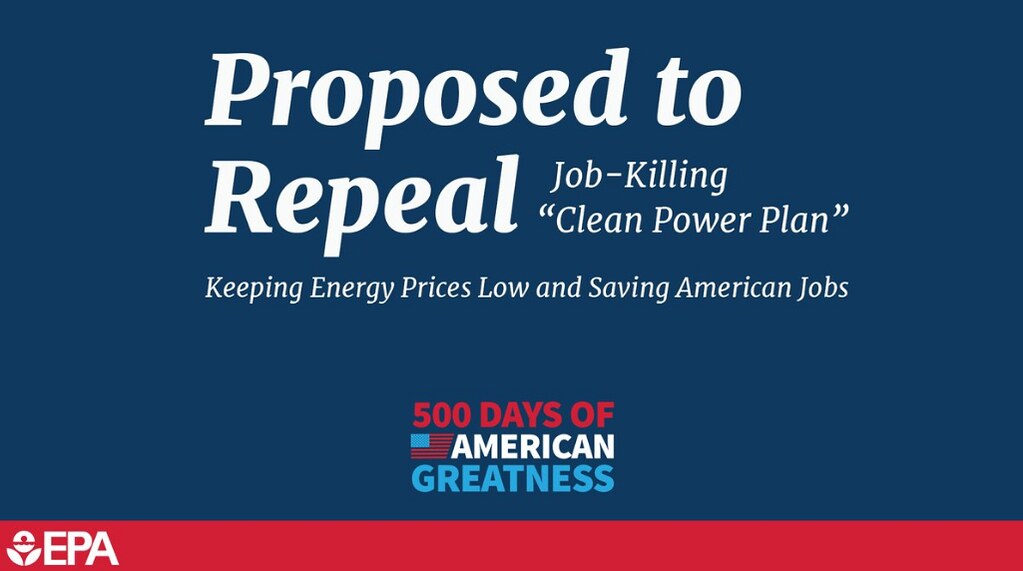
Source: EPA (Twitter)


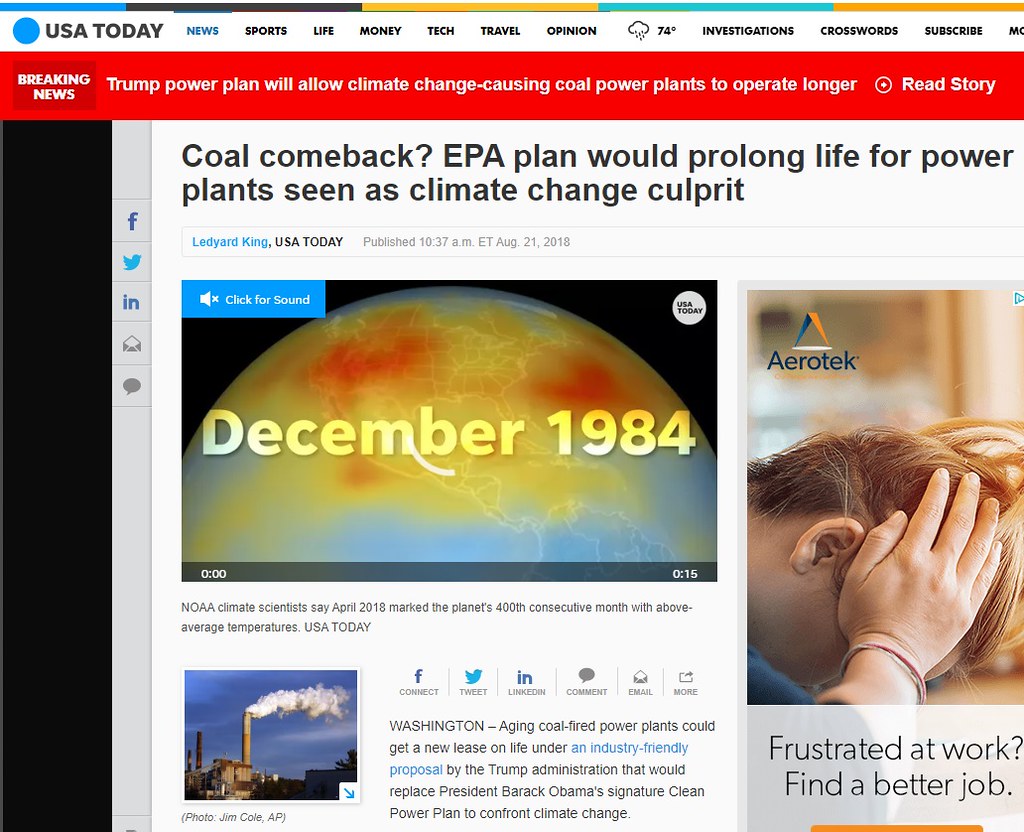
One model of the popular news is based on 'fear' -- propagating/inciting fear -- to get the most 'eyeballs' on a given story.  The thought is to produce news which is extremely controversial in nature and install fear into the story, while receiving the most 'eyeballs' from a given audience.  Don't forget to run ads on the sides of the articles to generate revenue.  Each of us react differently to news.  Take for instance the headline shown below of a recent news article from USA Today shown below:


Source: USA Today


Regardless of the degree of reaction (negative/positive), each of us would be well served to take a pause and consider the degree of threat each story poses to our daily life/safety or to our environment.   In the blog post below, I offer a video in which a former Administrator of the Environmental Protection Agency offers an opinion on the degree of truth behind news bites regarding 'Proposed' changes by either a federal agency (EPA, FDA, USDA, CDC, etc.) or a presidential administration (such as President Trump's administration currently).


Repeal or Not Repeal?


The news is good at producing eye-catching headlines like the one displayed above.  Further, at first sight the headline implies that the 'proposal' to 'repeal' or 'make changes' is absolute and without question.  In previous blog posts on this site, this is not the case at the outset.  More complications come into play when changing or repealing a law which has been enacted.  I came to the understanding of this reality last year while listening to a series of online webinars from the American Association of the Advancement of Science(AAAS).  The Facebook page for the AAAS has a series of webinars which can be viewed on demand.


Dr. Rush Holt, the current CEO of AAAS engaged in a discussion in which he described the reality of repealing or changing a current law enacted by a federal agency or congress -- which was extremely informative.  But why should we be listening to Dr. Rush Holt -- the CEO of AAAS?  The reason is that prior to a career spent in research at Princeton University, Dr. Rush Holt (who is a physicist) served as a U.S Representative for New Jersey's 12th congressional District from 1999 to 2015.  During his tenure in congress, Dr. Holt learned a tremendous amount regarding the processes which turn the wheels moving the country forward on a day to day basis.  Therefore, when Dr. Holt says that laws are in place which can only be replaced by laws which are "better" for the environment -- then I tend to believe him.


Although, what if people (readers) choose not to believe him.  Fair enough.  You may choose to believe the next source I have to provide.  Below is a video of a recent interview between veteran reporter Stephanie Ruhle and former EPA Administrator Christine


Wow.


In the video above, former EPA Administrator Christine Whitman points out the overall complications with the previous EPA Administrator - Scott Pruitt.  Namely, that on a day to day basis, Administrator Pruitt would announce publicly that he was going to 'repeal back an Obama administration regulation'.  Although, as pointed out by former congressman Rush Holt above, that statement is usually followed by legal action -- especially, if the new guidelines put the nation at greater risk of environmental damage.


Remember, to repeal or replace a regulation, the new proposed regulation cannot due more damage to the environment than the previous (or replaced) regulation did.


Additionally, former EPA Administrator Christine Whitman points out that the overall approach to changing (repealing or modifying) an existing regulation has to be done by the following approach: "This is why we think that the existing regulation is bad for the environment and here is the study to back up this assertion" -- along that avenue of reasoning.  Otherwise, the regulation will not be changed at all.


Example-Court Rules against Electric Companies?


Yes, the headline is written correctly.  For all of the news of 'roll-backs' or 'repeals' happening in the Trump Administration, the reality is the opposite.  An example is a lawsuit just ruled against by a panel of judges in Massachusetts.  Here is the news brief from 'Politico Energy' sent yesterday morning via e-mail to subscribers:


COURT SAYS MASSACHUSETTS CARBON CAP APPLIES TO UTILITIES: Massachusetts' top court on Tuesday ruled that electric utilities are indeed subject to the state's major climate change law, including a shrinking cap on carbon emissions imposed last year following an order from Republican Gov. Charlie Baker. The New England Power Generators Association and GenOn argued that the cap cannot apply to the electric sector because it is already regulated under another part of the state law. But the seven-member Massachusetts Supreme Judicial Court ruled that the two parts of the law "complement each other," adding: "Given that the electric sector is one of the largest in-state greenhouse gas emission sources, it would make little to no sense for the Legislature to have excluded it from the critical emission reduction requirements."


The case did not meet the criteria for a reversal or repeal on the ban.  Why would it?  As former EPA Administrator points out correctly, a large percentage of large (huge) corporations are actually falling in line with new environmental regulations (even those set in place by the Obama Administration).   Only the 'outliers' who are in jeopardy from not keeping up with the changing (sustainable) measures are crying out and lobbying the Trump Administration.  Which is attempting to 'roll back' or 'repeal' to protect these dying companies.


In fact, a critical statement made in the video above is that the 'route' or 'method' taken by the Trump Administration is not correct and often fails in courts (i.e. a legal battle) - which is not surprising. I have been saying all along over the past two years that the greatest threat to the Trump Administration is the lack toward attention to detail.  Which specific departments like the State Department and other federal agencies can greatly assist in creating legislation which will actually challenge existing regulations.  Although, the change has to be grounded in 'sound science'.


Speaking of regulations and emissions, in the same e-mail sent yesterday by Politico Energy, a short poll was taken on emission standards and pollution linked to higher adverse health incidences.  Here is the excerpt as reported by the journalist shown below:


HOW ACE IS PLAYING OUT: EPA's own estimates on its proposed Affordable Clean Energy plan to regulate carbon dioxide emissions from power plants is turning off voters, a new POLITICO/Morning Consult poll found. When asked whether EPA "estimates that the proposal could, in some scenarios, increase annual premature deaths from certain particulate emissions by up to 1,400 by 2030" would make voters more or less likely to support the plan, 30 percent of respondents said it would make them "much more likely to oppose" the plan. Fifteen percent said it would make them "somewhat more likely" to oppose the ACE plan, while 9 percent and 13 percent said it would make them "much more likely to support" or "somewhat more likely to support" the plan, respectively.

Asked a similar question about agency estimates that the proposal could reduce 2030 carbon dioxide emissions by as much as 1.5 percent from projected levels without the existing Clean Power Plan, 15 percent of voters said that knowledge would make them either "somewhat more" or "much more" likely to oppose the plan, while 45 percent said the opposite. The poll was conducted Aug. 28-31, with a margin of error of plus or minus 2 percentage points. It surveyed 1,964 registered voters.


Not surprising to say the least.


Conclusion...


The overall approach by the Trump Administration has met considerable opposition in courts.  Which is not surprising given the lack of evidence to support such repeals.  If the science was questionable, then a reasonable argument could be made.  But as I mentioned above and in previous blog posts which can be found here, the efforts have been largely unsuccessful -- especially since large corporations are already moving toward investing in sustainable energy technology.  Shell announced earlier this year such efforts.  Still, the Trump Administration chooses to argue with congress over science which is settled.


The world is composed of many parts moving at varying speeds.  Different nations move at different speeds with regard toward implementing more sustainable policies at various levels within their respective government.  The United States is one nation moving forward -- not necessarily leading the sustainability future.  Although, over the past few years, investments into a more sustainable world have been made and are continuing to be realized.  We should be investing in a green future.  With that being said, the next time that news is aired which is counter toward forward progress, take pause and think about the probability of the adverse impact actually becoming a reality.  There are certain steps in place in congress to ensure that forward progress is inevitable. That is where we should spend our focus and energy on.


Related Blog Posts:


EPA Estimates Of Methane - GHG - are off by 60%


French President Macron Organizes Climate Conference With Pledges Of Trillions Of Dollars For Climate Risk Management From World Organizations


Conservatives are calling on President Trump to fire EPA Administrator Scott Pruitt over Renewable Fuel Standards


Parameters: Oil vs. Corn based Ethanol - A Tug-Of-War between Trump Administration and Congressional Leaders


Parameters: Shells Oil Corporation Invests In Renewable Energy Infrastructure


Thoughts: Trump Administration Realizes Renewable Energy Is Here To Stay?


Do You Need Clean Air To Breathe? An Introduction To Environmental Justice


Environmental Entrepreneurs Weigh In On Repealing The Clean Power Plan


EPA Blatantly Suppresses Scientific Results Regarding Climate Change?


EPA Director Finally Realizes Reality Of Trying To Roll-Back Obama Era Clean Air Act Regulation


How Can The Paris Climate Agreement Be "More Favorable To The U.S."???


Paris Climate Agreement Is A Start Toward The Renewable Energy Future


Iraq Has Enough Oil To Support The World For 4 Years -- What?


Is 94 Million Barrels Of Oil A Large Amount? That Is The Global Daily Demand!


What Promises Did President Trump Make Science Research During His Campaign?


READ THIS BEFORE VOTING -- Presidential Science (WORLD) Issues!


Saturday, August 25, 2018

Ralph Nader: Warner Slack - Doctor for the People Forever


Have you ever been frustrated while trying to access your medical records?  Considering the abundance of medical records sitting in doctors' offices across the world, why has there not been a system (or systems) devised to give patients the access that is necessary to calm their minds.  Further, why have those same records not been 'anonymized' and made available to medical researchers to gather data across a greater patient population that could result in better medical care -- i.e. better medicine?  Surely, one of the many great physicians over the past few decades have conceived of such a system -- especially with the rise of technology is society.  In the blog post below, the iconic activist Ralph Nader introduces us to his good friend -- Dr. Warner Slack -- who passed away recently.  Dr. Warner Slack is one such physician who not only conceived of such a system, but worked tirelessly to advance the medical field to implement Electronic Health Records.


Electronic Health Records?


'Big Data' is a hot topic today.  The field of data mining with computers is taking on a new role from analyzing 'likes' on social media platforms to analyzing large data sets of pharmaceutical companies over the research and discovery of a new potential drug.  Which is why Electronic Health Records would be transformative for society and Dr. Warner Slack is honored for his ambitious pursuit over the decades as highlighted below in Ralph Nader's letter.  But first, let's take a step back and realize why having access to health records would make our lives better in the future.


In order to design a more effective drug, pharmaceutical companies need more information on the reactivity (i.e. efficacy, side-effects, costs, etc.) of a certain drug.  As I pointed out in the original post on drug discovery in an earlier post (over a year ago - here), the cost is tremendous -- around $1 billion dollars to bring the drug to market place over the course of 20 years.  Yes I said the process takes up to 20 years to get the drug from the university to the marketplace.  This covers the range of costs associated with discovery to patent through clinical trials -- which is no easy task.


Remember as I point out in an earlier post, the target (drug target) is discovered at the university level.  From there the drug target is tested against a wide variety of patented or proprietary test targets from a given pharmaceutical company. If a suitable match is found -- meaning a drug (or medicine) from a company is found to hit the target. Then the pharmaceutical company may be willing to take the drug to market - through clinical trials.  During clinical trials, the drug is tested on a specific population (limited but verifiable to U.S. standards).  Last but not least, the real 'data' on the drug comes from years of testing the drug in various doctors' offices across the world.  Which is why the data that is dispersed throughout the world could be fed back to the pharmaceutical company to optimize (refine or make a better) the drug which was brought to the market place.


People do not realize that as patients, they are testing the efficacy of the newly released medicine too.


Why are we still using a paper-based system of keeping track of patient's health rather than electronic health records?  At first sight, the answer might be related to the complexity with the whole process.  We are talking about hundreds of millions of patients just inside the United States -- not to mention other countries.  Or different countries might choose to use different file types which might not compatible across large populations to mine for researchers.


Global medicine is a topic among the upper echelons of the government and can be read about here.  Race, ethnicity, culture, and gender are increasingly important considerations when looking for effective and reliable treatment options for a given disease.  The more information we have to work with, the better the outcome.  Dr. Warner Slack has made this realization an issue which society has been forced to deal with and embrace in the pursuit of personalized medicine.  Don't take my word for it, read the letter below along with the cited article at the end of the letter about the wide range of Dr. Warner Slack's accomplishment for people during his career in medicine.


Without further ado, here is the letter written by Ralph Nader about his good friend -- Dr. Warner Slack shown below:


Warner Slack was a humble, multi-faceted great American physician at Harvard Medical School’s affiliated hospitals. Yet after he passed away last month at age 85, Dr. Slack did not receive the news coverage accorded numerous late entertainers, athletes, writers and scoundrels. In fact, his life was ignored by the Boston Globe, New York Times and the Washington Post.
Dr. Slack, in his pioneering, brilliant humane work, always focused on the lives of the American people whom he served in the millions, directly and indirectly.
It has been said that in a celebrity culture, we honor whom we value. Along the way the most important human beings who give us the blessings of liberty, justice, health, safety, knowledge and overall well-being mostly are missed or slighted by the priorities of a commercially driven culture. These people lift up our society every day on their largely anonymous, selfless shoulders.
In his final days, struggling with pulmonary fibrosis, I called Dr. Slack to express my deepest admiration and said: “For all your adult life, Warner, you have been a physician’s physician, a patient’s physician, a student’s physician, a citizen’s physician, and a champion of peace and justice.” This gentle, many-splendored medical doctor achieved such excellence in an age of specialization and amorality.
Dr. Sidney Wolfe, the nationally known long time director of Public Citizen’s Health Research Group, called Warner “a hero of mine.”
Just what did Warner Slack do to receive such encomiums? First, he was an early vocal medical practitioner who supported universal health insurance, when few were urging such humanity. He was among the first physicians in the world to see and apply the potential of computers in healthcare delivery but declared that advances mattered only if they advanced patients’ wellbeing. He insisted on patients being informed, on being empowered, and he led the way from his clinical practice in ending the absurdity of prohibiting patients from accessing their own medical records. Over the opposition of most of his profession and hospitals, he pressed on until this basic patient right was enacted as part of the Health Insurance Portability and Accountability Act.
Dr. Slack founded the Division of Clinical Computing from which flowed many professional articles and studies including prescient warnings about how computers misused can invade patients’ privacy and waste a ton of taxpayer money. He also pointed out that mindless converting from paper records to digital records might ill-serve the patients.
Once in a rare while, we meet relentlessly honest and courageous people who instinctively and cognitively see through the ruses, the snares and the delusions, and the profiteering propaganda that harm innocent, trusting people in so many grave ways.
Unlike many innovators, who bask in the limelight of praise, Dr. Slack humbly kept at it pressing for how his breakthroughs could actually benefit patients and not be hijacked for the all-mighty dollar. Human beings were never to be reduced to numbers.
As his son, author Charlie Slack wrote:
[Warner Slack’s] article “The Patient’s Right to Decide,” published in the British journal The Lancet, put forth a then-radical idea of “patient power”—encouraging patients and physicians alike to overturn the traditionally paternalistic nature of healthcare. Patients, Dr. Slack believed, should play a crucial part in determining their own care. Their insight, he often said, was “the least utilized resource in healthcare.
As an original thinker, a visionary, and a rigorous conveyer of medical ethics and responsibility to the hundreds of young clinicians he mentored or trained, Dr. Slack, maintained his steadfastness with a remarkable congeniality and the human touch.
In pain and hospitalized for weeks, he never complained. His demeanor and continual regard for the orderlies, nurses, and physicians, who took loving care of him, revealed his authentic character.
An early inchoate defender of the underdog, he was among the first physicians to publically oppose the Vietnam War, to go down South to help injured civil rights marchers, even working to help ease the integration of the University of Wisconsin football team. While in his seventies, he twice went to Honduras to provide medical assistance to residents of remote, impoverished villages.
A Princeton classmate of mine, Warner and I got to know each other better in 1980 when he and our Center independently issued tough critiques of multiple-choice standardized testing (SATs, etc.). As the author or co-author of many articles, book chapters, newspaper op-eds and books, such as Cybermedicine: How Computing Empowers Doctors and Patients for Better Health Care, Warner was very aware of phony studies, deceptive statistics, and other technical ways to manipulate persons.
Together with his colleague, Douglas Porter, he authored, in the Harvard Educational Review, the myth-busting article, “The Scholastic Aptitude Test: A Critical Appraisal.” They demonstrated that, contrary to ETS’s defiant assertions, aptitude was not frozen and its test scores could be raised by study and training for the tests. They also showed that SAT scores are poor predictors of college academic performance compared with high school grades.
Our study, “Reign of ETS: The Corporation That Makes Up Minds,” added that non-quantifiable traits, such as diligence, creativity, stamina, and even motivational idealism, can be more important as predictors of college performance.
This year, Warner’s critiques were further vindicated by the news that, joining some other colleges, the University of Chicago, has dropped these standardized tests as a requirement for admission.
Warner managed his interests and professional activities and duties without sacrificing being with his wife, Carolyn, their three children, and seven grandchildren. He relished these gatherings where he expressed his limitless curiosity about the world and continued to be, in Charlie’s words, “a person defined mainly by his youthfulness.”
Someone once said that “the only true aging is the erosion of one’s ideals.” No one who knew and worked with Warner viewed him as “elderly.” He couldn’t have been more contemporary and forward-looking with his classmates whenever they gathered for meetings regarding their unique alumni class organization—Princeton Project 55, which placed Princeton undergraduates and graduates with systemic civic groups around the country.
Dr. Slack was as complete a brainy, humane, down-to-earth, big picture human being as you could ever meet.
He left this life in Carolyn’s arms on the morning of their 62nd wedding anniversary.
His legacy is strong, deeply rooted in his many students and colleagues, and is lastingly conveyed in his writings and exemplary career, under pressure and controversy.
A biography of Warner Slack and his times needs to be written.


Conclusion...


Dr. Warner Slack has been hailed by others as the 'pioneer' of electronic health records.  Read here about his envision of artificial intelligence and computers playing transformative role in medicine.  With the rise of technology coupled with Dr. Warner Slack's vision, we have arrived at pursuits toward precision medicine like "All of Us" trial being conducted by the National Institutes of Health.  In the future, we will thank heroes like Dr. Warner Slack who have paved the way toward a better understanding of health by giving access (and better care) to patients through making the data (medical records) available to both patients and researchers.  The future of medicine should be exciting through both participants eyes.  Thank you Dr. Warner Slack for your work.  And Thank you Ralph Nader for bringing our attention to lesser known heroes like Dr. Warner Slack.


Related Blog Posts:


NIH Director Updates Congress On Research Progress


Does your brain move throughout the day?


Parameters: Race, Ethnicity, and Gender Needed In Health Research


Ralph Nader: MAGA is really MADA?


Ralph Nader: Has Corruption Become Institutionalized?


Ralph Nader Says 10 Million People Could Change Healthcare Policy - That Few?


Ralph Nader Suggests To Consumers Reading 'Consumer Reports' Before Impulse Buying


Thoughts: Ralph Nader On A Cashless Economy


Ralph Nader Asks "Will the Federal Civil Service Defend Us?"


Activist Ralph Nader Gives Politicians Advice Post Hurricane Harvey


Activist Ralph Nader Calls To Each Pillar Of Society - A Call To Action.


Can One Community Organization Change Regional Transportation Habits?


Wednesday, August 22, 2018

What is a typical day like for a systems engineer at JPL?


Source: Phys.Org


Hollywood gives us a picture (one example) of a typical day in the life of a systems engineer at the Jet Propulsion Laboratory.  What does that picture look like?  An example might be shown below:


Now compare that with the written description from an interview of a true systems engineer at the Jet Propulsion Laboratory in Pasadena as highlighted on the 'Science & Entertainment Exchange' website shown below:


What is a typical day like for a systems engineer at JPL?

The one thing I love about my job as a systems engineer is that there really is no such thing as a typical day. It changes dramatically over the lifecycle of a project, which goes like this. In the early phases of a project, the scientist community and NASA decide what it is that needs further study. Take Jupiter, for example. How was Jupiter really formed? Related to that question are things like: Does Jupiter have a core? How big is the core? What is the water vapor content of the atmosphere?
Next, a call for proposals is sent out and engineers work with scientists to figure out how to go about finding the answers. Can we use a telescope on Earth? Or do we need to send a spacecraft all the way to Jupiter? Can it just fly by the planet or does it need to go into orbit? Then, we come up with a specific design for the spacecraft and instruments. For the instruments: they are often selected through a parallel proposal process. For the spacecraft side: if a spacecraft is going all the way to Jupiter, we work through big design questions like: Does it need nuclear power? Or can we use solar power? If we use solar power, how big would the arrays need to be? Over time, we mature the design to a very high level of detail, then build parts, and assemble them. There are many points throughout the design process for testing things, performing analyses, etc., to ensure everything is going to come together smoothly and perform the way we expect. Eventually, we launch the spacecraft. Once we are in this operations phase, we are getting the data back from the instruments, but also managing the health of the spacecraft.
So far, I have worked on projects starting from the middle of the design phase through the final assembly, testing, launch, and operations phases. My job focuses a lot on troubleshooting and resolving design disconnects. For example, early in the design phase a telecom engineer might want 100 watts of power to make sure the signal back to Earth is very strong and easy to lock onto, but the power system may be providing only 500 watts for the entire spacecraft. The systems engineer’s job is to work with engineers from both of those areas (and the rest of the spacecraft too) to explore the trade space and figure out the best approach.


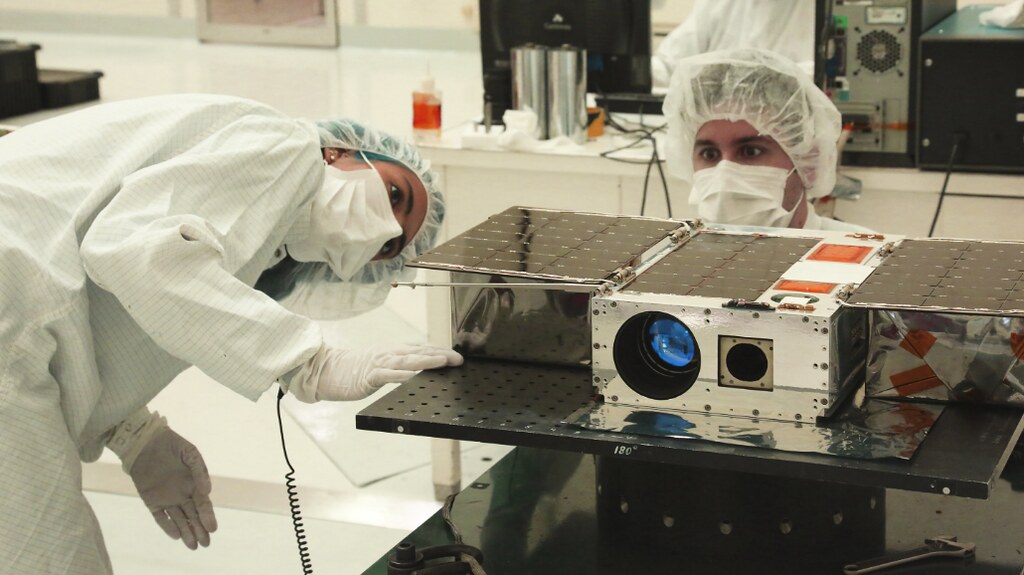
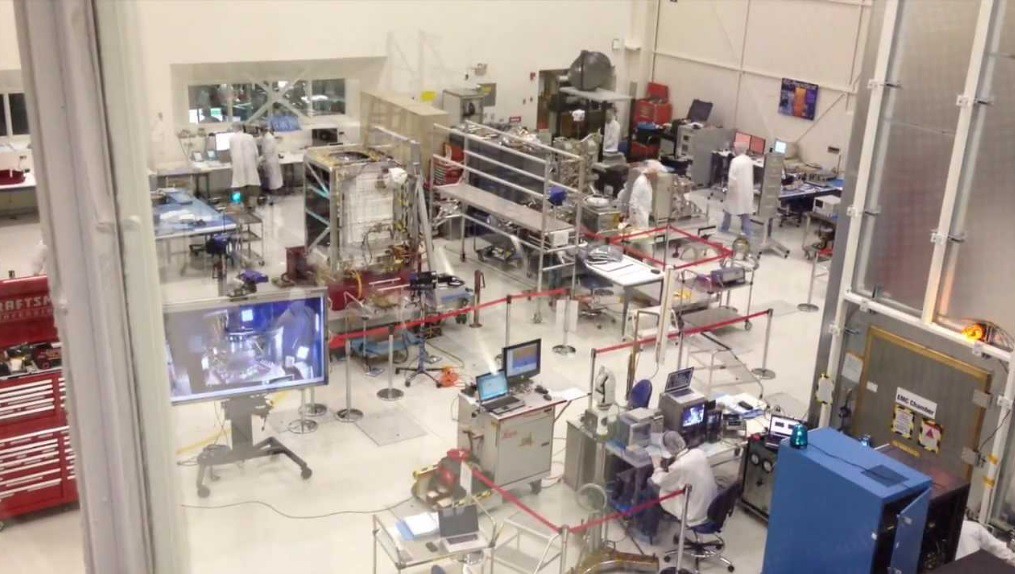
The description above implies the images below:


Source:JPL


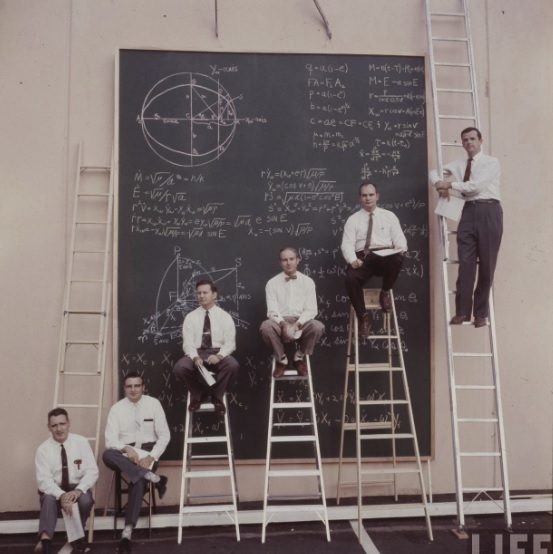
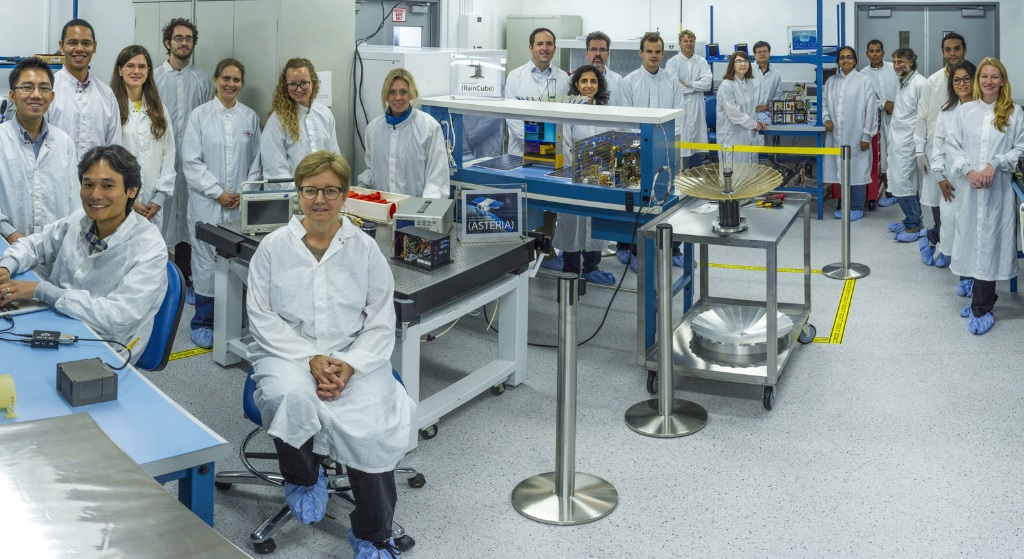
Laboratories like the one above and below house teams of scientists who work collaboratively to think about all of the considerations for a given mission.  A team which appears like the picture below:


Source: JPL/NASA


The laboratory above (spacecraft factory) is a result of years of work by NASA engineers.  Over the course of decades, space scientists have worked to optimize (perfect) the process of design, construction, testing, and launching/mission.  According to the description above by the systems engineer, a day can take on many different forms.  Which highlights a very important observation which frequently arises when non-scientists visit laboratories.  The scientific process has many components which range from constantly sourcing out funding for various research projects to solving unexpected problems encountered during research and development.


Conclusion...


The traditional (old image) of a scientist or systems engineer is one that is not only outdated but has changed over the last few decades.  What image do I speak of?  The image of men chalking up the boards with equations has been replaced largely by computational methods.  A scientist working alone in his/her laboratory day after day has been replaced by a more collaborative working environment -- diverse with different genders, race, and ethnic backgrounds.  Which spurs different angles of creativity and ideas in solving a project at hand.  Since funding is getting more hard to find, more consideration into each part of the process from planning to finalizing construction of a spacecraft is considered in more detail. The result is a more diverse and inclusive interdisciplinary research and design group of scientists who are more concerned about living in a better world and beyond. 


Related Blog Posts:


Why Chemistry Matters from the mouths of Nobel Laureates!


Scientists compare Misinformation In Mainstream News to a Viral Infection


What Is Going On Inside That Cell?


How Do Scientists Think?


Monday, August 13, 2018

Why Chemistry Matters from the mouths of Nobel Laureates!


Source: TED Fellows


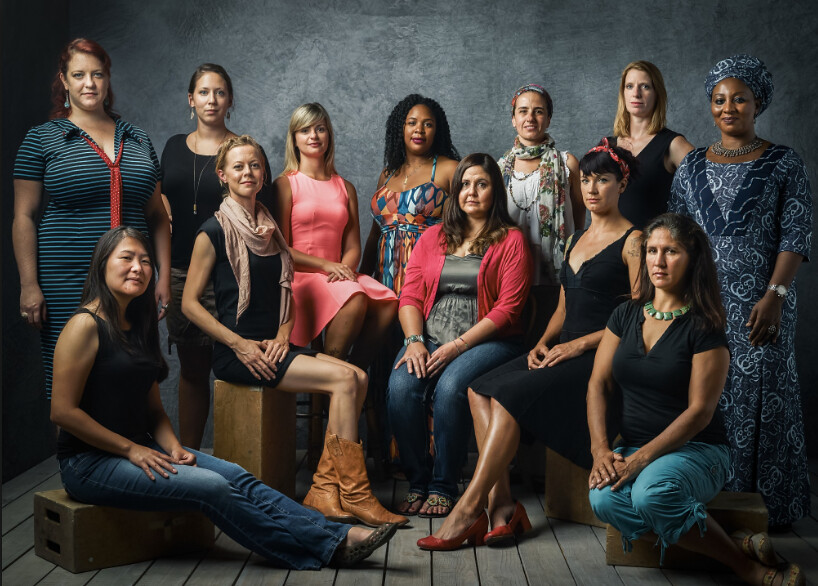
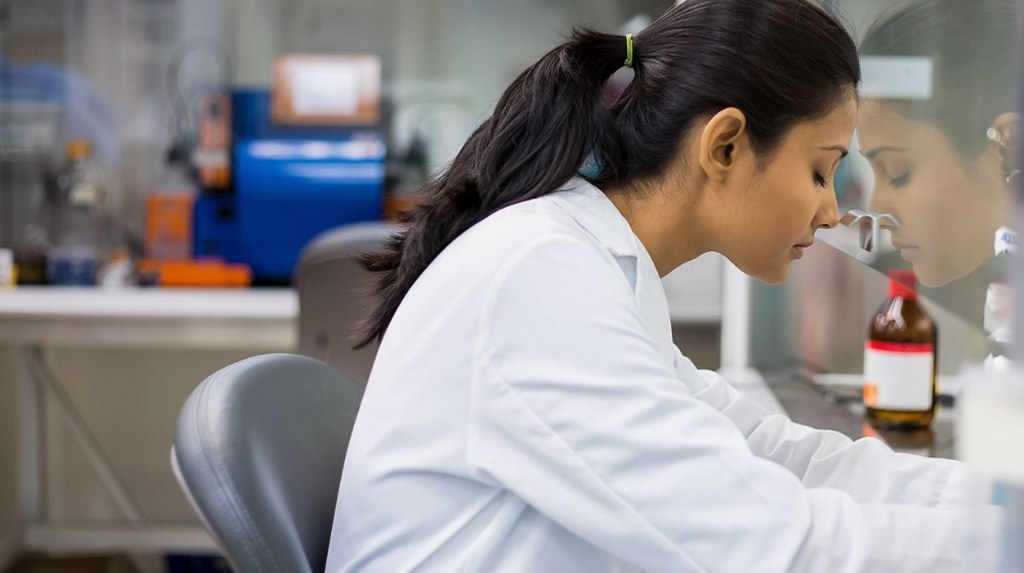
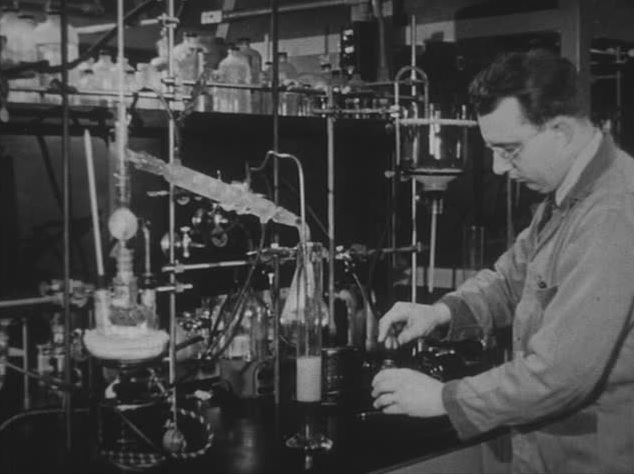
Does the modern image of a scientist reflect or match that of a past image?  Here is a modern image shown below:


Source: Science


And here is an image taken from the 1950s shown below:


Source: ShutterStock


How do they differ?  How are they the same?  The reason why I ask these questions is that science in general (and society for that matter) has been locked in the gender rigid mindset in professional aspirations.  As a result, there are a lack of females in science as are there a lack of minorities.  This image presents one far different from that in the cover photo above - which is representative of today's society.


In presenting the wrong image of a scientist, the gap of diversity is narrowed and science (as a whole) suffers from the loss of potentially great contributors which is terrible to say the least.  In the changing world in which we live today, diversity and inclusiveness have a greater meaning in all fields.  Especially science.  As I have mentioned in an earlier post, all of us (people) start out at one point in our lives as "amateur scientist's".  The difference between then and now are those individuals who pursue a profession of creativity and curiosity which is unbound by traditional means.

Science is an open ended field of search and discovery of understanding the world around us.  As highlighted in the video below from the mouth's of Nobel Laureates, science is really made for anyone who chooses to pursue their curiosity and thirst for knowledge.  Contrary to popular thinking, there are many different fields in science -- which do not require - math or complex equations.  Here is a video which is not new but will drive home the point of 'why chemistry matters' in a collection of elegant short statements:


After watching the video above, I hope that you are inspired to think creatively and follow your curiosity to its limits.  This is one of the great joys of scientific research as a profession.  Many people have misconceptions about science - which is terrible.  I find that view to be 'self-limiting' and not useful.  Each of us should understand that the field of science as a profession is within our reach.  That is if we are willing to do the work to pursue that line of work as a profession.


 Although, even if a person chooses not to pursue science as a profession, this does not mean that science is not accessible to each.  Each of us could potentially have access to the world wide web - which is limitless in knowledge about the world around us.  The act of pursuing that knowledge resides in each of us.


Related Blog Posts:


How Do Scientists Think?


Science Topics, Thoughts, and Parameters Regarding Science, Politics, And The Environment!


Dimensional Analysis Of Statistics And Large Numbers - Index Of Blog Posts


Sunday, July 8, 2018

Parameters: Trade Tariffs Will Affect International Science


I have written about trade before on this site.  First, about the potential benefits of 'global free trade' which can be found here.  Second, how the trade tariffs set to hit in recent weeks will affect a whole range of commodities (i.e. products, crops, etc.) which can be found here.  Recently, in the journal 'The Scientist' in an article titled "New US-China Tariffs Could Affect Science" written by Diana Kwon, the potential negative impacts to international science is laid out succinctly.  In the excerpt below, I include the entire article (not too long) to avoid butchering the piece with my own opinion.


Without further ado, here is the article shown below:


On June 15, the Office of the United States Trade Representative released a list of 818 Chinese imports that would be subject to an additional 25 percent tariff starting on July 6. These include products used in scientific research, such as microscopes and parts used in X-rays, magnetic resonance imaging (MRI) scanners, and other imaging devices. While the effect that these tariffs will have on researchers is still unclear, some policy experts worry that President Donald Trump’s policies may impede scientific collaboration and talent flow between the two countries.  
Brian Xu, a toxicologist with The Acta Group, a scientific and regulatory consulting firm, says that because China exports relatively few high-quality scientific instruments, the tariffs on those products are unlikely to have a large effect on researchers in the U.S. However, he notes that Chinese companies produce many synthetic chemicals used by pharmaceutical and biotech companies in the U.S. “If there are tariffs [placed] on those, that’s certainly going to increase costs,” Xu says.  
According to the Trade Representative office (USTR), Trump’s administration is implementing the new tariffs to address the results of an agency investigation, which found China guilty of unfair trade practices. “China’s acts, policies and practices related to technology transfer, intellectual property, and innovation are unreasonable and discriminatory, and burden U.S. commerce,” USTR says in a June 15 statement. 
China immediately retaliated to the US government’s announcement with a list of 545 US exports that it would slap additional taxes on starting next week, along with an additional 114 products—including chemicals and medical equipment—under consideration for additional tariffs.  
Some scientists in the U.S. have expressed concerns to Nature about the potential increase in research equipment costs as a result of the tariffs. But whether the tariffs will have noticeable effects for researchers remains to be seen. 
Scientific organization in the U.S. do not yet see cause for alarm. “At this point, it is unclear what impact this may have on the research ecosystem here in the US, and to date, we have not heard from any ACS [American Chemical Society] members or their respective organizations on this topic,” Glenn Ruskin, the director of ACS External Affairs and Communications, writes in an email to The Scientist. “It is a developing situation and one that we will be watching.”
Likewise, Tom Wang, the chief international officer at the American Association for the Advancement of Science (AAAS), says that “it’s hard to say right now what the direct impact [of the tariffs] will be.” Wang adds that while it will be important to keep an eye on the products used the research community, at this point, the full extent of the tariffs that the U.S. will place on foreign products—and the retaliatory tariffs that may come as a result—is still unknown. 
On the other side of the tariffs, in China, worries are also reserved. Yibing Duan, a science and technology policy researcher at the Chinese Academy of Sciences, tells The Scientist in an email that the potential for the tariffs to increase the cost of research in China is not a big concern, because products bought from the U.S. for scientific purposes “could be imported from the E.U., Japan, and other developed nations.” 
There is, however, fear that the economic dispute between the U.S. and China may intensify. USTR has also released a second set including 284 products that may be subject to additional tariffs. (The agency declined The Scientist’s request for comment.) “Contrary to what the Trump administration has said, trade wars are not easy to win,” says William Hauk, a professor of economics at the University of South Carolina. “They have a tendency to escalate with tit-or-tat measures, and this could start affecting a broader range of products.” 
Spill-over effects  
Duan tells The Scientist that although he does not currently see the new tariffs as a serious concern for research, a trade war between the U.S. and China could create a distrustful environment that may stifle intercountry relationships in the areas of science and technology. 
Wang adds that other moves by the Trump administration, such as the tougher restrictions on visas for Chinese students studying in the U.S., may also reduce scientific cooperation between the two countries. Together, these kinds of policies could have a “chilling effect on collaboration, access to technology, and access to knowledge and talent,” Wang says. 
Hauk notes that, if the US-China trade war escalates, there could be additional restrictions placed on student visas, as well as H1B visas, which allow US companies to hire foreign workers. 
“The argument made by some in this administration is that somehow the U.S. is not the beneficiary of the talent, the knowledge, or the technology from other places, but that the U.S. is giving this away to other countries,” Wang tells The Scientist. “But I think that’s not reflective of how the US scientific system works, in which we do benefit from working with [foreign] people, technologies, and companies.” 


There is more at risk than just products.  Additional risk can be classified as 'services' which I discussed briefly in the previous blog post on trade.  Furthermore, students from China travel abroad to the United States to receive a graduate education mostly to return to China for future work. Although, the United States pharmaceutical industry along with the technology sector do hire and hold onto a large portion of these visiting scholars.  I was in a research lab with international students during graduate school and wrote briefly about the benefit to U.S. science of having diversity in the research lab setting - which can be found here.


Last week, after Independence Day, returning to work, I encountered a colleague who returned back home to visit to China after the end of last semester.  She was frustrated with her travel back to the U.S. on the China side.  Her visa was scrutinized by customs which held up the process for a couple of weeks.  Which translates into a hold on her research here in the United States.  This is normal for visiting scholars in the United States.  But for professors here trying to earn tenure at an academic institution, the delay is critical toward professional advancement.


She remarked that there were much fewer applications to travel abroad - which is a result of harsher immigration laws by the Trump administration (read here). Still, the process was held up on China's side.  The exact reason still remains unknown to this day.


Conclusion...


Overall, trade with China is important.  As I mentioned, more than products are traded and at risk with current negotiations.  The international political scene seems to be interfering with the field of science along with many others.  The potential negative fall out or adverse impact is that the United States could fall behind in output at the research level and technology transfer level.  If China holds potential imports to the United States such as vital chemicals used in research, this in turn directly impacts researchers ability to further advance the U.S. science arena -- which is bad.


More blogs can be found here:


Parameters: Tariffs Affect Trade In Both Directions -- In And Out Of The USA


Parameters: One Parameter Change In The Trade Machine Leads To A 'Re-Adjustment' Of Another


Parameters: Steel And Aluminum Tariffs Are Not Isolated - They Are Tied To Trading Of Other Vital Goods


More blogs are located here


Friday, March 2, 2018

President Trump Just Allowed Greater Environmental Risk To Children's Health

Source: WCAI


Of all of the cuts to the federal government, the one that seems obvious to withstand are any attempts to put the safety of the public (and specifically children) health in jeopardy.  Although, that is exactly where the nation is headed with the following news from an article on the website 'Yubanet' titled "EPA to Close Toxics Research Center that Protects Children’s Health":


WASHINGTON, D.C. Feb. 27, 2018 – Yesterday, it was announced that the Environmental Protection Agency is closing the National Center for Environmental Research (NCER). The program provides millions of dollars in grants each year, and through fellowships, studies the effects of chemicals on children’s health.
This closure is not the first time Trump’s EPA has stood by the chemical industry. Last year, EPA administrator Pruitt rejected a ban on chlorpyrifos, a pesticide linked to reduced IQ, developmental delay and increased risk of learning disabilities in children. The EPA recently reversed restrictions on the use of this pesticide, called chlorpyrifos, shortly after meeting with officials from Dow. Trump nominated Michael Dourson to head the EPA Office of Chemical Safety and Pollution, the division that oversees the chemical industry. Dourson spent much of his professional career writing studies that undermine existing science and concerns about toxic chemicals calling for weaker regulations on chemicals like pesticides, and was previously paid by Dow Agrosciences to downplay safety concerns about chlorpyrifos. Dourson later withdrew his name from consideration for the position. Dow Chemical, the parent company of Dow Agrosciences, contributed $1 million to Trump’s inaugural committee.


In the same article, the author include the response from the Sierra Club, an environmental group greatly concerned with the news and rightly so:


In response, Sierra Club Melinda Pierce Federal Lobby and Advocacy Director released the following statement:
“By shutting the door on the research operation that keeps our kids safe from toxic chemicals all while making dangerous policy decisions that pump more chemicals into our air and water, Scott Pruitt is taking the health and safety of our families as seriously as playground games. From his failure to ban the toxic pesticide chlorpyrifos, to his attacks on rules that cut mercury and arsenic in our water, to halting research that protects children from toxic threats, it’s clear that when it comes the health of our families, Scott Pruitt simply does not care.”


Wow!  That is my initial reaction to the news.  I understand the intention of privatization on part of this administration.  Although, I do not understand where or how this save us money in the long run.  There is no substitute for the health of our children who will grow up to be tomorrow's consumers and advocates.  Now, they have no choice.  Later they will be in a situation where the decisions of today have greatly affected the climate (and environment) of tomorrow.


Conclusion...


This measure is unacceptable.  Really, talk about environmental justice.  The decision to close the National Center for Environmental Research is quick and not well thought out.  The following questions need to be seriously entertained:


Who benefits besides industry with this closure?  


How much money do we save on an annual basis compared to the amount of money which will have to be spent on treating the adverse health effects of today's decision?


These are the questions that we as a nation should be asking ourselves and our elected officials when the Trump Administration decides to throw our country into an environmental disarray.  Our health should not be compromised by elected officials who have no knowledge of the gravity of their decisions.  When these conversations come up at the dinner table, be sure to weigh in on the disastrous effects on children's health -- tomorrows leaders.


Friday, February 10, 2017

What Promises Did President Trump Make Science Research During His Campaign?

In a post that predated last years election, I listed questions that were compiled by scientists which were sent out to politicians campaigning for the 2016 election for the Presidency.  Now that a candidate has been elected and assumed the office of the Presidency, I thought a review of the answers (and questions) which represented President Trump's view on funding science research is worth while.  Especially, since President Trump has already limited the ability of federal agencies to disseminate tax-payer dollar funded research last week.  I wrote a blog post regarding the executive decision to limit science during the first week.  Without further ado, lets review the questions and answers from scientists to President Trump prior to his assuming office.


Questions & Answers Regarding Science Research


I list below the questions that were sent to President Trump when he was a candidate running for office last year.  After each question, his response is listed.


Question #1


Science and engineering have been responsible for over half of the growth of the U.S. economy since WWII. But some reports question America’s continued leadership in these areas. What policies will best ensure that America remains at the forefront of innovation?


Answer #1


Innovation has always been one of the great by-products of free market systems.  Entrepreneurs have always found entries into markets by giving consumers more options for the products they desire.  The government should do all it can to reduce barriers to entry into markets and should work at creating a business environment where fair trade is as important as free trade.  Similarly, the federal government should encourage innovation in the areas of space exploration and investment in research and development across the broad landscape of academia.  Though there are increasing demands to curtail spending and to balance the federal budget, we must make the commitment to invest in science, engineering, healthcare and other areas that will make the lives of Americans better, safer and more prosperous. 


Question #2


Many scientific advances require long-term investment to fund research over a period of longer than the two, four, or six year terms that govern political cycles. In the current climate of budgetary constraints, what are your science and engineering research priorities and how will you balance short-term versus long-term funding?


Answer #2


The premise of this question is exactly correct—scientific advances do require long term investment.  This is why we must have programs such as a viable space program and institutional research that serve as incubators to innovation and the advancement of science and engineering in a number of fields.  We should also bring together stakeholders and examine what the priorities ought to be for the nation.  Conservation of resources and finding ways to feed the world beg our strong commitment as do dedicated investment in making the world a healthier place.  The nation is best served by a President and administration that have a vision for a greater, better America.  


Question #3


The Earth’s climate is changing and political discussion has become divided over both the science and the best response. What are your views on climate change, and how would your administration act on those views?


Answer #3


There is still much that needs to be investigated in the field of “climate change.”  Perhaps the best use of our limited financial resources should be in dealing with making sure that every person in the world has clean water.  Perhaps we should focus on eliminating lingering diseases around the world like malaria.  Perhaps we should focus on efforts to increase food production to keep pace with an ever-growing world population.  Perhaps we should be focused on developing energy sources and power production that alleviates the need for dependence on fossil fuels.  We must decide on how best to proceed so that we can make lives better, safer and more prosperous.


Question #4


Biological diversity provides food, fiber, medicines, clean water and many other products and services on which we depend every day. Scientists are finding that the variety and variability of life is diminishing at an alarming rate as a result of human activity. What steps will you take to protect biological diversity?


Answer #4


For too long, Presidents and the executive branch of our federal government have continued to expand their reach and impact.  Today, we have agencies filled with unelected officials who have been writing rules and regulations that cater to special interests and that undermine the foundational notion of our government that should be responsive to the people.  Our elected representatives have done little to uphold their oaths of office and have abrogated their responsibilities.  When these circumstances occur, there is an imbalance that rewards special interests and punishes the people who should benefit the most from the protection of species and habitat in the United States.  In a Trump administration, there will be shared governance of our public lands and we will empower state and local governments to protect our wildlife and fisheries.  Laws that tilt the scales toward special interests must be modified to balance the needs of society with the preservation of our valuable living resources.  My administration will strike that balance by bringing all stakeholders to the table to determine the best approach to seeking and setting that balance.


Question #5


The Internet has become a foundation of economic, social, law enforcement, and military activity. What steps will you take to protect vulnerable infrastructure and institutions from cyber attack, and to provide for national security while protecting personal privacy on electronic devices and the internet?


Answer #5


The United States government should not spy on its own citizens.  That will not happen in a Trump administration.  As for protecting the Internet, any attack on the Internet should be considered a provocative act that requires the utmost in protection and, at a minimum, a proportional response that identifies and then eliminates threats to our Internet infrastructure. 


Question #6


Mental illness is among the most painful and stigmatized diseases, and the National Institute of Mental Health estimates it costs America more than $300 billion per year. What will you do to reduce the human and economic costs of mental illness?


Answer #6


This is one of the great unfolding tragedies in America today.  States are reducing their commitments to mental health treatment and our jails are filled with those who need mental health care.  Any mental health reforms must be included in our efforts to reform healthcare in general in the country.  We must make the investment in treating our fellow citizens who suffer from severe mental illness.  This includes making sure that we allow family members to be more involved in the total care of those who are severely mentally ill.  We must ensure that the national government provides the support to state and local governments to bring mental health care to the people at the local level.  This entire field of interest must be examined and a comprehensive solution set must be developed so that we can keep people safe and productive.


Question #7


Strategic management of the US energy portfolio can have powerful economic, environmental, and foreign policy impacts. How do you see the energy landscape evolving over the next 4 to 8 years, and, as President, what will your energy strategy be?


Answer#7


It should be the goal of the American people and their government to achieve energy independence as soon as possible.  Energy independence means exploring and developing every possible energy source including wind, solar, nuclear and bio-fuels.  A thriving market system will allow consumers to determine the best sources of energy for future consumption.  Further, with the United States, Canada and Mexico as the key energy producers in the world, we will live in a safer, more productive and more prosperous world.


Question #8


American students have fallen in many international rankings of science and math performance, and the public in general is being faced with an expanding array of major policy challenges that are heavily influenced by complex science. How would your administration work to ensure all students including women and minorities are prepared to address 21st century challenges and, further, that the public has an adequate level of STEM literacy in an age dominated by complex science and technology?


Answer #8


There are a host of STEM programs already in existence.  What the federal government should do is to make sure that educational opportunities are available for everyone.  This means we must allow market influences to bring better, higher quality educational circumstances to more children.  Our cities are a case-study in what not to do in that we do not have choice options for those who need access to better educational situations.  Our top-down-one-size-fits-all approach to education is failing and is actually damaging educational outcomes for our children.  If we are serious about changing the direction of our educational standing, we must change our educational models and allow the greatest possible number of options for educating our children.  The management of our public education institutions should be done at the state and local level, not at the Department of Education.  Until more choices are provided in our cities, those who tout their concern about educational outcomes cannot be taken seriously.


Question #9


Public health efforts like smoking cessation, drunk driving laws, vaccination, and water fluoridation have improved health and productivity and save millions of lives. How would you improve federal research and our public health system to better protect Americans from emerging diseases and other public health threats, such as antibiotic resistant superbugs?


Answer #9


The implication of the question is that one must provide more resources to research and public health enterprises to make sure we stay ahead of potential health risks.  In a time of limited resources, one must ensure that the nation is getting the greatest bang for the buck.  We cannot simply throw money at these institutions and assume that the nation will be well served.  What we ought to focus on is assessing where we need to be as a nation and then applying resources to those areas where we need the most work.  Our efforts to support research and public health initiatives will have to be balanced with other demands for scarce resources.  Working with Congress—the people’s representatives—my administration will work to establish national priorities and then we will work to make sure that adequate resources are assigned to achieve our goals.


Question #10


The long-term security of fresh water supplies is threatened by a dizzying array of aging infrastructure, aquifer depletion, pollution, and climate variability. Some American communities have lost access to water, affecting their viability and destroying home values.  If you are elected, what steps will you take to ensure access to clean water for all Americans?


Answer #10


This may be the most important issue we face as a nation for the next generation.  Therefore, we must make the investment in our fresh water infrastructure to ensure access to affordable fresh water solutions for everyone.  We must explore all options to include making desalinization more affordable and working to build the distribution infrastructure to bring this scarce resource to where it is needed for our citizens and those who produce the food of the world.  This must be a top priority for my administration.


Question #11


Nuclear power can meet electricity demand without producing greenhouse gases, but it raises national security and environmental concerns. What is your plan for the use, expansion, or phasing out of nuclear power, and what steps will you take to monitor, manage and secure nuclear materials over their life cycle?


Answer #11


Nuclear power is a valuable source of energy and should be part of an all-the-above program for providing power for America long into the future.  We can make nuclear power safer, and its outputs are extraordinary given the investment we should make.  Nuclear power must be an integral part of energy independence for America.


Question #12


Agriculture involves a complex balance of land and energy use, worker health and safety, water use and quality, and access to healthy and affordable food, all of which have inputs of objective knowledge from science. How would you manage the US agricultural enterprise to our highest benefit in the most sustainable way?


Answer #12


The implication of your question is that there should be central control of American agriculture by the federal government.  That is totally inappropriate.  The agriculture industry should be free to seek its best solutions through the market system.  That said, the production of food is a national security issue and should receive the attention of the federal government when it comes to providing security for our farmers and ranchers against losses to nature.


Question #13


We now live in a global economy with a large and growing human population. These factors create economic, public health, and environmental challenges that do not respect national borders. How would your administration balance national interests with global cooperation when tackling threats made clear by science, such as pandemic diseases and climate change, that cross national borders?


Answer #13


Our best input to helping with global issues is to make sure that the United States is on the proper trajectory economically.  For the past decade we have seen Gross Domestic Product growth that has not provided adequate resources to fix our infrastructure, recapitalize our military, invest in our education system or secure energy independence.   We cannot take our place as world leader if we are not healthy enough to take care of ourselves.  This means we must make sure that we achieve our goals in tax reform, trade reform, immigration reform and energy independence.  A prosperous America is a much better partner in tackling global problems that affect this nation achieving its national objectives. 


Question #14


Science is essential to many of the laws and policies that keep Americans safe and secure. How would science inform your administration's decisions to add, modify, or remove federal regulations, and how would you encourage a thriving business sector while protecting Americans vulnerable to public health and environmental threats?


Answer #14


This is about balance.  We must balance a thriving economy with conserving our resources and protecting our citizens from threats.  Science will inform our decisions on what regulations to keep, rescind or add. A vibrant, robust free market system will regulate the private sector.


Question #15


Public health officials warn that we need to take more steps to prevent international epidemics from viruses such as Ebola and Zika. Meanwhile, measles is resurgent due to decreasing vaccination rates. How will your administration support vaccine science?


Answer #15


We should educate the public on the values of a comprehensive vaccination program.  We have been successful with other public service programs and this seems to be of enough importance that we should put resources against this task.


Question #16


There is a political debate over America’s national approach to space exploration and use. What should America's national goals be for space exploration and earth observation from space, and what steps would your administration take to achieve them?


Answer #16


Space exploration has given so much to America, including tremendous pride in our scientific and engineering prowess.  A strong space program will encourage our children to seek STEM educational outcomes and will bring millions of jobs and trillions of dollars in investment to this country.  The cascading effects of a vibrant space program are legion and can have a positive, constructive impact on the pride and direction of this country.  Observation from space and exploring beyond our own space neighborhood should be priorities.  We should also seek global partners, because space is not the sole property of America.  All humankind benefits from reaching into the stars.


Question #17


There is a growing opioid problem in the United States, with tragic costs to lives, families and society. How would your administration enlist researchers, medical doctors and pharmaceutical companies in addressing this issue?


Answer #17


We first should stop the inflow of opioids into the United States.  We can do that and we will in the Trump administration.  As this is a national problem that costs America billions of dollars in productivity, we should apply the resources necessary to mitigate this problem.  Dollars invested in taking care of this problem will be more than paid for with recovered lives and productivity that adds to the wealth and health of the nation.


Question #18


There is growing concern over the decline of fisheries and the overall health of the ocean: scientists estimate that 90% of stocks are fished at or beyond sustainable limits, habitats like coral reefs are threatened by ocean acidification, and large areas of ocean and coastlines are polluted. What efforts would your administration make to improve the health of our ocean and coastlines and increase the long-term sustainability of ocean fisheries?


Answer #18


My administration will work with Congress to establish priorities for our government and how we will allocate our limited fiscal resources.  This approach will assure that the people’s voices will be heard on this topic and others.


Question #19


There is much current political discussion about immigration policy and border controls. Would you support any changes in immigration policy regarding scientists and engineers who receive their graduate degree at an American university? Conversely, what is your opinion of recent controversy over employment and the H1-B Visa program?


Answer #19


Immigration has been one of the cornerstones of my campaign.  The issues brought up in your question are exactly what we should be addressing in immigration reform.  If we allow individuals in this country legally to get their educations, we should let them stay if they want to contribute to our economy.  It makes no sense to kick them out of the country right after they achieve such extraordinary goals.  As for the H1-B program, we cannot allow companies to abuse this system.  When we have American citizens and those living in the United States legally being pushed out of high paying jobs so that they can be replaced with “cheaper” labor, something is wrong.  The H1-B system should be employed only when jobs cannot be filled with qualified Americans and legal residents.


Question #20


Evidence from science is the surest basis for fair and just public policy, but that is predicated on the integrity of that evidence and of the scientific process used to produce it, which must be both transparent and free from political bias and pressure. How will you foster a culture of scientific transparency and accountability in government, while protecting scientists and federal agencies from political interference in their work?


Answer #20


Science is science and facts are facts.  My administration will ensure that there will be total transparency and accountability without political bias.  The American people deserve this and I will make sure this is the culture of my administration.


Conclusion...


As you can see the range of questions above covers all of the major threats to our society.  From vaccinations through current epidemics to the development of renewable energy to reduce our impact on the climate today.  The above questions and answers were provided by the website "ScienceDebate.org" to ensure that the incoming administration ensured that science was of the upmost importance.


In the weeks to years to come, we will look back on the questions and answers to hold President Trump accountable to the promises he made while running for office.  Science plays a part in every facet of this universe.  We should not forget that or forget to fund the vital research which makes our world a better place.


Unfortunately, already, we have seen in the first couple of weeks a break with the answers above regarding immigration -- which is completely disappointing.  Although, according to some, that is not unusual given his demeanor.  The outcome of which is undetermined and potentially dangerous.  Coming up here soon, I will write a piece on this exact observation.


Until next time, Have a great day!